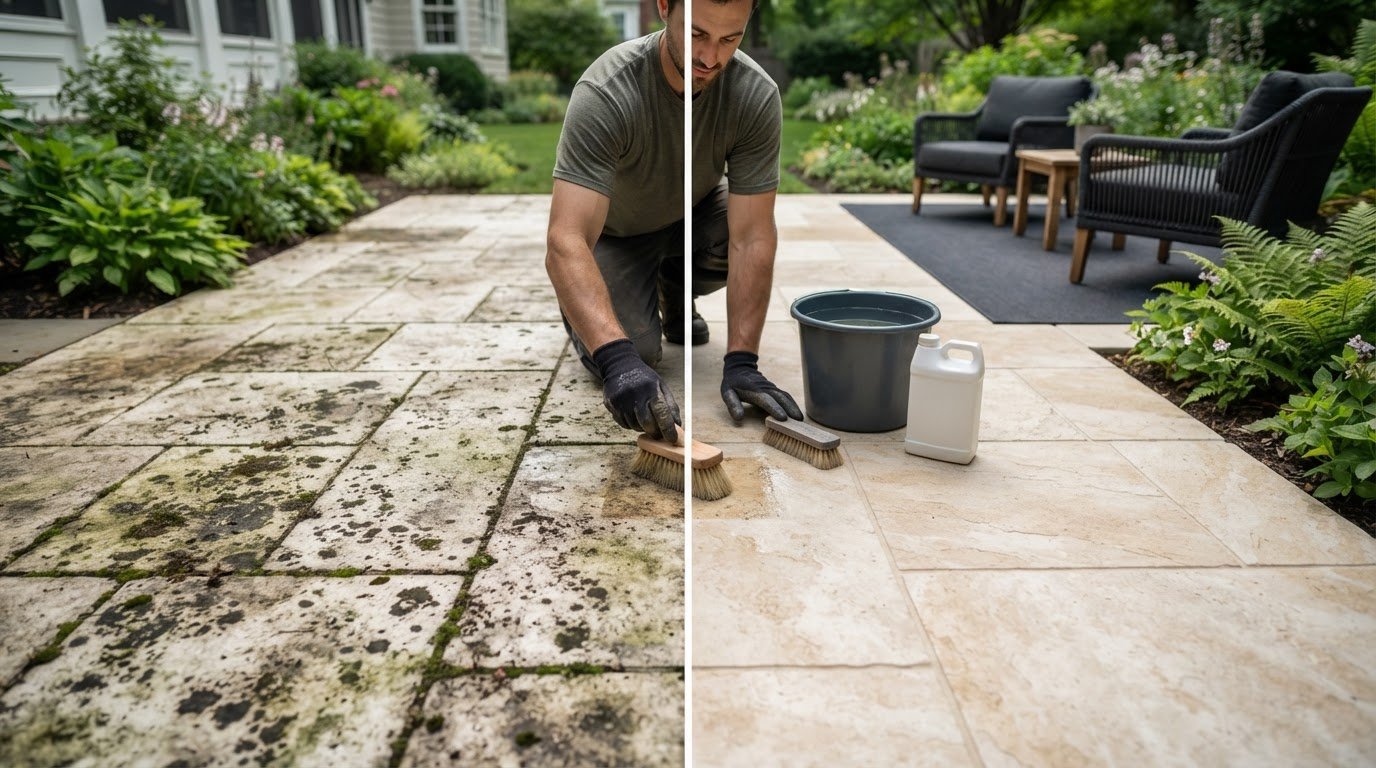
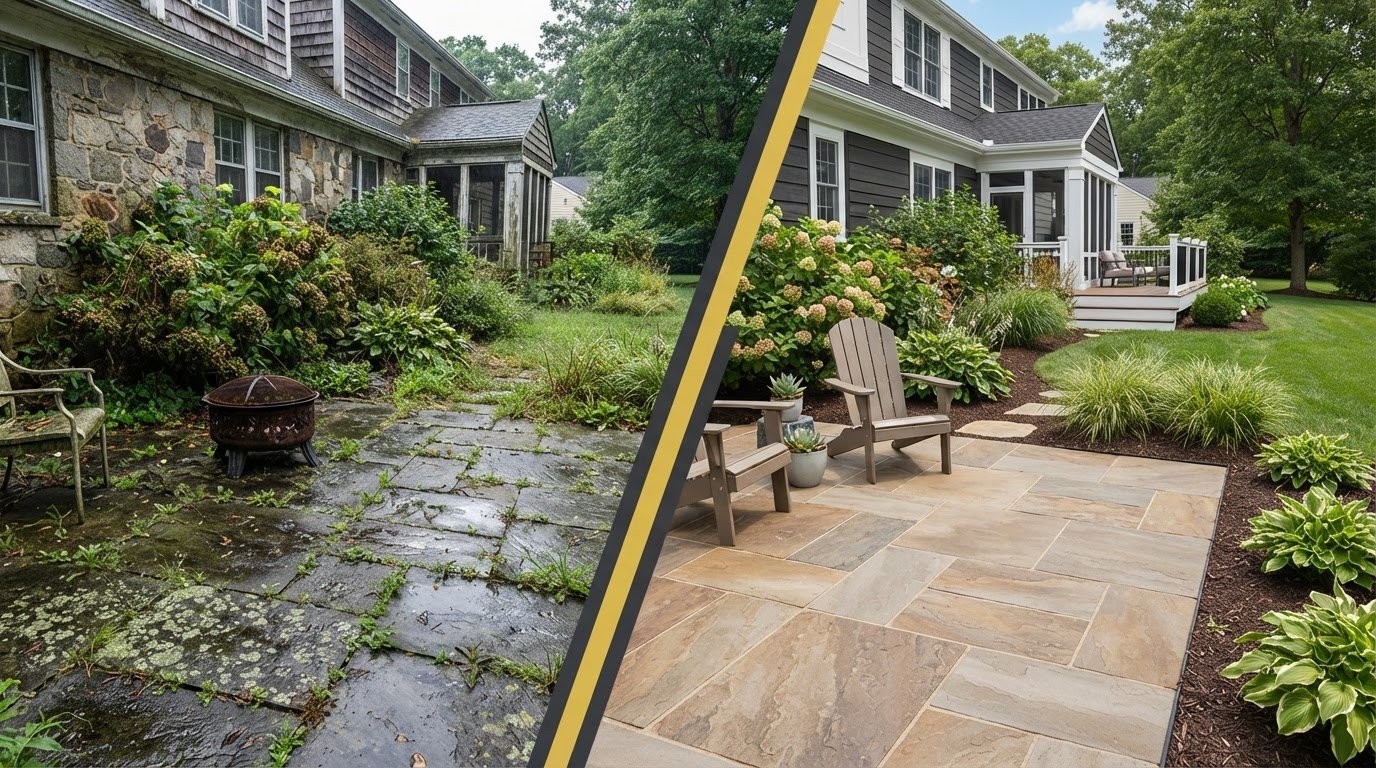
A slippery patio needs algae removed, not simply covered up. Start with a cleaner suited to the paving, brush it across the affected area, and follow the product instructions for rinsing. For effective Algae Removal, match the method to both the surface and the growth.
It’s frustrating when green growth makes an outdoor space look neglected and feel unsafe underfoot. The right approach can make cleaning more straightforward, but methods used for ponds don’t always suit paving. This guide explains how to choose a chemical treatment, why a rake isn’t usually the right tool for a patio, and whether water temperature should influence your plan. You’ll also learn how to clean with the paving material in mind and what to consider when algae returns, so you can make a practical choice without relying on guesswork.
Key Takeaways
- Choose a chemical treatment based on the kind of algae and the surface; a pond treatment and a patio cleaner aren’t interchangeable.
- Use mechanical removal that suits the area and paving, then clear away loosened growth and debris.
- Water temperature can affect algae growth, but its role depends on whether you’re treating a pond, aquarium, or outdoor surface.
- For roofs, siding, decks, and concrete, match the cleaning method to the material to avoid unnecessary surface damage.
- Professional treatment costs depend on the surface, the extent of growth, and the work involved; for patio organic staining, Patio Black Spot Remover is a relevant product option.
1. Chemical algaecides
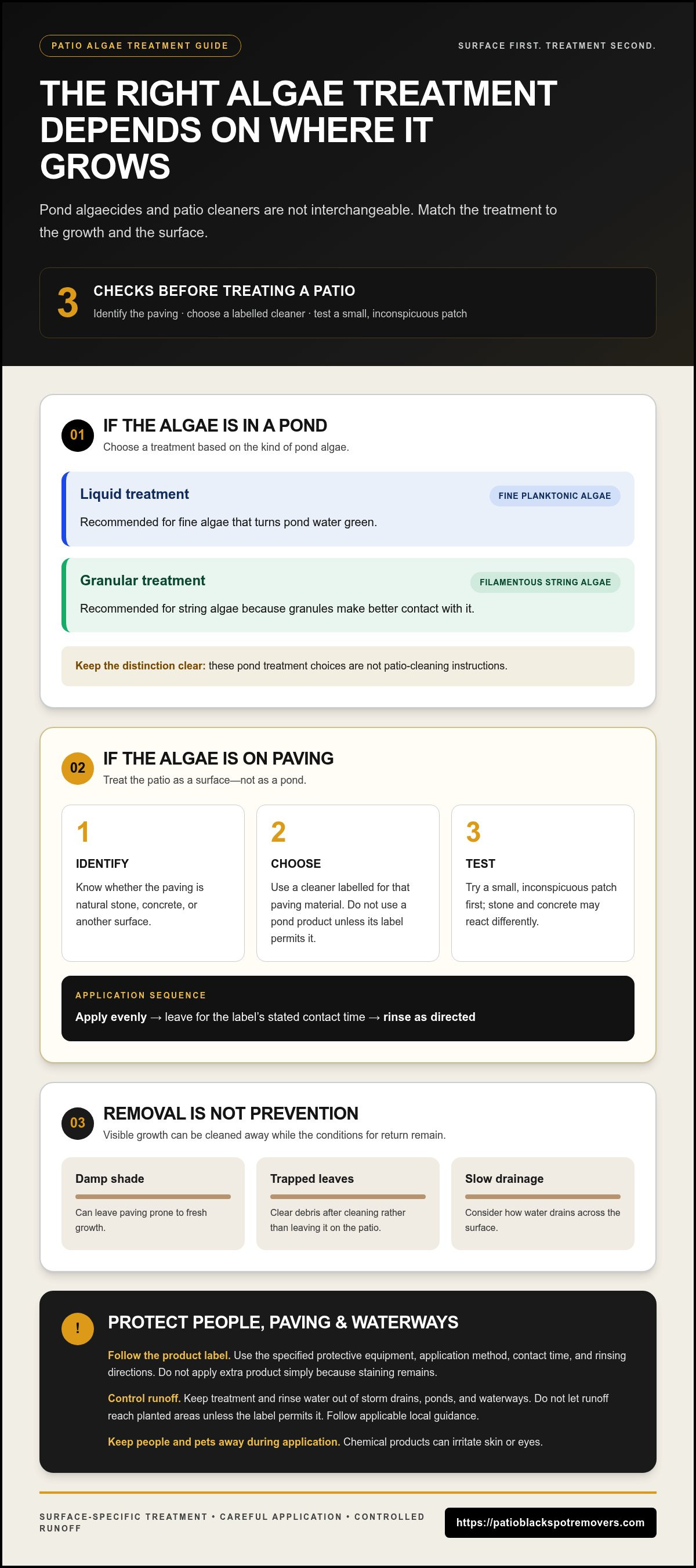
A chemical treatment can loosen or kill growth, but the right choice depends on where the algae is growing. A patio is not a pond: don’t use products formulated for pond water on paving unless the label specifically permits it. For a slippery patio, choose a surface cleaner intended for the paving material, then follow the label for application, contact time, and rinsing.
Pond treatments vary by algae type. Liquid treatments are recommended for fine planktonic algae that turns water green. Granular treatments are recommended for filamentous string algae because they make better contact with it. These distinctions apply to ponds, not patio cleaning. On stone or concrete, use a suitable patio product as directed instead of borrowing from an aquatic treatment routine.
Chemical treatments can quickly treat existing pond algae, but they don’t prevent regrowth. The same principle applies outdoors: removing visible growth doesn’t remove the conditions that let it return. Damp shade, trapped leaves, and slow drainage can leave paving prone to fresh growth. After cleaning, clear debris and consider how water drains across the patio. Don’t apply extra product just because staining remains; follow the label’s directions for repeat treatment.
What local rules or environmental restrictions apply to algae treatments and runoff? Rules vary by location and product, so read the label and follow applicable local guidance. Keep treatment and rinse water out of storm drains, ponds, and waterways. Don’t let runoff reach planted areas unless the label permits it.
What safety risks come with algae removal chemicals and pressure washing? Chemical products can irritate skin or eyes, while pressure washing can damage paving, loosen jointing material, or send debris toward people. Wear the protective equipment specified on the label, keep people and pets away during application, and use pressure and a nozzle suited to the surface.
For a patio, make three practical checks: identify the surface, choose a treatment labelled for it, and test a small, inconspicuous patch. Natural stone may react differently from concrete paving, so don’t assume one cleaner suits both. Apply the product evenly, leave it for the stated contact time, then rinse as directed without diverting residue into drains or waterways.
Use Patio Black Spot Remover for patio staining when its directions suit your paving. A surface-specific product and careful runoff control make chemical cleaning more appropriate than using a pond algaecide or relying on high-pressure water alone.
2. Rakes and mechanical removal
A rake works best on loose growth, not algae bonded to patio paving. In a pond, a pond rake can lift floating mats of filamentous algae from the water’s surface. On a patio, algae often clings to textured concrete, stone, or paving joints. A rake may skim away leaves and loose debris, but it won’t reliably remove growth from those surfaces.
Choose a tool suited to the surface. A stiff-bristled outdoor brush can reach across a textured slab and loosen a thin film without the concentrated force of metal teeth. Sourcing dedicated exterior equipment through suppliers like jracenstein.com helps ensure you have the right gear on hand. Use a plastic scraper for small patches on smooth, durable paving. Avoid dragging a metal rake or sharp edge across stone: it can scratch the surface or catch in the joints. Test your chosen tool in an inconspicuous spot first.
For patio cleaning, work in manageable sections with controlled strokes. Brush across the algae, then change direction to reach growth in surface grooves. Use a hand brush around steps, edges, and narrow joints where a wide broom can miss patches. On uneven flagstones, follow the contours rather than forcing a rigid tool over raised edges. Collect loosened debris as you go so it doesn’t spread back across clean paving.
Mechanical removal is useful when growth is loose, localized, or mixed with leaves. Brushing can also prepare the surface for a suitable patio cleaner by clearing material that would block contact with the paving. But brushing alone may leave a green film in porous stone or deep texture. If the surface still feels slick after debris is removed, inspect shaded edges and joints for remaining growth rather than applying more pressure indiscriminately.
Pressure washing is another mechanical method, but force matters. A narrow spray held close can mark concrete, damage softer stone, or wash jointing material from between pavers. Start with a broad spray and restrained pressure, keeping the nozzle moving. Stop if the surface begins to pit or joints start to empty. A brush gives better control around fragile pointing and decorative finishes.
For a practical sequence, remove loose leaves with a soft outdoor broom, brush the affected paving, and clear away the loosened material. Inspect the joints and textured areas before deciding whether a surface-appropriate cleaner is needed. If you’re comparing patio-specific cleaning options, review patio algae cleaning options as a next step. Mechanical work helps remove what’s loose; the tool and pressure should match the paving, not just the visible stain.
3. Water temperature and algae growth
Water temperature matters most when algae is growing in water, such as an aquarium or pond. An aquarium example recorded a water temperature of 79°F. That reading helps explain why temperature is considered alongside light, nutrients, and water conditions. It doesn’t set a cleaning temperature for patio slabs, where algae grows on a damp surface rather than underwater.
For aquariums, lowering the temperature by a couple of degrees may slow algae growth, provided the water remains appropriate for the fish. Fish needs come first: changing the temperature too far can create a separate problem. Make adjustments gradually, and consider the species’ needs rather than treating temperature as a stand-alone algae solution.
A patio doesn’t have a single water temperature to adjust. Sunlight, shade, rain, and drainage affect how quickly each area dries. For example, paving beneath a planter may stay damp longer than an exposed slab. That difference can make the shaded patch more prone to recurring green growth, even if both sections received the same cleaning.
After cleaning, look for conditions that keep the paving wet. Move leaves and plant debris, clear drainage channels, and check whether water pools beside a step or wall. Trim vegetation where it blocks airflow or keeps an area shaded. These steps target damp conditions around the patio, rather than treating temperature as the cause.
How can you prevent algae from returning after removal? Clear leaves and debris, improve drainage where water collects, and reduce persistent shade where practical. Inspect shaded edges, planter bases, and joints regularly to catch fresh growth before it spreads across the paving.
Use water in a way that suits the surface and the cleaner’s directions. Hotter water isn’t a substitute for choosing a patio-appropriate treatment, and temperature alone won’t remove growth embedded in textured stone. Follow the product label, avoid flooding areas where water can stand, and direct rinse water away from places where it can collect.
Keep the distinction clear: aquarium temperature advice concerns living fish and algae in water, while patio care focuses on dampness, debris, and drainage. The 79°F aquarium example and the suggested adjustment of a couple of degrees shouldn’t be applied to paving. For a slippery patio, reduce lingering moisture and keep problem areas clear after cleaning.
Pond algae management also involves controlling nutrients and supporting water quality. Collier County recommends that at least 60% of fertilizer nitrogen be water-insoluble nitrogen (WIN), helping prevent algal blooms and uncontrolled aquatic weed growth. This is separate from patio care: a pond’s algae grows in water, so pond treatments and water conditions are relevant in ways they are not for damp paving.
Pond UV clarifiers destroy ultrafine particles that cause discolored water; the particles then clump together and are removed by mechanical filtration. Copper ionizers release copper ions into pond water to help keep it clear and reduce string algae buildup. Good pond aeration helps maintain healthy oxygen levels and water circulation as treated algae decays, especially in warmer months. Stocking guidelines are 1-2 koi per 200 gallons of water or 2-3 goldfish per 200 gallons of water. These measures address pond conditions, not algae growing on a patio surface.
4. How do you remove algae from roofs, siding, decks, and concrete?
Match the cleaning method to the material, not just the green stain. Asphalt shingles, vinyl siding, timber decking, and concrete respond differently to moisture, brushing, and cleaning products. First identify the surface and check its care instructions. Then clear loose leaves and dirt so they don’t hide algae or interfere with cleaning. A method suited to concrete may be too aggressive for roofing or wood.
On a roof, avoid scraping shingles or directing forceful water beneath their edges. Algae can grow on the surface, while aggressive scrubbing can disturb roofing material. Use a product specifically labelled for the roof type, and follow its application and rinsing directions. Roof pitch, access, and nearby plants also affect the approach. Don’t climb onto a wet roof to reach a stain; difficult access is a reason to avoid working from the roof surface.
For siding, begin with a gentle rinse and a soft brush on a small test area. Vinyl siding and painted wood can react differently, so check the surface before applying cleaner broadly. Work in manageable sections, following the product label for contact time and rinsing. Avoid forcing water behind siding laps, around window trim, or into seams. These details matter when cleaning algae from shaded walls or damp areas near downspouts.
Decks need care suited to their finish. For composite decking, follow the maker’s cleaning guidance and use a soft-bristled brush. For timber, check whether the boards are painted, stained, or unfinished before choosing a cleaner. Brush along the grain, not across it, and rinse without leaving cleaner pooled between boards. A slippery patch beneath a planter may also need better airflow and less trapped moisture.
Concrete is generally easier to brush than delicate roofing or finished wood, but its texture can hold growth. Apply a concrete-appropriate cleaner as directed, then use a stiff outdoor brush across grooves and edges. Rinse away loosened residue without directing it into a storm drain or garden bed. After cleaning a walkway, inspect joints and shaded corners; missed growth there can leave the surface slick.
For all four surfaces, test an inconspicuous patch first and don’t mix cleaning products. Follow the label for dilution, application, and rinsing. Keep runoff from spreading onto untreated surfaces, and remove leaves that collect beside the cleaned area. The safest practical choice depends on the material, surface condition, access, and drainage. A roof, painted siding, timber deck, and concrete path each call for a different level of care.
5. How much does professional algae removal cost for pools, ponds, and exterior surfaces?
Algae Removal costs vary with the surface, the amount of growth, and the work involved. Pool treatment differs from pond maintenance, while cleaning a concrete patio differs from treating a roof. Those jobs use different methods, materials, and cleanup steps, so one price can’t accurately represent all three. Start by identifying the surface and affected area.
For a pool, the condition of the water and the algae buildup influence the work. Green water may require a different plan from growth on steps or walls. Pool size, access to equipment, and cleanup after treatment also shape the scope. Ask what the proposed work includes, such as treatment, brushing, debris removal, and follow-up maintenance.
A pond presents different considerations. Water volume, algae type, fish, plants, and filtration can all affect the approach. Removing loose string algae differs from addressing green, cloudy water. A pond treatment plan may also account for circulation and debris handling. This makes pond work distinct from cleaning an outdoor paved surface.
For exterior surfaces, material and access matter. A ground-level concrete patio differs from a steep roof or raised deck. The amount of staining, surface texture, nearby landscaping, and runoff management can add work. On paving, joint condition and protection for surrounding plants may affect the cleaning process. A localized patch also differs in scope from growth across several surfaces.
Market pricing reflects those differences. An algae-control treatment package typically ranges between 277 and 393 USD on the market, with a median of about 329 USD. That range describes the treatment-package market, not a set price for every pool, pond, or exterior cleaning job. Compare what each estimate covers before judging its total.
For a useful comparison, check whether an estimate includes preparation, treatment, mechanical cleaning, rinsing, and debris disposal. Pool or pond proposals may include filtration or water-quality steps, while patio work involves different surface and cleanup tasks. Algae Removal pricing makes more sense when you compare similar scopes, not totals for unlike jobs.
For patio-specific options, explore patio algae-cleaning products and match your choice to the paving and staining involved.
Owners can also ask whether a pond estimate addresses ongoing algae management, not just removal. Pond owners are advised to shade 40-60% of a pond's surface area with floating plants. They are also advised to feed fish once a day and give them only as much food as they can eat in a few minutes. These are practical maintenance points to discuss alongside the quoted treatment and cleanup scope; they do not replace a clear description of the work being priced.
Seasonal options may also matter when comparing pond proposals. Barley can be used in ponds during winter, when other pond treatments are ineffective. Ask whether the recommendation suits the pond and what work, if any, the estimate includes around its use. Separating prevention, seasonal treatment, and physical algae removal helps clarify what’s included, so you can compare estimates on a like-for-like basis without assuming every pond needs the same plan.
Patio Black Spot Removal: Patio Black Spot Remover
Patio Black Spot Removal INC offers Patio Black Spot Remover for outdoor paving affected by organic staining. It’s a practical next step when brushing alone hasn’t cleared algae or other stubborn marks from your patio. Choose a cleaner suited to your paving and follow its directions for application and rinsing.
For algae-focused patio cleaning, Grean Boss Algae Remover is another option. Bluestone Cleaner Stone King is intended for bluestone, while Patio Black Spot Preventer supports ongoing patio maintenance. Match the product to the surface and cleaning need rather than using one treatment for every material.
For patio cleaner options, contact Patio Black Spot Removal INC.
Make patio care part of your routine
A safer, more welcoming patio starts with noticing how the space changes through the seasons. Treat algae removal as part of regular outdoor care, not just a response to a slippery patch. Keep an eye on the areas you use most and plan maintenance around how you want to enjoy the space, whether that means relaxed mornings outdoors or a clear path through the garden.
Choose a surface-care approach that fits your paving and priorities. Patio Black Spot Removal INC offers Patio Black Spot Remover, Bluestone Cleaner Stone King, and Patio Black Spot Preventer for patio cleaning and care. Use the product information to guide your choice, then make a simple upkeep plan that works for your home.
Ready to take the next step with your patio? Contact Patio Black Spot Removal INC to explore the available options. With a thoughtful approach and consistent care, you can make your outdoor space more inviting and comfortable to use.
Frequently Asked Questions
What causes algae growth in pools, ponds, and on outdoor surfaces?
Algae grows when moisture, light, and nutrients create suitable conditions. In pools and ponds, leaves, uneaten fish food, and other organic debris can add nutrients to the water. The Centers for Disease Control and Prevention notes that nutrients in water can help harmful algal blooms grow. On paving, a damp spot beneath a planter or beside a leaky downspout can encourage growth compared with a dry, exposed area.
Which products work best for different algae problems?
Choose a product designed for the surface and type of staining. For patio algae removal, Grean Boss Algae Remover treats green algae, mildew, and grime on outdoor hardscapes. Patio Black Spot Remover targets black lichen and organic stains, while Bluestone Cleaner Stone King is formulated for bluestone and sensitive natural stone. Patio Black Spot Preventer provides ongoing surface protection. Match the product to your paving and follow its directions.