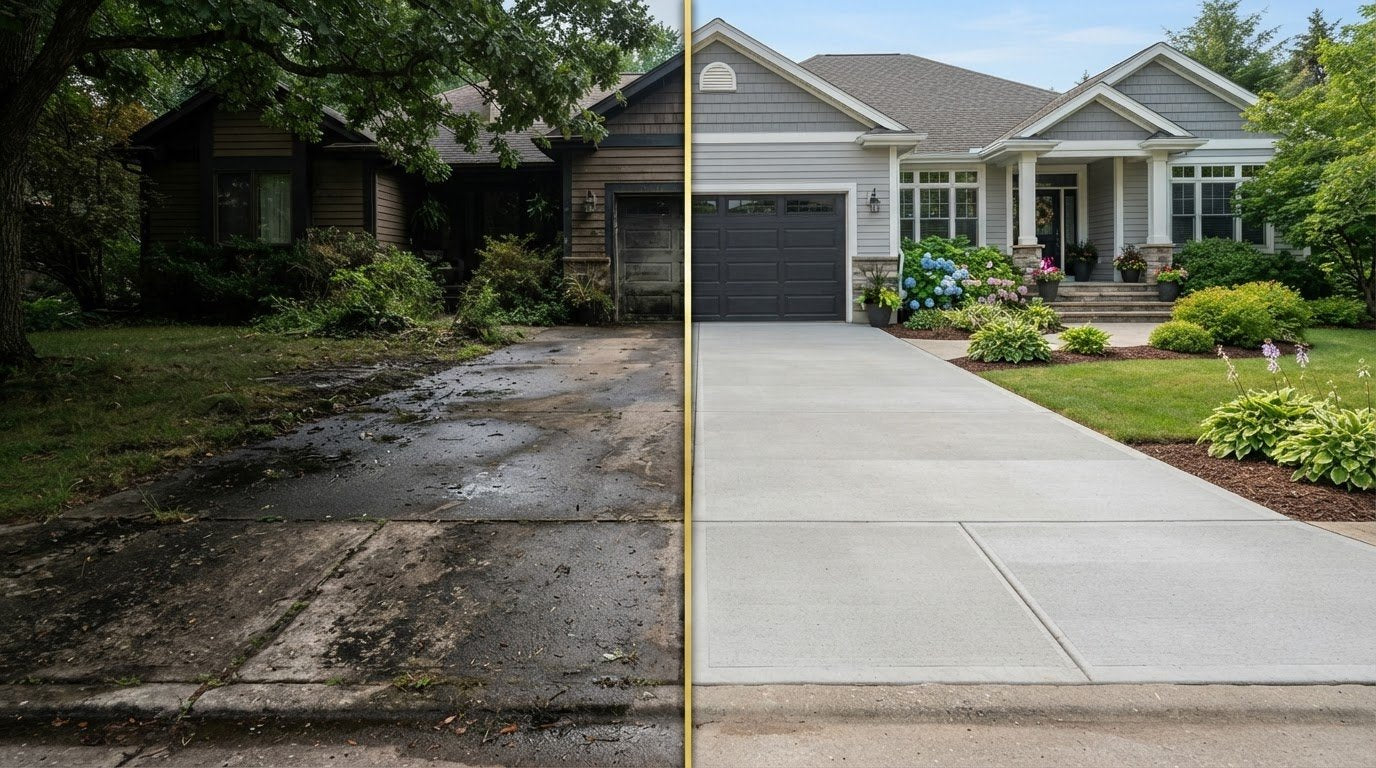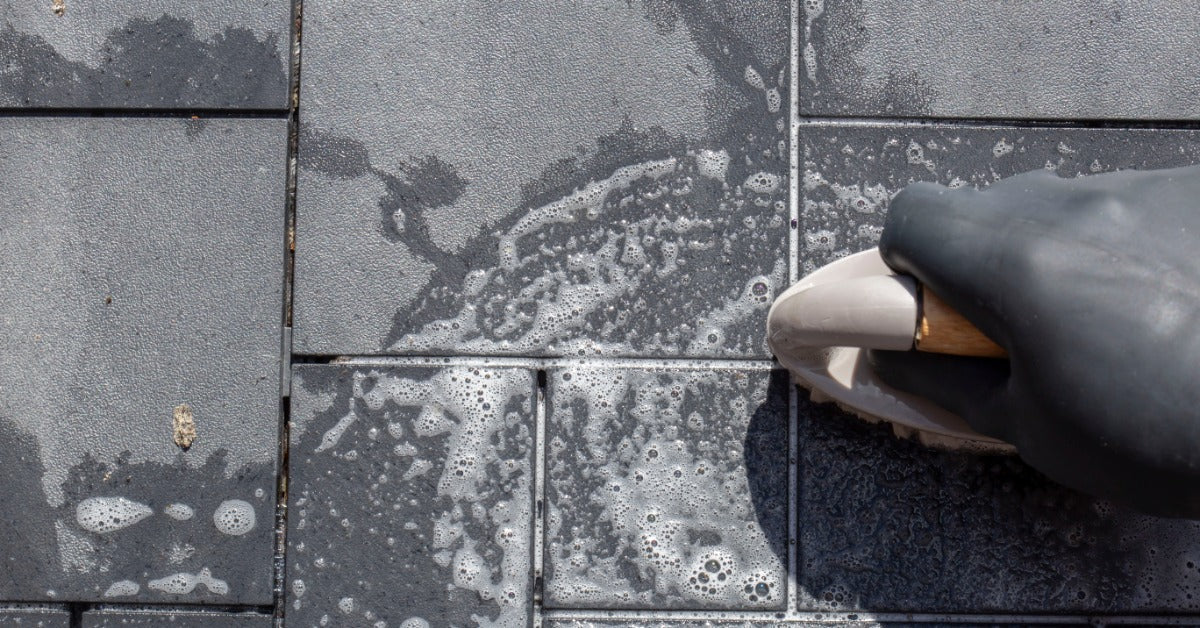
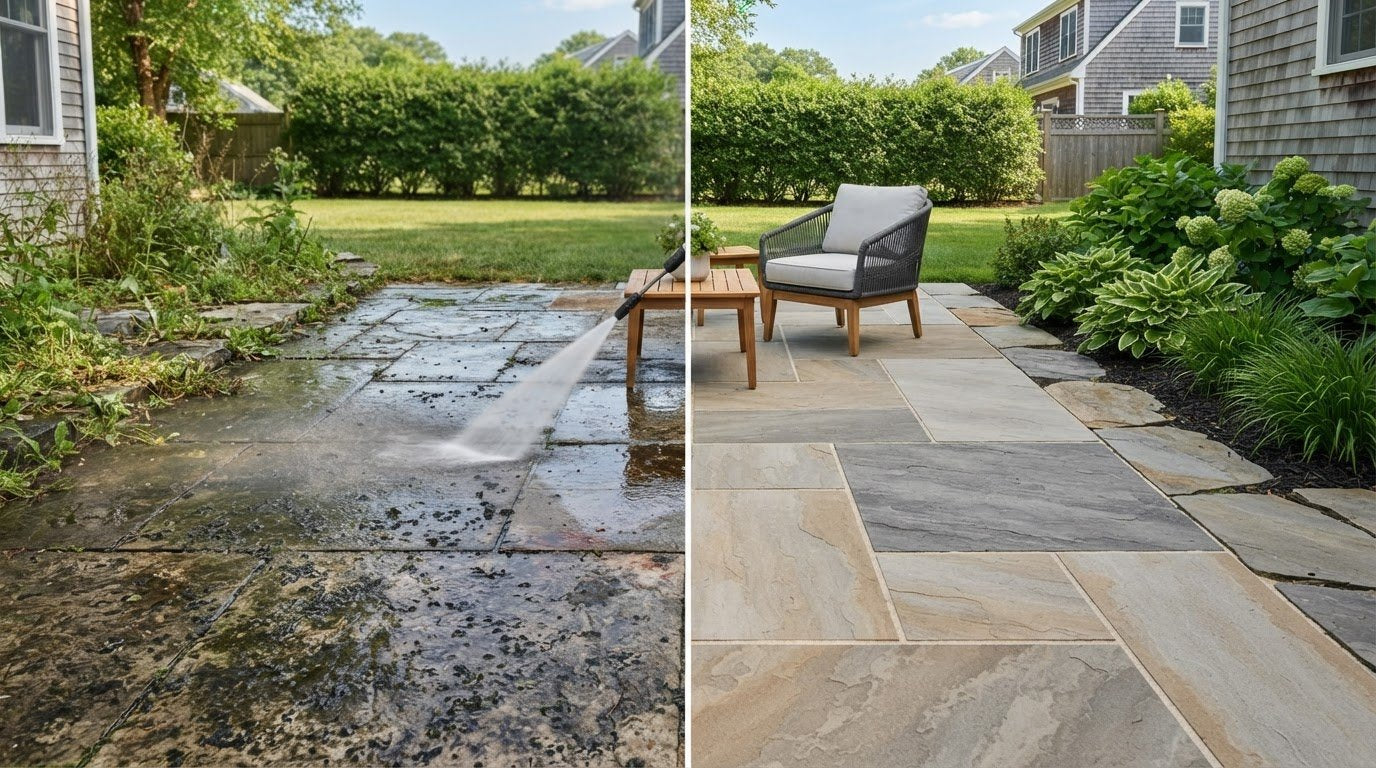
What if the pressure washer isn’t the problem, but the kind of stain left behind? You’ve blasted away loose dirt and surface grime, yet those dark patio spots are still staring back. The answer to “Why pressure washing won't remove all stains” often comes down to what’s attached to or growing on the paving. Pressure can rinse a surface, but it may not break down lichen, algae, mildew, oil, rust, or other stubborn marks.
It’s frustrating, and turning up the pressure can seem like the obvious next move. But more force isn’t always more effective. On stone or concrete, an overly aggressive approach may affect the surface without removing the stain.
This guide explains what pressure washing can and can’t remove, how to spot clues that point to biological growth or another kind of stain, and how to choose a sensible next step. You’ll also see why the paving material matters and when a targeted cleaner may be more suitable than another blast of water. The aim is to address the mark without taking unnecessary risks with your patio.
Key Takeaways
- Why pressure washing won't remove all stains often depends on whether a mark is attached growth or another type of stain, not simply how hard you wash.
- Compare the stain’s appearance and the patio material before choosing a cleaning approach. Similar-looking marks can have different causes.
- If a stain remains, pause before increasing pressure. Inspect the surface and consider the likely stain to avoid unnecessary damage.
- Choose a targeted treatment suited to the stain and paving, and follow its label directions, including any guidance on testing an inconspicuous area.
- For possible black lichen, bluestone, green algae, or mildew, explore the matching product category and confirm surface compatibility before use.
Why pressure washing won’t remove every patio stain
The patio looks cleaner after washing, but a few dark marks remain. That doesn’t necessarily mean the cleaning failed. Pressure washing can loosen and rinse away loose dirt and accessible grime, but it doesn’t automatically break down every substance attached to or growing on the paving.
Why pressure washing won't remove all stains comes down to a simple limit: water pressure can move residue, but it can’t identify what caused a mark or select a treatment for it. A stubborn spot may need a different approach, not a stronger blast.
What pressure washing can remove from paving
A pressure washer is useful for rinsing away surface soil, dust, and grime that hasn’t become firmly attached. How much it removes depends on the paving material and condition, the type of contamination, and the cleaning technique. Textured or worn paving can hold residue in places a rinse may not easily reach. Don’t assume that one pressure setting will be safe or effective for every patio.
Why a clean surface can still look stained
Once loose dirt is gone, marks that were hidden beneath it may become more noticeable. They could be organic growth, such as lichen, algae, or mildew, residue held in the surface texture, or a material-related stain. These possibilities don’t all respond to water pressure in the same way. Repeating the wash may clear more loose residue, but it won’t identify the cause by itself.
Look beyond color before deciding what to try. Notice whether the mark is raised or flat, concentrated in the joints, or spread across exposed areas. Check the patio again once it’s dry, since wet paving can change how colors and patches appear. Treat these details as clues, not a definite diagnosis.
If pressure risks affecting delicate paving or simply isn’t addressing the residue, Soft washing describes an alternative approach that uses lower pressure with cleaning solutions. That doesn’t mean any solution is suitable for every patio. The surface and likely stain still need to guide the next step. Identifying the problem first can help you avoid increasing pressure when a targeted treatment may be more appropriate.
How stain type and patio material affect cleaning results
A dark patch isn’t a diagnosis. Lichen, algae, mildew, soil, and non-organic marks can look similar from a distance, but they don’t necessarily respond to the same cleaning approach. The paving matters too: its texture and sensitivity can affect how water pressure and cleaning products interact with the surface. That’s why Why pressure washing won't remove all stains often has more to do with the stain and stone than the force of the rinse.
- Loose dirt: Often rinses away because it sits on the surface rather than growing on or bonding with it.
- Black lichen: May appear as dark, defined spots that remain after surface grime is washed off.
- Green algae: Can show as greenish patches, particularly in damp or shaded areas.
- Mildew: May appear as discolored growth, but its appearance can overlap with other staining.
- Non-organic marks: Rust, oil, or other material-related stains may need a different approach from biological growth.
Surface dirt sits on paving; organic growth can attach to it and remain after loose grime is rinsed away. These distinctions can help narrow down the possibilities, but they aren’t guarantees. A patch’s color or location alone can’t confirm its cause. Consider its texture, spread, and surroundings, then check what the paving is made of before selecting a treatment.
Clues that a mark may be organic growth
Black spots, green patches, or discoloration in persistently damp areas may suggest organic growth, but none is proof on its own. Black lichen, green algae, and mildew are different types of growth, not interchangeable names for any patio stain. Before choosing a cleaner, confirm the surface and read the product guidance to check which stains it is intended for and whether it is compatible with your paving.
Why bluestone and other natural stone need care
Natural stone varies in texture and sensitivity, so a method that suits one patio may be unsuitable for another. The Concrete Masonry & Hardscapes Association’s Cleaning concrete masonry guidance supports using the least aggressive method that can do the job. Bluestone Cleaner Stone King is formulated for bluestone and sensitive natural stone. Check its directions against your specific paving before use.
Match the treatment to both the likely stain and the material, and follow the label rather than assuming a product suits every surface. If you’re comparing options for organic patio marks, explore specialist patio stain treatments and confirm the product guidance before applying one.
Pressure washing versus targeted patio stain treatment
Pressure washing and stain treatment do different jobs. A rinse can lift loose dirt from paving, while a targeted cleaner is selected for a particular kind of residue or organic growth. If a mark remains after washing, repeating the same method or turning up the pressure won’t identify its cause. It may only increase the risk of affecting the surface.
| Method | Likely role | Limitations | Material check |
|---|---|---|---|
| Pressure washing | Rinses away loose surface dirt and accessible grime. | May leave attached growth or other stains behind; more pressure isn’t a reliable fix. | Follow equipment guidance and confirm the paving can tolerate the method. |
| Targeted cleaner | Addresses a type of stain or growth named in its product guidance. | Won’t necessarily suit every stain or surface. | Check label directions and compatibility with your specific paving. |
| Preventative treatment | May be used as a separate step to help prevent future black-spot staining. | Doesn’t diagnose or remove an existing mark by itself. | Use only as directed for the surface. |
When pressure washing may be enough
If the visible problem appears to be loose dirt sitting on the surface, a careful rinse may be all that’s needed. Follow the washer manufacturer’s instructions and any guidance for your paving instead of guessing at pressure or nozzle distance. Let the patio dry, then inspect any marks that remain. Persistent spots are a reason to reassess the stain, not automatically repeat the wash.
When a targeted treatment may be more appropriate
Choose a treatment based on the likely growth and the product’s stated use. Patio Black Spot Remover targets stubborn black lichen spots and organic staining. Grean Boss Algae Remover targets green algae, mildew, and surface grime. These products aren’t interchangeable solutions for every patio mark, so check each product’s directions and surface compatibility first. Patio Black Spot Preventer is a separate preventative treatment, not a way to identify an existing stain.
Why pressure washing won't remove all stains is easier to understand once you separate rinsing from treating: one moves accessible grime, while the other needs to be matched to the suspected stain and material. For another general cleaning-method reference, compare its guidance with your equipment and paving instructions. If you’re considering a product, explore patio stain treatment options from Patio Black Spot Removal INC and read the label before use.
What to do when pressure washing leaves stains behind
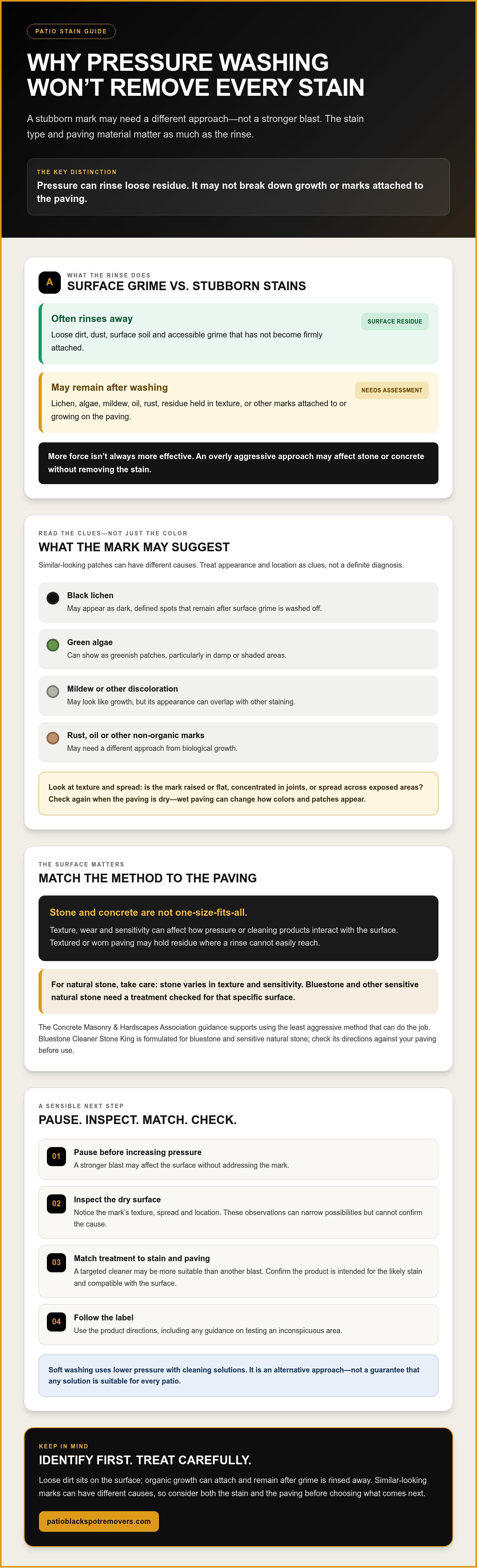
Stains remain after washing? Pause before making another pass. Increasing pressure or repeatedly blasting the same spot may affect the paving without revealing what caused the mark. A measured check helps you choose a next step based on the stain and the surface, rather than guesswork.
A simple check before choosing another cleaning method
Start with the patio itself. Note where the marks appear, whether they’re raised or flat, and whether they resemble possible lichen, algae, or mildew. Treat these as clues, not a diagnosis: color alone can’t confirm the cause or tell you which cleaner to use. If possible, identify the paving from installation records or ask the original supplier for guidance.
Then use this quick sequence:
- Stop: Don’t repeat an unsuccessful wash automatically.
- Inspect: Check the paving material and the location and texture of the marks.
- Identify: Consider likely organic growth or another stain, but don’t rely on appearance alone.
- Choose: Select a method or cleaner only after checking that it’s suitable for the surface.
How to reduce the chance of surface damage
Follow the pressure washer manufacturer’s instructions and any care guidance from the paving supplier. If you’re considering a cleaner, read the full label for surface compatibility and application directions. Test an inconspicuous area first when the label recommends it or when a small trial is appropriate for the material. Don’t assume a product suitable for one kind of stone is suitable for another.
Before treating a stubborn patio mark, identify the likely stain, confirm surface compatibility, and follow the cleaner’s label directions. That’s a more considered starting point than trying more pressure. If the stone changes appearance during cleaning, stop. If you can’t identify the material or remain unsure about the mark, seek advice from a qualified stone-care professional before applying another method.
Keep notes on what you observe and what you’ve already tried. This makes it easier to explain the issue if you need material-specific guidance and helps prevent accidental repeat applications. For products to consider after checking the stain and surface, browse patio stain treatment options and review the directions before use.
Choose the right next step for stubborn patio stains
Before choosing a cleaner, match what you suspect is on the patio with the paving material. A stubborn mark isn’t automatically lichen or algae, and a product intended for organic staining may not be the right choice for a non-organic mark. Check the surface, review product directions, and don’t treat appearance alone as a definite diagnosis.
Match a treatment to the stain and surface
Use the product’s stated purpose as your guide, then confirm the label’s instructions and surface suitability:
- Black lichen spots or organic staining: Patio Black Spot Remover is intended for these marks. Check its directions against your paving before use.
- Green algae, mildew, or surface grime: Grean Boss Algae Remover is intended for these types of growth and residue. Follow the current label to confirm that your specific surface is suitable.
- Bluestone or sensitive natural stone: Bluestone Cleaner Stone King is formulated for bluestone and sensitive natural stone. Read its product directions to check suitability and application for your paving.
These categories can help narrow your options, but they don’t replace checking the label. If the stain’s cause or the stone type is uncertain, pause and seek material-specific advice rather than applying a cleaner by guesswork.
Preventative care after cleaning
Removing an existing stain and helping prevent future staining are separate steps. Patio Black Spot Preventer is offered as a preventative treatment; it isn’t a substitute for identifying or treating a mark that’s already there. Check its current directions and surface suitability before use, and follow the label for application.
Why pressure washing won't remove all stains is a reminder to diagnose first: pressure can rinse accessible grime, but stubborn marks call for an approach matched to the suspected stain and patio material. Choose a product only when its stated use fits the issue, and follow its current instructions rather than assuming every stone can be treated the same way.
For a closer look at options for outdoor stone care, explore outdoor stone cleaning products. Review each product’s directions before deciding what’s suitable for your patio.
Choose a Patio Treatment That Fits the Stain
The answer to Why pressure washing won't remove all stains is often that rinsing loose grime and treating a stubborn mark are different jobs. Before trying again, consider what may be causing the stain and identify your patio material. Don’t rely on color alone, and avoid increasing pressure when the cause is unclear.
For possible black lichen and organic staining, Patio Black Spot Remover is one option to review. Grean Boss Algae Remover is intended for green algae, mildew, and surface grime, while Bluestone Cleaner Stone King is formulated for bluestone and sensitive natural stone. Patio Black Spot Preventer serves a separate preventative purpose. For every product, check the current label for surface suitability and application directions before use.
With the right diagnosis, you can choose a considered next step instead of risking the paving with repeated washing. Explore outdoor stone cleaning products and compare their stated uses with your stain and patio material. Take it one careful step at a time; a stubborn mark is easier to tackle when you know what you’re treating.
Frequently Asked Questions
Why won’t pressure washing remove black spots from my patio?
Black spots may be lichen or another kind of organic staining that water pressure alone doesn’t treat. A washer can rinse away loose dirt, but attached growth or staining can remain in the paving’s texture. That’s one reason Why pressure washing won't remove all stains depends on the stain as well as the cleaning method. Consider the material and the mark’s appearance, but don’t diagnose it by color alone.
Can pressure washing damage patio slabs?
Yes, pressure washing can affect patio slabs if the method is too aggressive for the material or its condition. The impact can depend on the paving, equipment, and technique, so there isn’t one pressure setting that’s right for every patio. Follow the washer manufacturer’s directions and any care guidance for your paving. If the surface changes appearance during cleaning, stop and seek material-specific advice before continuing.
What are the black spots left after pressure washing?
They could be black lichen, another type of organic growth, or a different stain. A dark color alone can’t confirm the cause, and similar-looking marks may need different treatments. Look at the spot’s texture and location, and identify the paving material if possible. If black lichen seems likely, compare the mark with the stated use of a suitable treatment and check its label for surface compatibility.
Will pressure washing remove algae and mildew from paving?
Pressure washing may rinse away loose surface grime, but it might not treat algae or mildew that remains attached to the paving. The result depends on the growth, surface, and cleaning method. Grean Boss Algae Remover is intended for green algae, mildew, and surface grime. Before using it, read the current label to confirm suitability for your paving and follow its application directions.
Should I use more pressure if stains remain on my patio?
No, don’t assume more pressure is the answer. A remaining mark may be attached growth or another stain that needs a different approach, while aggressive washing may affect the paving. Stop and reassess instead. Check the surface material, observe the mark, and review equipment and paving guidance before choosing a next step. If you’re unsure what the stain is or how the surface will respond, seek qualified advice.
How do I choose a patio cleaner for natural stone?
Start by identifying the stone and matching the cleaner’s stated use to both the surface and likely stain. Natural stone types can differ, so don’t assume a product is suitable for every patio. Bluestone Cleaner Stone King is formulated for bluestone and sensitive natural stone. Check its current label for compatibility and directions, and test an inconspicuous area when appropriate or advised by the product guidance.
Does pressure washing prevent patio stains from returning?
Pressure washing can remove some loose grime, but it shouldn’t be treated as a guarantee against stains returning. Prevention is a separate step from removing an existing mark. Patio Black Spot Preventer is offered for preventative care against black-spot staining; check its current directions and surface suitability before use. Keep the likely stain and paving material in mind, and follow the label rather than relying on pressure alone.