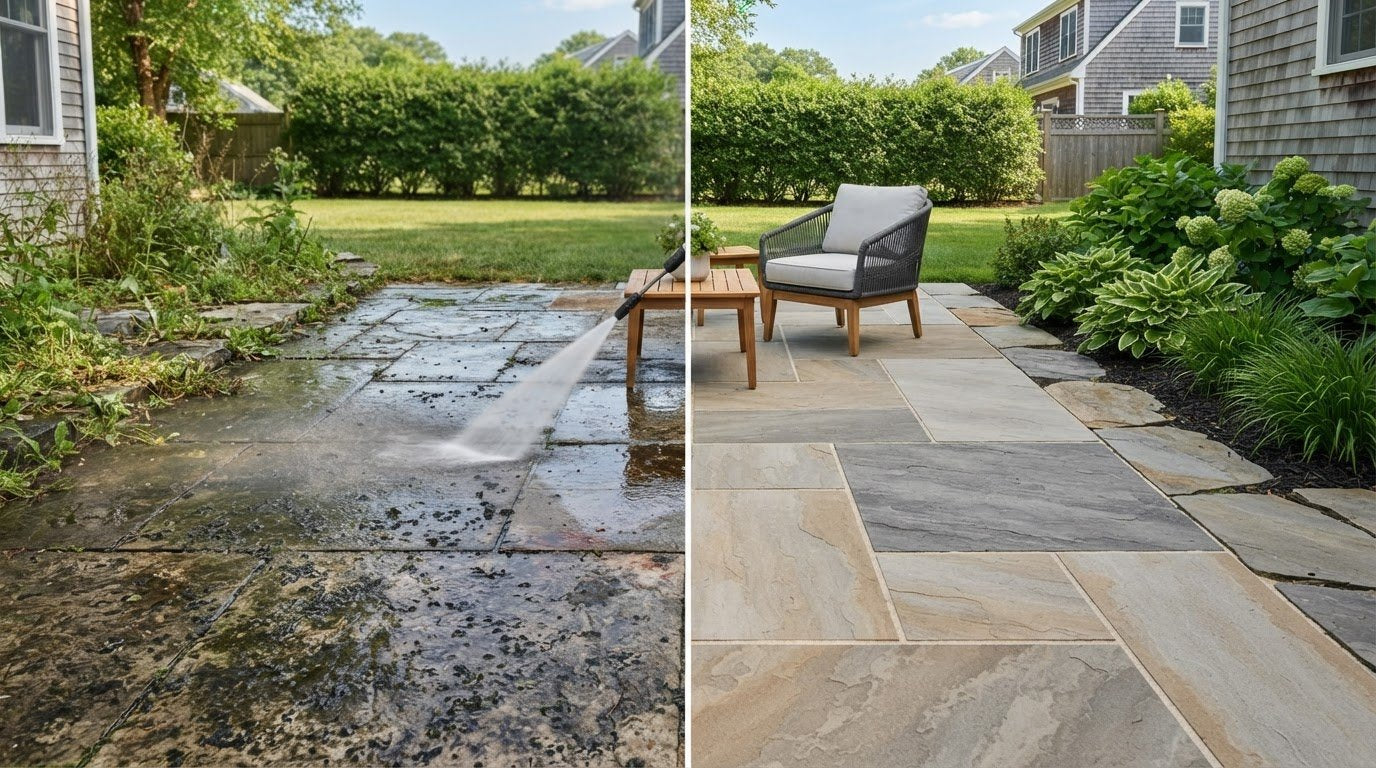
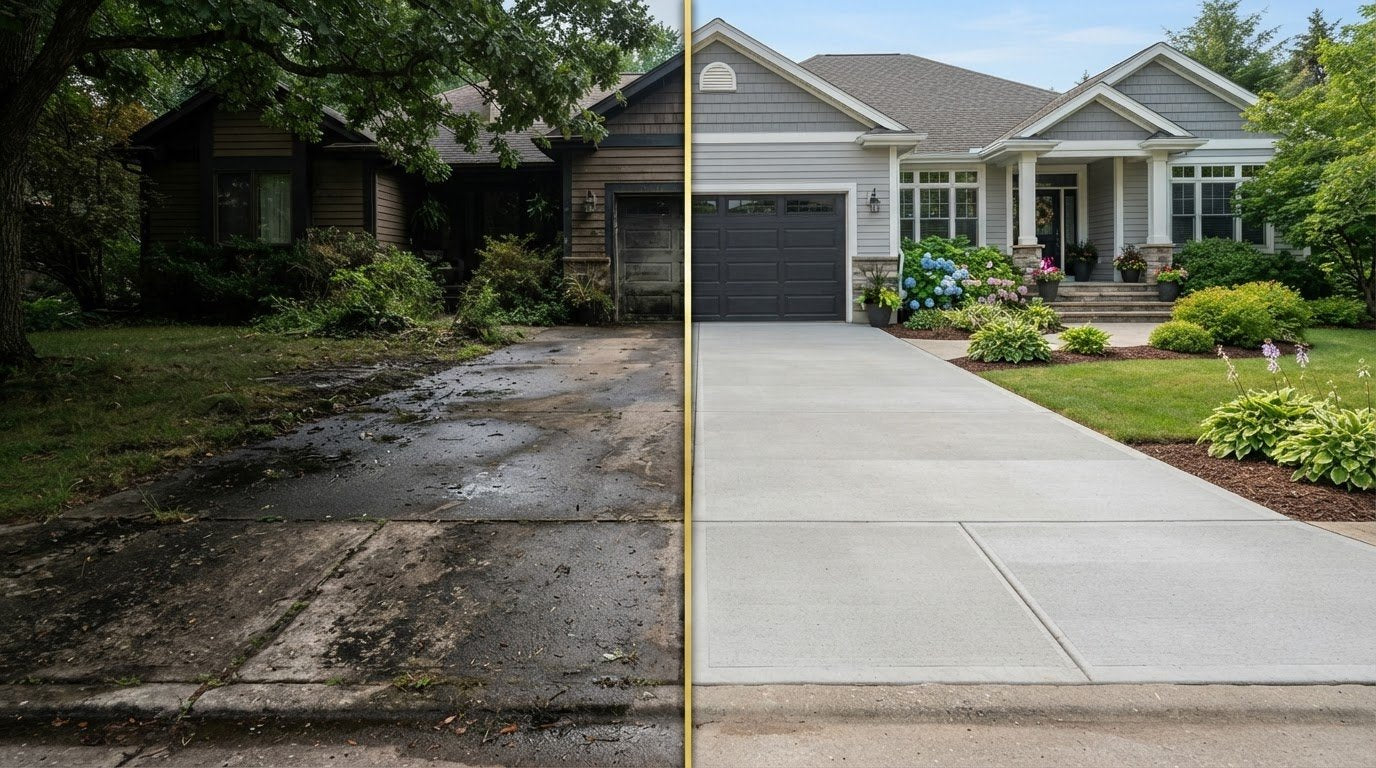
What if those stubborn black dots aren’t ordinary dirt at all? Black marks on a driveway or sidewalk can be algae or fungus, but grime and other stains may look similar. Choosing among Driveway Cleaning Products before identifying the mark and paving material may leave the spots behind or risk changing the surface’s appearance.
It’s frustrating when washing or scrubbing makes little difference. Start by noting where the marks appear and what they look and feel like. Then identify whether your driveway is concrete, asphalt, bluestone, or another paving material. A cleaner suited to one stain or surface may not be appropriate for another.
This guide explains how to assess possible causes, match a cleaning approach to the stain and material, and decide when a specialized outdoor stone cleaner may be appropriate. You’ll also learn why black-spot treatment, algae removal, and prevention aren’t interchangeable, so you can make a more informed choice before tackling the driveway.
Key Takeaways
- Shade, moisture, debris, and limited airflow may encourage biological growth, but they don’t confirm what caused a particular stain.
- Choose Driveway Cleaning Products by matching the likely stain and paving material to the cleaner category, then check the label.
- Black-spot removers, algae removers, bluestone cleaners, and prevention treatments address different needs, so don’t assume they’re interchangeable.
- Before applying a cleaner, identify the surface, read the directions, prepare the area, and test a small, inconspicuous spot.
- Follow the product label for dilution, timing, protective equipment, and rinsing, then reassess the surface before taking further action.
What Are the Black Dots on a Sidewalk or Driveway?
Those dark dots can be maddening. You sweep, rinse, or scrub, yet they remain visible against the paving. Black spots have several possible causes, including biological growth, embedded dirt, vehicle residue, and other organic staining. The marks may look alike, but the right way to treat them depends on the cause and the driveway material.
Quick answer: Biological growth, such as lichen, algae, or mildew, is one possible source of black dots. Ordinary surface dirt and other stains can also leave dark marks. Appearance alone can’t reliably confirm the cause.
How lichen, algae, and mildew can appear on paving
Algae or mildew may show up as dark, discolored patches on paving, especially where surfaces stay damp. Lichen can appear as small, firmly attached spots or crusty growth. These are visual clues, not a diagnosis: color and texture can vary with the paving material, age of the mark, and recent weather. Wikipedia’s overview of lichen biology explains that lichen involves a fungus living with an alga or another partner, a distinctive structure that can help it attach to surfaces.
If spots persist after routine sweeping or washing, they may need more than ordinary upkeep. Don’t choose a treatment based only on color. Note whether the mark appears raised, crusty, slick, or embedded, then check which cleaners are suitable for the paving.
Could black dots be dirt, tire marks, or another stain?
Yes. Soil, general grime, and vehicle residue can all leave dark marks. A streak near a parking area might suggest tire or vehicle residue; dots beneath a tree could be linked to fallen debris. Those locations are clues, not proof. Even a familiar-looking pattern can have more than one explanation, so avoid treating a guess as a confirmed cause.
Dark marks on paving can come from biological growth, everyday grime, or other stains, and similar appearances don’t guarantee the same cause. That distinction matters when selecting Driveway Cleaning Products. A targeted option may suit one type of stain but not another, and surface compatibility matters too. Use the next sections to assess the likely stain and paving material before choosing a cleaner.
What Makes Black Spots Form on Sidewalks and Driveways?
Where dark spots appear can offer clues about what keeps the area dirty or damp, but it can’t identify a stain by itself. Shade, moisture, fallen debris, and limited airflow can create conditions that favor some surface growth. For example, a shaded corner beneath an overhanging tree may stay wet longer than an open, sunny stretch of driveway. That’s a possible contributing condition, not proof that a particular spot is algae, lichen, or mildew.
Why shaded and damp areas may develop visible growth
Persistent dampness and shade can create conditions favorable to some surface growth, but they don’t confirm what caused a specific mark. Check whether water collects near a downspout, drainage channel, or low point, and whether plants block sunlight and airflow. Leaves and other organic debris can hold moisture against paving or cover stains. Clearing them helps you inspect the surface more closely. Keep the area swept, but don’t assume better drainage alone will remove existing marks.
How paving material affects staining and cleaning
Concrete, individual pavers, and natural stone don’t all have the same texture or porosity. A rough or porous surface may hold moisture and debris in small openings, while some residue may be easier to see or wipe away on a smoother surface. Neither texture guarantees a particular stain or cleaning result. Joint lines, worn areas, and differences in stone can also affect how a cleaner contacts the paving.
Take extra care with porous natural stone, including bluestone. Before selecting Driveway Cleaning Products, check that the label identifies your material as suitable and test an inconspicuous area as directed. A product appropriate for one paving type may not suit another. Angi’s overview of how to use a driveway cleaner can help explain pressure washing as a separate cleaning method, but equipment choice doesn’t establish what caused a dark spot.
Use your observations to guide the next step: note whether spots cluster in shaded or wet places, follow a vehicle path, or appear on a particular surface. Treat these details as clues, not a diagnosis. For a product option, review outdoor stone-care products and compare the intended use with your paving and suspected staining before choosing.
How to Choose Driveway Cleaning Products for the Stain and Surface
Start with two checks: what kind of mark are you treating, and what material is the driveway made from? A cleaner chosen for the wrong problem may not address the stain. A product that isn’t suitable for the paving could affect its appearance. Use the table as a starting point, then let the product label guide your choice.
| Likely stain | Surface to identify | Cleaner category to consider | Label check |
|---|---|---|---|
| Persistent black spots | Concrete, pavers, or natural stone | Targeted black-spot treatment | Confirm the surface is approved and follow all directions and precautions. |
| Visible algae-like growth | Outdoor paving, including joints and textured areas | Algae-focused cleaner | Check the listed materials and instructions for applying and rinsing. |
| General surface grime | Any driveway material | Cleaner labeled for that surface and type of soil | Verify suitability before use, especially on porous or colored paving. |
| Staining on bluestone | Bluestone | Bluestone-specific cleaner, if compatible | Make sure the label names the material and explains any precautions. |
Match the cleaner category to the suspected problem
A black-spot remover addresses a different cleaning need from an algae remover. General cleaners may suit everyday surface grime, but don’t assume they’ll handle stubborn staining. These categories aren’t interchangeable by default. For example, a targeted black-spot product may be worth considering for persistent dark marks, while an algae-focused cleaner may suit visible growth. Appearance alone can’t confirm which applies, so use your assessment as a guide, not a diagnosis.
A bluestone-specific cleaner is an option only if your paving is bluestone and the product label confirms it’s suitable. The cleaner’s name or broad claims aren’t a substitute for checking approved surfaces and directions.
Check paving compatibility before buying
Identify the surface first. Concrete, manufactured pavers, and natural stone can differ in texture, porosity, and finish. Then read the label for approved materials, precautions, application instructions, and rinsing guidance. If the surface isn’t listed or you’re unsure what the paving is, ask the product seller before applying anything.
Don’t assume the strongest-sounding cleaner is the best choice. A product that sounds more aggressive isn’t automatically suitable for your stain or surface. Look for the option whose intended use and label directions match both.
How to Test and Use a Driveway Cleaner Carefully
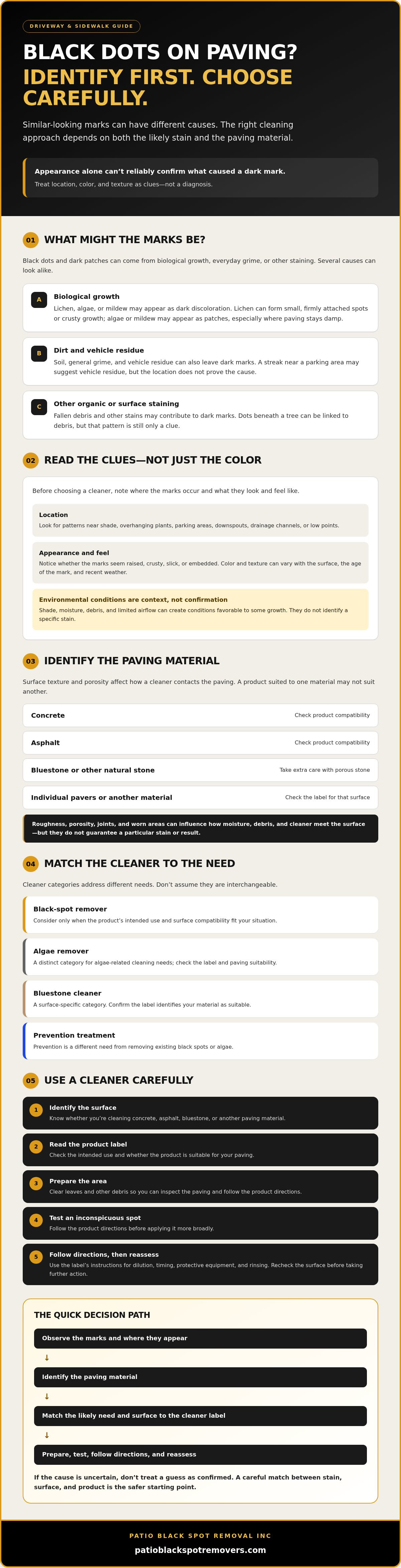
A careful process helps limit the risk of discoloration or surface damage. Before using any of your Driveway Cleaning Products, work through these steps in order: identify the paving, read the product label, prepare the area, test a small spot, apply as directed, then reassess. Don’t guess at dilution, wait time, protective equipment, or rinsing. Follow the specific label for each one.
Prepare the paving and perform a small-area test
First, check what the driveway is made of and confirm that the product is labeled for that surface. Clear loose leaves, soil, and other debris so you can see the paving and reach the area you plan to treat. Review the label for weather and site conditions, precautions, protective equipment, and instructions for keeping the product away from nearby plants.
Choose a small, inconspicuous test area and apply the cleaner exactly as directed. Watch for an unexpected change in color or finish. If you notice one, stop rather than treating a larger section, and seek product-specific guidance from the seller. A test spot is a practical safeguard, not a guarantee that every area will respond identically.
Apply, reassess, and plan ongoing care
Once the test appears suitable, follow the label precisely across the intended area. Don’t mix cleaning products or combine a cleaner with another treatment unless its instructions explicitly say to do so. Use only the stated dilution, timing, protective equipment, and rinsing method. Keep children and pets away as directed, and protect surrounding plants and surfaces according to the label.
After completing the labeled process, reassess the treated paving. Some marks may remain, and a stain’s appearance can change gradually or require further product-specific guidance. Don’t repeat an application or increase a concentration unless the label allows it. If the result is unclear, pause and contact the product seller before trying a different cleaner.
For ongoing care, remove leaves and loose debris regularly and pay attention to places where water tends to collect. These habits make the surface easier to inspect, though they can’t guarantee that stains or growth won’t return. If you’re comparing products for your paving, explore outdoor stone cleaning products and check each option’s current label for compatibility and directions.
Which Outdoor Cleaning Products Can Help with Sidewalk and Driveway Spots?
The right cleaner depends on three things: the suspected staining, the paving material, and the product’s current label directions. A black-spot treatment, an algae remover, a bluestone cleaner, and a prevention product each serve a different purpose. Treat the product name as a guide to its intended category, then confirm that the label and your surface match before buying or applying it.
When a targeted outdoor stone cleaner may be worth considering
If dark spots persist after routine cleaning, a targeted black-spot product may be worth exploring. Persistent marks don’t confirm a particular cause, so don’t treat a guess as a diagnosis. Patio Black Spot Remover is the company’s treatment for stubborn black spots and organic staining on natural stone and paving slabs. Before use, review the current label for intended surfaces, precautions, and application directions. Don’t assume a product is suitable for every type of paving simply because it’s made for outdoor stone.
When bluestone, algae, or prevention products may fit
Different needs call for different categories. Consider Bluestone Cleaner Stone King only if your paving is bluestone and its current product directions confirm compatibility. Grean Boss Algae Remover is the company’s algae-focused offering, while Patio Black Spot Preventer is a separate category intended for prevention rather than the same role as a cleaner. Check the label for directions and any stated duration rather than assuming how long prevention lasts.
Before choosing among these Driveway Cleaning Products, check the material, the kind of staining you suspect, and the label’s approved uses. If you can’t identify the paving or the directions don’t clearly address it, pause before purchase and seek product-specific stone-care guidance. A careful match is a better starting point than choosing the strongest-sounding option.
Choose a Cleaner That Fits Your Driveway
Dark spots can have different causes, so don’t let color alone dictate your cleaning plan. First consider the likely stain and identify your paving, then choose a product category that fits both. Check the current label for surface compatibility and directions, and test an inconspicuous area before treating more of the driveway.
The right Driveway Cleaning Products depend on the job. Specialized outdoor treatments are available for black spots, bluestone, algae, and prevention, but these categories aren’t interchangeable. Confirm the intended use and follow product-specific guidance rather than assuming one cleaner suits every surface or stain.
If you’re ready to compare options, explore outdoor stone cleaning products and care guidance. Browse the online shop and use the available stone-care advice if you’re unsure which treatment matches your paving. Compare the product directions with your surface and suspected stain before choosing.
Frequently Asked Questions
What are the black dots on a concrete sidewalk?
Black dots on concrete can come from lichen, algae, mildew, embedded dirt, vehicle residue, or other organic staining. Shade and dampness may make some biological growth more likely, but they don’t confirm what caused an individual mark. Look at the spots’ texture and location for clues, then check the concrete and any cleaner’s label before treating them. Color alone isn’t a reliable diagnosis.
Are black spots on a sidewalk usually lichen?
Not necessarily. Lichen is one possible cause, particularly when small, persistent marks seem firmly attached, but algae, mildew, dirt, and other stains can look similar. The paving’s texture, the spots’ age, and weather can all affect their appearance. Don’t choose a treatment based only on a guess. Consider the surface and pattern, and follow product directions if you decide to test a suitable cleaner.
Can driveway cleaning products remove black dots from paving?
Some Driveway Cleaning Products are made for specific outdoor stains, but results depend on the mark, paving material, and product directions. A targeted black-spot treatment may be an option for persistent dark staining, while an algae-focused cleaner serves a different need. Check that the label lists your surface, follow its instructions, and test an inconspicuous area. Don’t assume any cleaner is suitable for every spot or paving type.
How do I choose a cleaner for black spots on a sidewalk?
Identify the sidewalk material first, then consider whether the marks may be biological growth, grime, or another stain. Choose a cleaner category intended for that problem and verify that the label lists your surface, precautions, and application directions. Test a small, hidden area before treating more paving. If you can’t identify the material or the label doesn’t clearly confirm compatibility, ask the product seller for guidance before use.
Can pressure washing remove black spots from a driveway?
Pressure washing may remove loose dirt and surface grime, but it may not resolve persistent biological staining. The result depends on the stain and paving, and excessive pressure or an unsuitable technique can damage some surfaces or disturb joints. Identify the driveway material and use equipment cautiously. If dark spots remain, consider whether a compatible, targeted cleaner is more appropriate, following its label rather than relying on pressure alone.
Is it safe to use a stone cleaner on concrete or pavers?
Only use a stone cleaner on concrete or pavers if its current label says those materials are suitable. “Stone cleaner” doesn’t mean the product is compatible with every paving surface, finish, or joint. Read the precautions and application directions, then test an inconspicuous spot and watch for unexpected changes. If the surface isn’t listed or you’re unsure what it is, contact the product seller before applying the cleaner.
How can I help prevent black spots from returning on a sidewalk?
Regularly clear leaves and debris, and pay attention to areas where water collects or paving stays shaded and damp. These habits help keep the surface easier to inspect, but they can’t guarantee spots won’t return. A prevention treatment may be worth considering for compatible paving. Check the product label for approved surfaces, directions, and any stated duration, and don’t assume a cleaner and a preventer serve the same purpose.