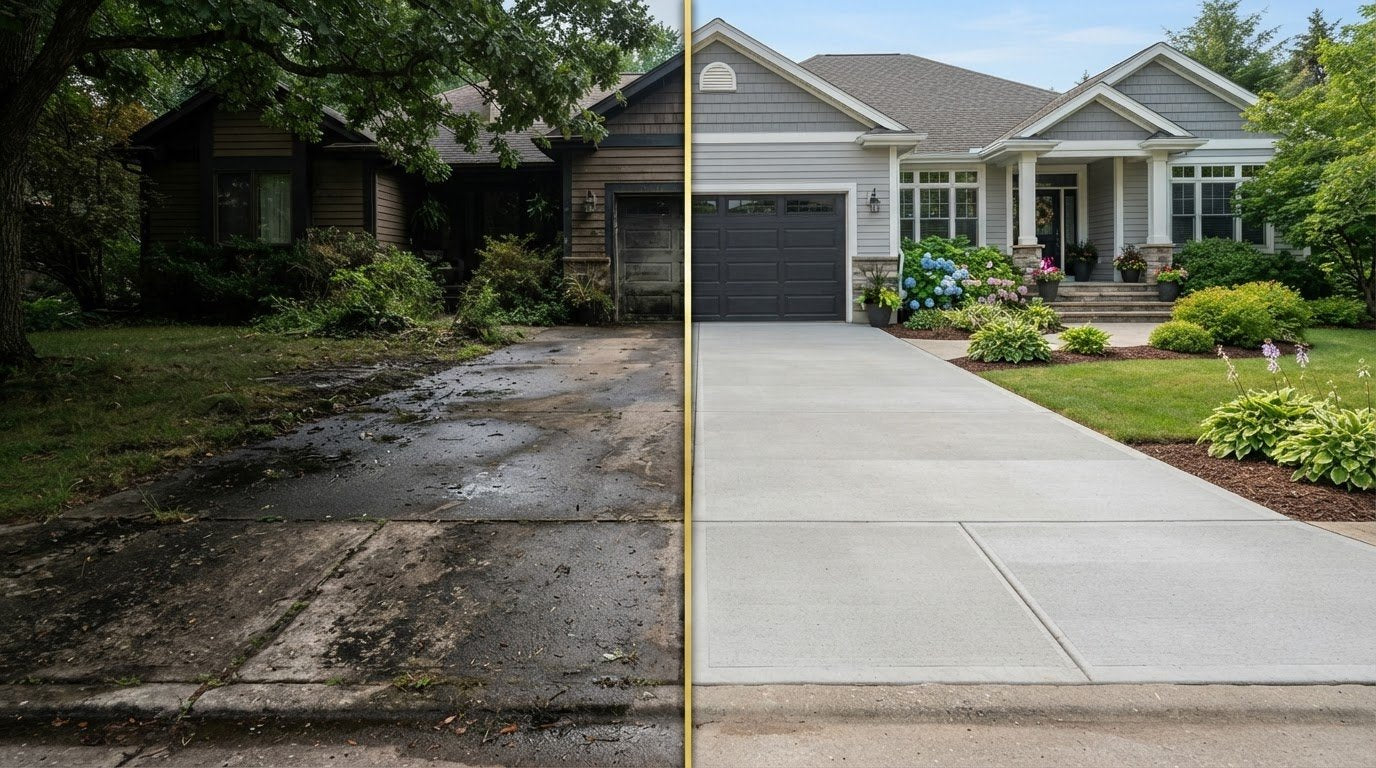
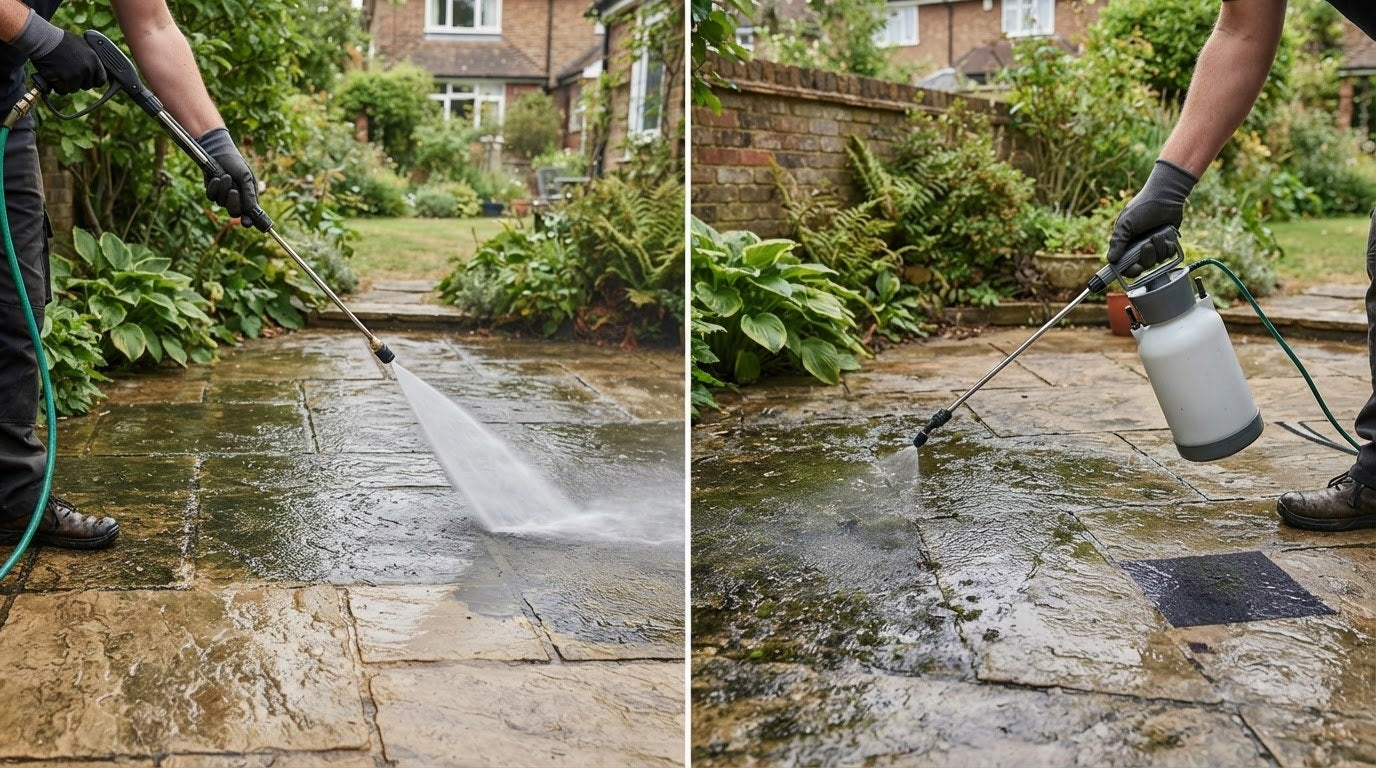
The strongest clean isn’t always the safest one. If black or green growth remains after rinsing, it can be tempting to reach for a pressure washer and turn up the power. But the pressure washing vs chemical patio cleaner decision depends on the likely cause of the stain and the material your patio is made from.
It’s reasonable to want a thorough clean while also worrying about damage to stone, joints, or the surface finish. Pressure can lift surface dirt, but excessive force may harm vulnerable materials. A patio treatment works differently, targeting particular cleaning needs, but it must be suitable for the surface and used with the right precautions.
This guide compares both methods by stain type, patio material, and practical risks. You’ll learn how to choose a sensible starting point and avoid unnecessary damage, including when persistent black lichen or algae spots, or green algae staining and mold, may call for a targeted DIY treatment rather than more pressure.
Key Takeaways
- Pressure washing can remove suitable surface soil, but it isn’t a guaranteed fix for every persistent stain.
- Compare pressure washing vs chemical patio cleaner by identifying the stain and checking the patio’s material, texture, joints, and finish.
- Use a careful sequence: identify the surface, assess the stain, check product directions, test discreetly, then clean.
- Follow the cleaner’s label and current Safety Data Sheet for use and precautions. Don’t assume a product suits a surface unless its documentation confirms it.
- For persistent black or green staining, consider a targeted treatment whose documented purpose matches the cleaning need and surface.
Pressure Washing vs. Chemical Patio Cleaner: What Each Method Does
When stains remain after a rinse, increasing the pressure can raise new concerns: could it disturb joints, roughen a finish, or affect nearby planting? Understanding how each method works is the first step in the pressure washing vs chemical patio cleaner decision. Neither approach is automatically right for every mark or patio.
Pressure washing is mechanical cleaning. It uses pressurized water and a directed spray to loosen or remove material from a surface. A chemical patio cleaner is a formulated treatment intended for particular cleaning targets. Ingredients, compatible surfaces, and directions vary by product, so check the current label and Safety Data Sheet rather than assuming all cleaners work alike.
What pressure washing can, and cannot, do
The cleaning action depends on water pressure, the distance and angle of the spray, and how quickly it moves across the patio. Used appropriately, pressure washing can lift surface soil and some visible growth. But removing material from the surface isn’t always the same as treating staining or growth held within textured, porous material. Results vary, and pressure washing doesn’t guarantee that every persistent mark will disappear.
That doesn’t mean a pressure washer will always damage stone. The risk depends on the material, its condition, the equipment settings, and how it’s used. Delicate joints or a vulnerable finish call for particular care. Don’t treat higher pressure as the automatic answer when a stain remains.
What a chemical patio cleaner is designed to do
A patio cleaner applies a formulation to a cleaning target rather than relying on water force alone. Products vary in the stains and surfaces they’re intended for. Don’t infer ingredients, compatibility, or application steps from a product’s name. Follow its label and current Safety Data Sheet for directions and precautions, and test a discreet area if the instructions advise it.
In practical terms, pressure washing moves surface material with water force; chemical treatment uses a formulated product aimed at a particular cleaning target. Some cleaning approaches combine a solution with lower-pressure rinsing instead of forceful spray. Soft washing is one example of a low-pressure method involving cleaning solutions. It’s still important to check whether a specific product suits your patio.
So the choice isn’t simply “water or chemicals.” The likely stain, patio substrate, equipment settings, and cleaner directions all affect the decision. A method that shifts loose surface grime may not address a persistent spot, while a targeted treatment still needs to match the surface and be used as directed.
How Stain Type and Patio Material Change the Best Cleaning Method
A mark’s color can offer a clue, but it can’t confirm what caused it. Before deciding between pressure washing vs chemical patio cleaner, assess both the stain and the surface beneath it. Textured stone with open joints presents different cleaning considerations from a smooth, sound concrete slab, even when the visible marks look similar.
Black spots, lichen, and green algae are not the same cleaning problem
Black spots may look lichen-like, but appearance alone can’t identify the organism or its cause. Persistent black spotting and green surface growth may call for different targeted treatments, so don’t assume a general wash will address both. If you need to identify or remove suspected black lichen, seek specialist guidance rather than relying on color as a diagnosis.
Bluestone, natural stone, and concrete need surface-aware care
Porosity and texture can affect how a surface holds staining and responds to cleaning. Check the condition of the stone, its finish, and the joints as well. Don’t assume a product described for one material is suitable for another. For example, Bluestone Cleaner Stone King is specifically described for bluestone patios and walkways, not as a universal cleaner for every stone or concrete surface.
Before using a chemical patio cleaner:
- Confirm the exact patio material, including whether it’s natural stone, bluestone, or concrete.
- Read the current product label and Safety Data Sheet for surface compatibility and precautions.
- If the product directions allow it, test a small, inconspicuous area and check for unwanted surface changes before treating more.
Consider where rinse water may go, too. The EPA’s overview of the environmental impact of chemical runoff offers useful context for chemical use on land. Follow the product’s runoff guidance and take care around nearby planting and drains.
Match the cleaning method to both the suspected stain and the patio substrate, then confirm that the product or equipment is appropriate for that surface. If a targeted patio treatment may suit your situation, explore DIY patio cleaning products and check each product’s current label before use.
Pressure Washing vs. Chemical Patio Cleaner: Compare the Trade-Offs
To make the pressure washing vs chemical patio cleaner decision, compare the likely cleaning target with your patio’s condition and the effort each method requires. Pressure washing may suit loose surface dirt across a broad area. A targeted cleaner may be worth considering for persistent biological-looking marks, but suitability and directions depend on the specific formulation and substrate. Neither method is the universal winner.
| Factor | Pressure washing | Chemical patio cleaner |
|---|---|---|
| Target problem | May loosen surface soil and rinse away some visible debris or growth. | Formulated for particular cleaning targets; check the label to confirm what it addresses. |
| Surface considerations | Material, condition, joints, pressure, nozzle, and spray distance affect the risk and result. | Compatibility varies. Confirm the exact patio material on the current product label. |
| Effort | Requires suitable equipment and careful control across the area. | Requires following product directions and precautions, which vary by formulation. |
| Control | Spray angle, distance, and movement influence where and how force is applied. | Application and any required rinsing depend on the label instructions. |
| Key caution | Excessive or poorly controlled force may harm delicate surfaces or disturb joints. | Don’t assume a cleaner suits every stain, surface, or nearby setting. Follow label and Safety Data Sheet guidance. |
When pressure washing may be the more practical choice
For loose dirt across a broad, suitable surface, a pressure washer may be a practical way to rinse and lift grime. Results aren’t guaranteed, especially when marks are embedded or persistent. Equipment pressure, nozzle choice, spray distance, and operator technique all matter. If the patio has delicate stone, a vulnerable finish, or fragile joints, check the surface or equipment manufacturer’s guidance, or seek advice from a qualified trade professional before washing.
When a targeted chemical cleaner may make more sense
Stubborn black or green marks that appear biological may be a reason to consider a targeted product instead of relying on water force alone. Appearance isn’t a definitive diagnosis, so match the product to its documented cleaning target and approved surface. Patio Black Spot Remover is formulated for stubborn black lichen and algae spots on exterior stone patios. Grean Boss targets green algae staining and mold on outdoor pathways. Check each product’s current label and Safety Data Sheet before use.
A combined approach may be appropriate only when the product directions and patio surface support it. For delicate or uncertain surfaces, or when a stain resists careful DIY cleaning, get professional advice rather than increasing pressure or improvising a chemical treatment. To compare products by cleaning target, explore patio cleaning products.
How to Choose and Use a Patio Cleaning Method More Carefully
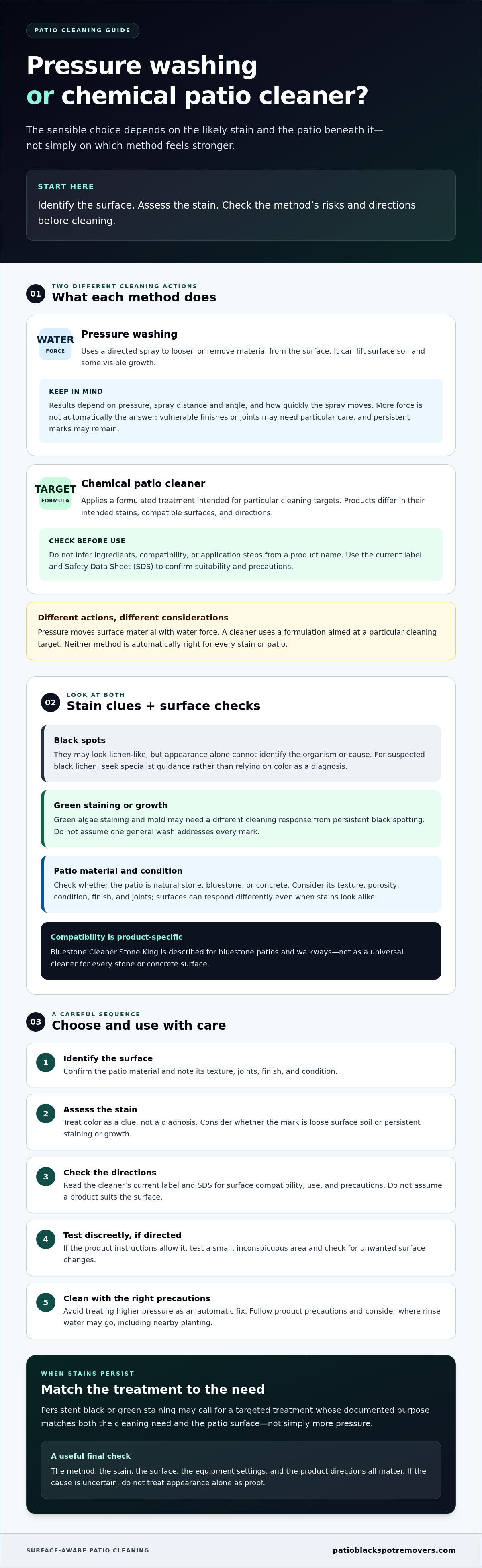
A careful process can prevent a stubborn stain from becoming surface damage. Before choosing pressure washing vs chemical patio cleaner, consider the patio’s condition, the likely type of mark, and the directions for the equipment or product you plan to use. If any step raises doubts, pause before cleaning.
A five-step decision checklist before cleaning
- Identify the surface. Confirm whether the patio is concrete, bluestone, or another type of stone. Look for loose joints, cracks, coatings, worn finishes, or signs of previous repairs.
- Assess the stain. Consider whether you’re dealing with loose surface dirt, green growth, or persistent black spotting. Color alone can’t confirm what caused a mark.
- Review the directions. For a pressure washer, read the equipment manufacturer’s instructions. For a cleaner, check the current product label and Safety Data Sheet for approved surfaces, use directions, and precautions.
- Test discreetly. If the instructions permit, try the method in an inconspicuous area. Follow the label-directed treatment and check for unexpected surface changes before proceeding.
- Treat only as directed. Use the chosen method according to its instructions. Don’t increase pressure, alter a product’s dilution, or extend its contact time to chase a faster result.
Reduce avoidable risks during cleaning
Use pressure-washing equipment only as its manufacturer directs. There’s no single pressure setting that suits every patio. Keep the nozzle, distance, and technique within the equipment guidance, and take extra care around fragile joints, damaged areas, and delicate finishes. If you can’t tell whether the surface can tolerate the equipment, ask the surface manufacturer or a qualified trade professional.
For chemical treatment, follow the product-specific label and current Safety Data Sheet for protective equipment, dilution, contact time, rinsing, and runoff precautions. Don’t assume those instructions are interchangeable between cleaners. Check the label for guidance about nearby plants, people, and pets, and keep them clear as directed. If the product documentation doesn’t answer a safety or runoff question, contact the manufacturer before use rather than guessing.
Stop if the surface changes unexpectedly, joints loosen, or the treatment behaves differently from the directions. Uncertain masonry, extensive staining, and delicate or previously repaired areas are good reasons to get qualified advice before continuing. A professional can help assess the surface and suitable method. For DIY treatment options, explore patio cleaning products.
Choosing a Targeted Patio Cleaner for Persistent Black or Green Stains
If surface dirt has rinsed away but black or green marks remain, a targeted cleaner may be worth considering. The useful question isn’t simply which product sounds strongest. Check whether its documented cleaning target and surface guidance match your patio. As with pressure washing vs chemical patio cleaner, the choice depends on the stain and substrate, not marketing shorthand or color alone.
Match the product category to the documented cleaning need
Patio Black Spot Removal INC offers DIY products for particular patio and pathway cleaning needs. Their documented uses include:
- Patio Black Spot Remover: formulated for stubborn black lichen and algae spots on exterior stone patios.
- Bluestone Cleaner Stone King: specifically described for bluestone patios and walkways.
- Grean Boss: targets green algae staining and mold on outdoor pathways.
These descriptions can help narrow your options, but a dark spot’s appearance doesn’t confirm what caused it. A product described for bluestone, exterior stone, or pathways shouldn’t automatically be treated as suitable for every patio material. Use its stated purpose as a starting point, then confirm that the specific surface is covered by the current product directions.
Check suitability and choose your next step
Before ordering, identify the patio material and compare it with the current product label. Review the directions and Safety Data Sheet for surface compatibility, application instructions, protective equipment, and runoff precautions. If the surface or stain isn’t covered, or you’re unsure about the patio’s condition, ask the manufacturer or a qualified professional before proceeding. Don’t guess at dilution, treatment time, or whether a product is appropriate.
Patio Black Spot Removal INC sells DIY exterior stone and patio cleaning products. The company doesn’t provide on-site pressure-washing or patio repair services. This comparison can help you decide whether a suitable targeted cleaner makes sense instead of, or alongside, mechanical cleaning. It can’t replace checking the product’s current documentation for your specific surface.
Ready to compare options against your patio material and cleaning need? Find a patio cleaning product for your surface.
Choose a Patio Cleaning Method with Confidence
The best choice in the pressure washing vs chemical patio cleaner decision depends on the stain and the surface, not simply which method seems more powerful. Pressure washing may suit loose surface soil on a compatible patio, while a targeted cleaner may be worth considering for persistent marks. Check the material, use equipment or products only as directed, and test carefully before treating the full area.
For stubborn black lichen and algae spots on exterior stone patios, Patio Black Spot Remover is formulated for that documented cleaning need. Bluestone Cleaner Stone King is specifically described for bluestone patios and walkways. In either case, review the current product directions to confirm suitability and precautions for your surface.
Compare DIY options with your patio’s material and cleaning need, and explore patio cleaning products.
Frequently Asked Questions
Is pressure washing or chemical cleaner better for a patio?
Neither method is best for every patio. The right choice depends on the stain, surface, and cleaning instructions. Pressure washing may help with loose surface dirt on a suitable, sound patio. A chemical cleaner may be worth considering for persistent staining if its label confirms it’s intended for that stain and material. When comparing pressure washing vs chemical patio cleaner, assess the likely target and surface compatibility, then start with an approach that is suitable for the patio.
Can pressure washing remove black lichen from patio stones?
Pressure washing may remove some visible surface material, but it isn’t a reliable way to treat every persistent black spot or suspected lichen. Appearance alone can’t confirm what caused a mark, and textured stone may hold staining below the surface. Avoid increasing pressure just because marks remain. Consider specialist guidance for black lichen, and check that any targeted cleaner is documented for your exact stone and cleaning need.
Will a chemical patio cleaner damage natural stone?
It can if the formulation isn’t compatible with the stone or is used contrary to its directions. Natural stone types, finishes, and conditions vary, so don’t assume a product labeled for one stone suits all others. Check the current product label and Safety Data Sheet for approved surfaces and precautions. If directed, test an inconspicuous area first and stop if the stone’s appearance changes unexpectedly.
Can I use a pressure washer and chemical cleaner together?
Only combine them if the cleaner’s current label and the pressure washer manufacturer’s instructions allow that specific use. Don’t put a patio cleaner into equipment or pressure-wash after treatment based on guesswork. Application, contact time, and rinsing requirements vary by product. Check the Safety Data Sheet for precautions, too. If the instructions don’t clearly explain whether the methods can be combined, contact the product manufacturer before proceeding.
How do I clean a bluestone patio without damaging it?
Start by checking the surface condition, including loose joints, cracks, coatings, or previous repairs. Use equipment only as directed by its manufacturer, and don’t assume a pressure setting is safe for all bluestone. If choosing a cleaner, confirm its current directions and precautions for the surface. Bluestone Cleaner Stone King is specifically described for bluestone patios and walkways, but check its current label and Safety Data Sheet before use.
What should I do if black spots remain after pressure washing?
Stop before raising the pressure. Remaining black marks may need a different approach, but appearance alone can’t confirm whether they’re lichen or another type of staining. Check the stone for changes or damage, then seek specialist advice if you need help identifying the marks. Patio Black Spot Remover is formulated for stubborn black lichen and algae spots on exterior stone patios. Confirm surface suitability and directions on its current label.
Is a chemical patio cleaner safe for nearby plants and pets?
Safety depends on the specific cleaner and how it’s used, so don’t assume every product has the same precautions. Read the current label and Safety Data Sheet for protective equipment, runoff guidance, and instructions relating to people, pets, and nearby plants. Keep them away from the treatment area as directed. If the documentation doesn’t answer a question about exposure or runoff, contact the manufacturer before applying the product.
To compare DIY patio cleaning products, visit Patio Black Spot Removal INC.