Patio surfaces face constant exposure to moisture and shade. Dirt and organic growth build up overtime and basic patio cleaning methods fall short.
A quick wash can improve surface appearance for a short time. However, visible improvement does not always mean the source of the staining has gone. Standard patio cleaning methods often fall short on patio surfaces unless you address the root of the problem.
Dirt on Patios Is Easy to Remove
Loose soil and dust sit on top of stone and concrete surfaces. A broom or garden hose can remove much of that material without much effort. If the broom fails, a light pressure wash will usually remove the majority of surface dirt. Over time, this method will become less effective as organic staining starts to take over the patio.
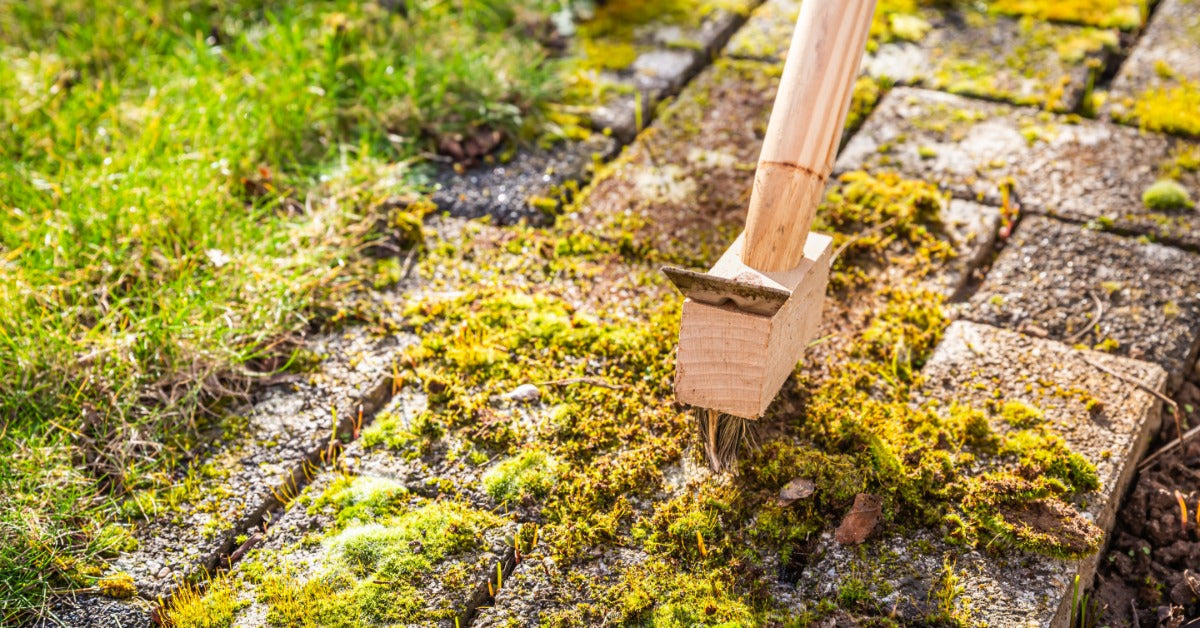
Organic growth behaves differently because the lichen feed off the mineral within the stone. Lichen get nestled into the pores of stone and if left untreated, begin to spread. Algae can grow over the surface during wet periods. Brushing algae and lichen will have limited to no impact.
Dark marks that appear after a few years of a patio being laid or not treated may be a type of lichen or organic growth. A single cleaning method often addresses what lays on the surface, not what grows within patio slabs.
Why Water Alone Has Limited Results
Water removes loose debris and helps rinse away light residue, but it does not break down the biological growth that creates stubborn black spots. A hose may make a patio look cleaner while the surface remains damp. That extra moisture can support new growth when drainage or sunlight remains limited.
Repeated rinsing can make stone more porous, opening the pores of the stone. The result may look better at first, but growth will accelerate and return quicker even after using the correct treatment.

Scrubbing Cannot Reach Every Pore
A stiff brush and elbow grease can lift dirt from textured paving but won’t have any impact on staining within the stone. Natural stones porous nature absorbs water quickly. What this also means is it absorbs lichen spores that land from the trees. If not removed within 12 months, you’ll start to notice black marks growing across the stone.
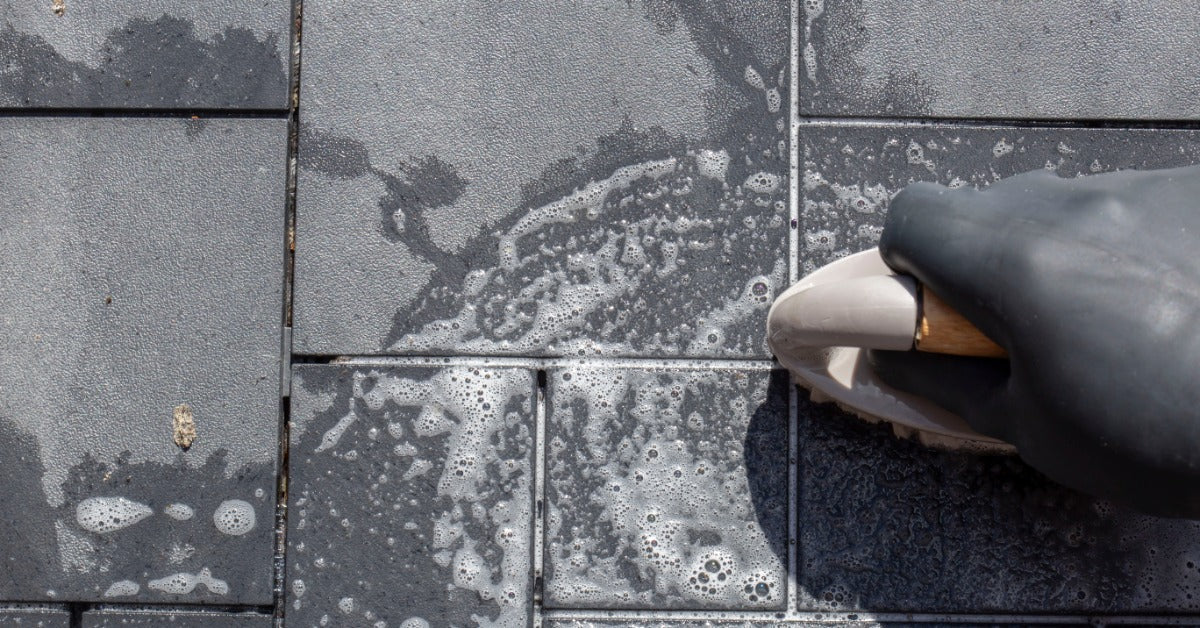
Heavy scrubbing may also create an uneven finish on softer materials. Excess force can disturb jointing material or leave visible scuff marks. The cleaning process should remove growth without creating new surface problems. That balance requires more than pressure and effort.
Household Detergents Target the Wrong Problem
Many household detergents work well on grease or food residue. However, patio black spots require a more targeted approach. General soap may loosen surface dirt but will make stubborn staining on the patio more prominent after cleaning.
Some products contain ingredients that do not suit outdoor stone. Unclear directions can increase the risk of staining or inconsistent results. A purpose-made patio cleaner from a Patio Black Spot Removal INC offers clearer guidance for application and contact time.
Pressure Washing Can Leave Growth Behind
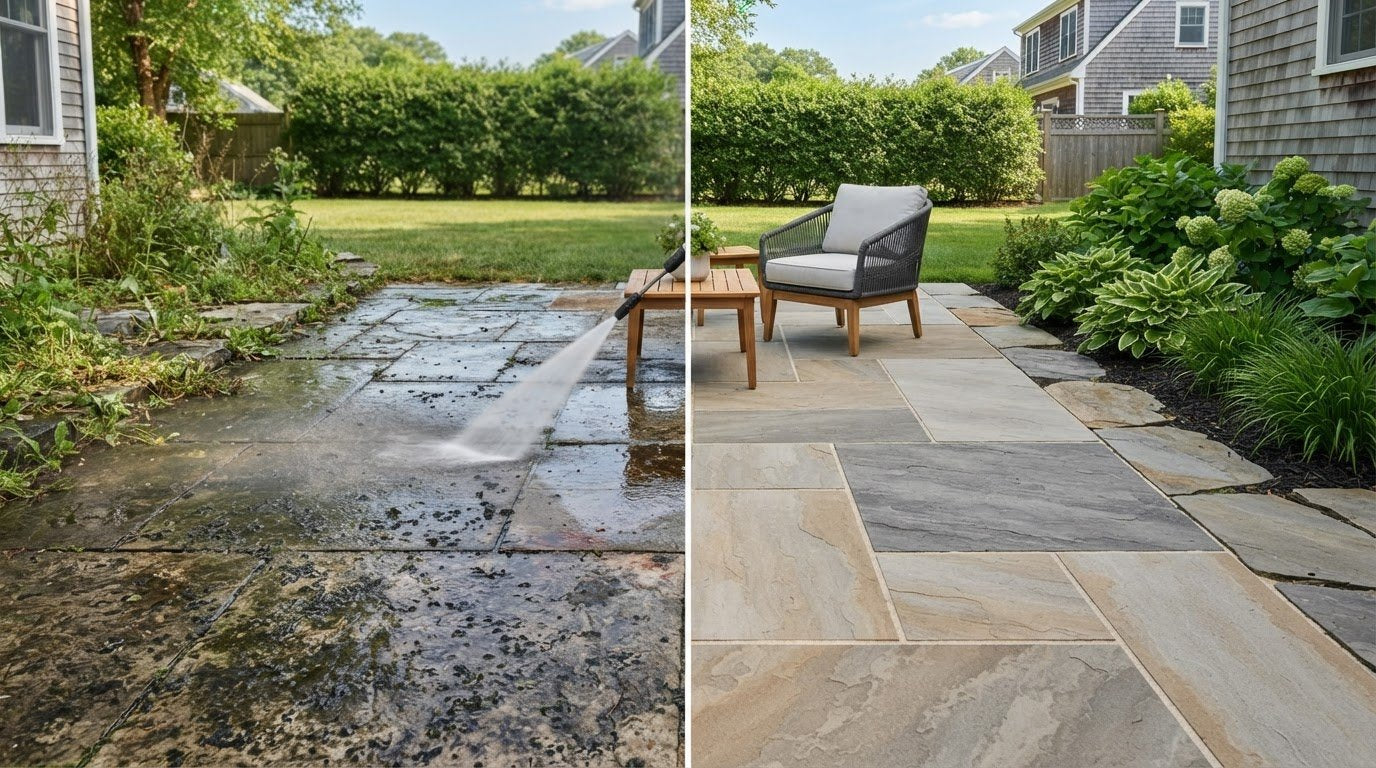
Pressure washing provides fast visual improvement. The pressure alone can remove grime from the top of the surface. However, black lichen will remain on the surface and within the slab. Some marks may fade but will return within months on concrete surfaces.
High pressure can also damage weak joints or weathered stone. The surface may look patchy when the nozzle passes too close. Repeated pressure washing can cause long term damage overtime especially when combined with freezing temperatures. A targeted cleaner can reduce the need for aggressive mechanical cleaning.
Acid Based Shortcuts Need Careful Handling
Some homeowners turn to acidic products for dark staining. Results can vary because depending on the surface these products are being used on. Acidic products can discolor natural stone paving causing orange marks across the slab. It will also kill surrounding foliage. Acidic product can also damage concrete based paving slabs and should be avoided for trying to remove organic staining from patio surfaces.
A dedicated product provides instructions for outdoor use. Clear guidance on how to apply the product, what to expect and how to maintain the results.
Product labels should always guide preparation and application. Testing a small hidden area first can help provide confidence that the product works and how to get the best results.
Black Spots Need a Targeted Formula
Patio Black Spot Removal Inc. Develops products for stubborn lichen and related organic growth. The formulas support use on common patio materials including sandstone, porcelain, limestone and bluestone.
Our company also directs homeowners toward simple application steps and product guidance. We provide products that match the needs of beginners who want clear instructions without technical confusion. And, great results that last.
Common Signs That Basic Cleaning Has Failed
Several warning signs suggest that a patio needs more than soap and water:
- Black spots remain after washing
- Green growth remains in shaded areas
- Stains stay visible after scrubbing
- Pressure washing creates uneven color
- Patio remains slippery
These signs point to organic growth and staining that remains on the surface and within the stone. More scrubbing may improve appearance without solving the underlying issue. Product selection should match the patio material and the type of staining.

Contact Time Matters
Specialist patio cleaners need time to work on organic deposits. Immediate rinsing can prevent the formula from reaching stubborn growth.
The correct contact period allows active ingredients to break down attached material. Directions may vary by product and surface condition.
Even coverage also matters during treatment. Missed areas can produce a patchy finish after rinsing. Working in manageable sections can improve control. Do this to prevent the formula from drying too quickly.
Surface Preparation Improves Results
Good preparation starts with removing furniture and loose debris. Dry leaves or soil can block direct contact with the stained surface. Nearby plants may need protection based on label directions. Plant safety remains a common concern among homeowners considering patio cleaning products.
A small test area can reveal how stubborn stains can be and if repeat applications will be required before treating the entire patio. Weather conditions also affect performance. Calm and mild conditions usually make application easier than strong sun or heavy rain.
Prevention Reduces Future Cleaning Work
Removing existing growth solves only part of the maintenance problem. Patios still face moisture and organic debris after treatment. Preventative maintenance is recommended annually and can help limit fresh buildup between deep cleans. Regular sweeping also reduces the material that holds moisture against the surface.
Drainage should remain clear around paving edges. Overhanging plants may also need trimming to improve airflow and sunlight.
Simple upkeep can extend the clean appearance of a restored patio. This approach reduces the need for frequent heavy scrubbing.
Choosing a Better Patio Cleaning Process
An effective cleaning plan should leave natural paving looking like new again. Stubborn black spots need a formula designed for removing organic staining and reviving the natural color. Application of the right product will produce better results with less physical effort.
Patio Black Spot Removal Inc. offers patio cleaners for all types of stone. Our formulas target black lichen plus common mold and algae concerns whilst restoring the natural colors.