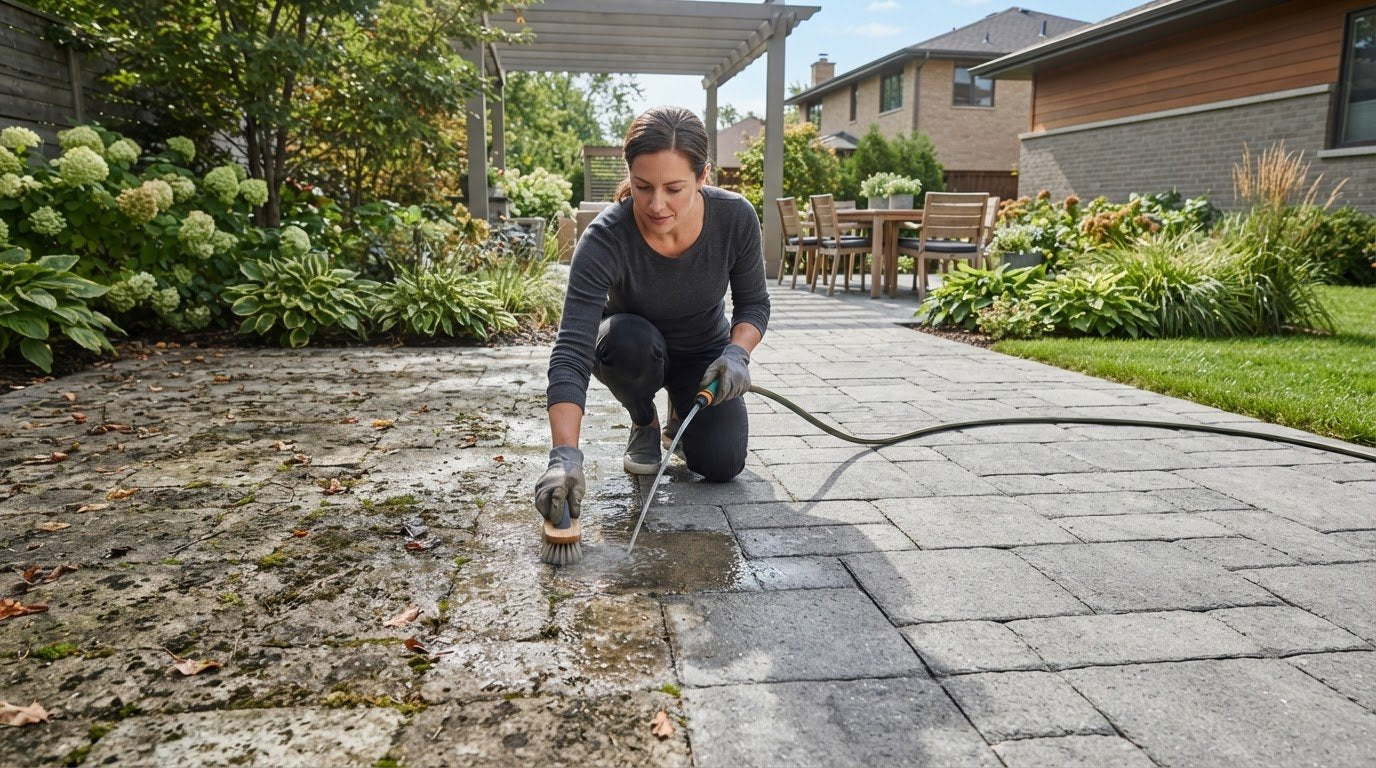

More pressure isn’t always the way to a cleaner patio. On natural stone or around paver joints, it can leave pitting, scarring or missing sand behind. If stains and outdoor grime have made your paving look neglected, knowing how to get the best results when cleaning your patio starts with identifying the surface and the type of dirt, not reaching for the strongest setting.
A quick blast may seem like an easy way to lift algae, mildew or stubborn black lichen, but the wrong nozzle, pressure or cleaner can cause damage that’s harder to fix than the stain. A surface-conscious approach can loosen everyday grime and organic growth while helping protect paving and joints.
This guide walks you through a practical sequence: identify your patio material, clear loose debris, choose a suitable cleaning method, treat stubborn growth with an appropriate stone cleaner, then rinse carefully and let the surface dry. You’ll also learn when lower pressure is the safer choice, how to protect nearby plants, and why product directions and a small test area matter. Whether you’re cleaning concrete, pavers or sensitive natural stone such as bluestone, the goal is a fresher patio without using more force than the surface can handle.
Key Takeaways
- How to get the best results when cleaning your patio starts with matching your approach to the paving material and type of soil.
- Before wet cleaning, move furniture and pots, clear debris, and take care around nearby plants.
- Test a small area, then follow the cleaner’s label for application, dilution, dwell time and rinsing.
- Don’t assume one cleaner or technique suits every surface. An unsuitable choice can put paving at risk.
- For stubborn black lichen spots and organic staining, consider a targeted option such as Patio Black Spot Remover.
How to get the best results when cleaning your patio: identify the surface first
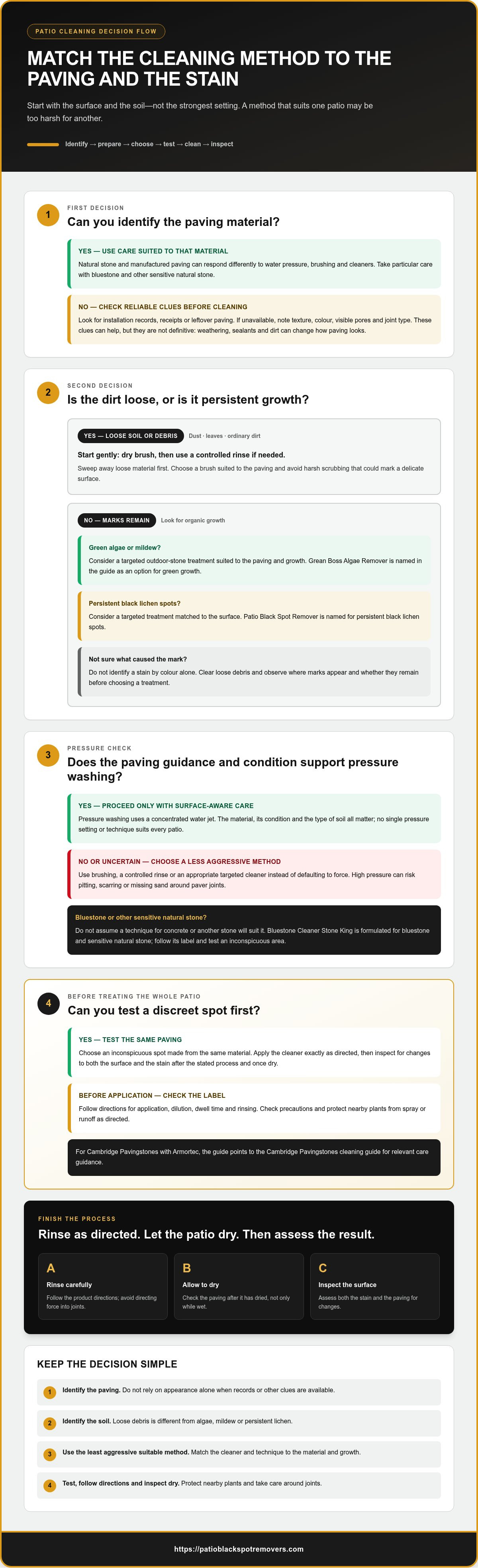
Effective patio cleaning starts with identifying the paving and the visible soil. A method that lifts dirt from one surface may be too harsh for another, so don’t start by turning up the pressure or applying a general-purpose cleaner. First, assess the surface and staining, prepare the area, choose an appropriate cleaning method, rinse as directed, then inspect the paving once it’s dry.
Natural stone and manufactured paving can respond differently to water pressure, brushing and cleaning products. Even stones that look similar may have different sensitivities. Pressure washing uses a concentrated water jet to remove dirt, but the method alone doesn’t determine whether it’s suitable for your patio. The surface material, its condition and the type of soil all matter.
How to identify patio paving before cleaning
Start with installation records, receipts or leftover paving materials, which can be more reliable than appearance alone. If these aren’t available, note the surface’s texture, colour, visible pores and the type of joints between slabs. These clues can help narrow down the material, but they aren’t definitive. Weathering, sealants and dirt can all change how paving looks.
Take particular care with bluestone and other sensitive natural stone. Don’t assume a technique suitable for concrete or one type of stone will work on another. Choose care that matches the identified material. Bluestone Cleaner Stone King is formulated for bluestone and sensitive natural stone. Follow the product label and test a small, inconspicuous area before treating the patio.
How to tell surface grime from stubborn organic staining
Loose dust, soil and leaf debris usually sit on the surface and can often be removed during ordinary preparation and cleaning. Algae, mildew and lichen are different: this organic growth can cling to paving and may call for a targeted treatment suited to both the growth and the material. Black marks can have more than one cause, so don’t identify a stain by colour alone.
Routine grime is loose soil to remove; persistent organic staining needs a suitable targeted treatment. Notice where marks appear and whether they remain after you’ve cleared loose debris. Don’t assume every dark patch is black lichen. This distinction helps you choose a method based on what’s actually present instead of applying unnecessary force or the wrong product.
Use your assessment to guide the next steps. Note the paving material, where the marks appear and what they look like. How to get the best results when cleaning your patio comes down to making these decisions before wet cleaning begins. Once you’ve identified the surface and soil, you can prepare the area and choose a method that’s less likely to damage the paving.
Prepare your patio and choose a cleaning method that suits the paving
After assessing the paving and marks, prepare the area before using water or cleaner. Move furniture and pots, sweep away leaves, and remove loose debris so it doesn’t turn into muddy residue. Check the product label for precautions before applying a treatment, and protect nearby plants from spray or runoff as directed. A clear starting area also makes it easier to see which stains need attention.
Which patio-cleaning method suits each type of paving?
Choose the least aggressive method that suits the paving. Brushing and a suitable rinse may be enough for loose dust and ordinary dirt. Green algae or mildew may call for a targeted outdoor-stone treatment, while persistent black lichen spots need a different approach. Match the treatment to the surface, then follow its label rather than guessing at application or rinsing.
- Dry brushing: Use for loose leaves, dust and debris. Choose a brush suited to the paving, and avoid harsh scrubbing that could mark a delicate surface.
- Water rinsing: Use a controlled flow for light, loose dirt after sweeping. Don’t direct force into joints or assume every paving material tolerates pressure.
- Targeted outdoor-stone treatment: Use a cleaner suited to the paving and type of growth for green algae, mildew or persistent black lichen. Follow label precautions and application directions.
- Pressure washing: Consider it only when the paving manufacturer’s guidance and the surface’s condition support it. The Power Washers of North America (PWNA) offers resources on exterior cleaning, but no single pressure setting or technique suits every patio.
For green growth, Grean Boss Algae Remover is a targeted option; for persistent black lichen spots, consider Patio Black Spot Remover. Match the product to the paving and follow its instructions. How to get the best results when cleaning your patio means letting the surface and soil guide your method, rather than defaulting to the most powerful tool.
Why a small test patch matters
Before treating the whole patio, choose a discreet spot made from the same paving. Apply the cleaner exactly as its label directs, including any stated dilution, application and rinsing steps. Inspect the test area after the stated process and once it has dried, checking for changes to the surface as well as the stain.
Keep preparation simple and deliberate: clear the patio, protect surrounding plants, choose a surface-appropriate method and test before treating the full area. To compare options for organic staining, explore outdoor stone cleaners and treatments for patio care, then follow the chosen product’s directions closely.
Clean your patio step by step and assess the result after it dries
A steady sequence helps you clean thoroughly while monitoring how the paving responds. Work in manageable sections, use the method selected for your surface and soil, and follow the cleaner label at every stage. Don’t judge the finish while the patio is wet: water can darken paving and disguise marks that remain after drying.
A practical cleaning sequence for outdoor paving
Keep the order simple. Clear furniture and pots, remove dry debris, test any treatment on a discreet area, then clean one manageable section at a time. Consistent coverage makes it easier to spot missed patches and avoid repeatedly treating the same area. If you use a pressure washer, follow the guidance for your paving and equipment, and avoid directing a forceful jet into joints.
- Clear the area. Move furniture and pots, and remove anything that could obstruct cleaning.
- Remove loose debris. Sweep away leaves, dust and grit while the surface is dry, so they don’t spread into wet residue.
- Test your chosen method. Try the cleaner or cleaning approach on an inconspicuous spot of the same paving. Check the result before treating a larger area.
- Clean in manageable sections. Apply your chosen method evenly and avoid treating the same patch repeatedly.
- Follow the product directions. Use the stated dilution, application method and dwell time, if specified. Rinse only as directed by the label.
- Let the patio dry, then inspect. Compare the cleaned sections with the original marks and note any spots that remain.
Don’t improvise by changing the cleaner’s dilution or leaving it on longer than directed. Application and rinsing requirements vary by product, so use the label as your guide. If you’re cleaning without a treatment, use a suitable brush or controlled rinse for the paving rather than assuming greater force will improve the result.
How to check whether the patio needs targeted stain treatment
Give the paving time to dry before deciding whether the work is complete. Look for overall improvement as well as individual marks that still stand out. A remaining spot may be organic staining, but its colour alone doesn’t confirm the cause. Note where it appears and whether it looks like persistent growth, then match any next treatment to the suspected stain and the surface.
A dry patio shows residual staining more clearly because wet paving can look darker and conceal marks. This check helps separate general grime that has lifted from stubborn patches that may need a targeted outdoor-stone treatment.
If marks remain, pause before repeating the process. Reapplying the same method without identifying the stain, or increasing pressure, can put the paving at unnecessary risk. Revisit your surface assessment, check that you used the product as directed, and choose the next step accordingly. How to get the best results when cleaning your patio means treating the dry inspection as part of the process, not as an afterthought.
Avoid common patio-cleaning mistakes that can undermine the result
A patio can still look stained after cleaning if the method doesn’t match the paving or the mark. Treating every surface with the same product or technique is a common misstep: natural stone, manufactured paving and bluestone may not respond alike. Check the paving guidance and cleaner label before starting, and use a small test patch instead of assuming a familiar method is suitable for the whole area.
Don’t skip the instructions. Changing a product’s dilution, application or stated dwell time can affect how it should be used. And don’t decide a treatment has failed while the paving is wet. Moisture can deepen the surface colour and make remaining marks harder to judge. Let the area dry before assessing the finish.
Why more pressure is not automatically a better cleaning method
Whether pressure washing is suitable depends on the paving, its condition and the equipment guidance, not simply on how much force the washer can deliver. An aggressive setting may be unsuitable for vulnerable surfaces or joints, even if it quickly removes visible dirt. Follow the paving manufacturer’s advice and the washer instructions. If the surface’s tolerance is uncertain, choose a gentler method. More force isn’t a substitute for identifying the soil.
What to do when stains remain after routine cleaning
If marks remain once the patio is dry, reassess before cleaning again. Consider whether they look like organic growth, such as algae, mildew or lichen, and whether the paving is compatible with a targeted outdoor-stone treatment. Persistent black spots may need a product intended for black lichen staining rather than another round of general washing. Follow the treatment label, including its application and rinsing directions.
Let the surface dry again, then inspect the treated spots and the surrounding paving in consistent light. This helps you judge whether the staining has changed and whether further action is appropriate. Don’t automatically repeat the treatment or increase pressure if the result is unclear. Revisit your stain identification and the product directions first.
How to get the best results when cleaning your patio is as much about avoiding the wrong next step as removing grime. A test patch, material-appropriate care and a dry-surface check can help prevent a stubborn mark from prompting unnecessary scrubbing or force. If you’ve identified persistent organic staining, explore targeted patio stone treatments suited to the type of growth you’re addressing.
Choose a targeted patio cleaner and keep stone looking its best
Once you know what your patio is made from and what kind of mark you’re dealing with, choose a cleaner to suit both. Loose soil and everyday surface dirt are different from persistent organic staining such as lichen, algae or mildew. Routine washing may clear surface grime, but stubborn growth can call for a targeted outdoor-stone treatment. Matching the product to the material helps you avoid treating every slab as if it were the same. Prevention is also an important part of looking after your stonework, use the Patio Black Spot Preventer annually to help maintain you newly cleaned paving.
When a specialist stone cleaner is more suitable than routine washing
If a mark remains after ordinary cleaning and appears consistent with organic growth, consider a specialist cleaner for that stain and paving type. Patio Black Spot Remover is designed for stubborn black lichen spots and organic staining. For bluestone and sensitive natural stone, Bluestone Cleaner Stone King is formulated to clean and maintain those surfaces. Neither is a universal cleaner for every surface or every kind of mark.
Before applying a product, read its label for surface suitability and directions. Follow the stated preparation and application process, and test a discreet area first. Don’t increase the amount, change the method or leave a cleaner on longer than directed in the hope of speeding up results. Careful use gives you a clearer basis for assessing the treated area.
How to maintain a cleaner patio between deeper treatments
Small, regular habits can help keep loose debris from accumulating. Clear fallen leaves and sweep away dirt before it builds up in joints or sits on the paving. If you notice green growth or new organic marks, address them with a method and product suited to the surface rather than waiting for the affected area to spread. Recheck the patio once it’s dry so you can distinguish residual staining from temporary wet-surface colour.
Patio Black Spot Preventer is an option for ongoing protection. Follow its label for use and surface suitability. It’s a separate step from choosing a cleaner for existing marks, so first identify the paving and the problem you want to address. How to get the best results when cleaning your patio comes down to that simple match: material, stain and appropriate treatment.
Identify the visible growth and paving type, then compare suitable patio stone cleaners and treatments. Check the label before applying any product, and use its directions to guide your test patch and full treatment.
Make your next patio clean a more considered one
A cleaner-looking patio doesn’t have to come from using more pressure or repeating the same wash. Let the surface and the stain guide your next step, and treat cleaning as part of ongoing stone care. That’s the practical principle behind how to get the best results when cleaning your patio: choose an approach that respects the paving and addresses the mark you can see.
For persistent organic staining on outdoor stone and paving, specialist treatments offer a targeted alternative to routine washing. Bluestone and sensitive natural stone call for particular care, so a cleaner formulated for those surfaces can be a relevant option. Always use the product label to guide surface suitability and application.
Ready to choose a treatment for your patio? Explore specialist patio and stone cleaners and find an option suited to your paving and the staining you’ve identified. Take the next step with care, and give your outdoor space a fresh start.
Frequently Asked Questions
How often should you clean a patio?
Clean your patio when visible debris or grime starts to build up, rather than relying on one fixed schedule for every surface. A patio under trees may need leaves cleared more often than an open, sheltered area. Check paving periodically, especially after wet or windy weather, and sweep away organic debris before it settles. For deeper cleaning, consider the material, current stains and product directions before choosing a method.
Is vinegar safe to use on bluestone paving?
Don’t assume vinegar is safe for bluestone. Vinegar is acidic, and acidic cleaners can etch or damage some natural stone. Bluestone types and finishes can vary, so use guidance specific to your paving rather than trying a household remedy on a prominent area. Choose a cleaner formulated for bluestone or sensitive natural stone, and follow its label, including any surface-testing instructions.
Can you clean patio paving with dish soap?
Dish soap may help with light surface dirt, but it isn’t a targeted treatment for persistent organic staining. Before using it, check that the paving manufacturer permits it and test a small, discreet spot. Use only a modest amount, since excess soap can leave a film or slippery residue if it isn’t rinsed away thoroughly. For a stubborn mark, identify the stain and select a compatible outdoor-stone cleaner instead.
What causes white haze on patio stones?
White haze can have several causes, including mineral deposits, residue from a cleaning product or efflorescence, a powdery deposit of salts that can emerge from masonry. Appearance alone may not identify the cause. Note whether the haze is powdery, streaked or concentrated near joints, and check any paving or cleaner guidance before treating it. Avoid adding another product immediately, since incompatible treatments could make diagnosis harder.
Can you clean a newly installed patio?
Yes, but first check the paving, jointing-material and installation guidance for any waiting period or cleaning restrictions. Fresh mortar, jointing compounds or other installation materials may need time to set, and early washing could disturb them. Once the relevant guidance allows cleaning, start with a gentle approach and test an inconspicuous spot.
Why do patio stains look darker when the stone is wet?
Water can make stone look darker because it changes how light interacts with the surface and fills some of its tiny pores. This can deepen the apparent colour and disguise the contrast between clean paving and a remaining stain. Wait until the surface is dry before judging the final appearance. If a mark is still visible then, assess it on its own rather than treating the whole patio again.
Should you seal patio stones after cleaning?
Not every patio needs sealing after cleaning. Whether it’s suitable depends on the stone, its finish and the paving manufacturer’s recommendations. If sealing is permitted, the surface may need to be fully dry and free from residue before application. Check the sealant instructions for preparation and compatibility, and test a discreet area if advised. Don’t use a sealer to disguise staining that still needs to be identified or treated. We'd recommend using our Patio Black Spot Preventer to help maintain your stonework, opposed to sealing. The Preventer will still allow the paving to breathe, whereas some sealants will stop this from happening, which is detrimental to the surface of the paver.