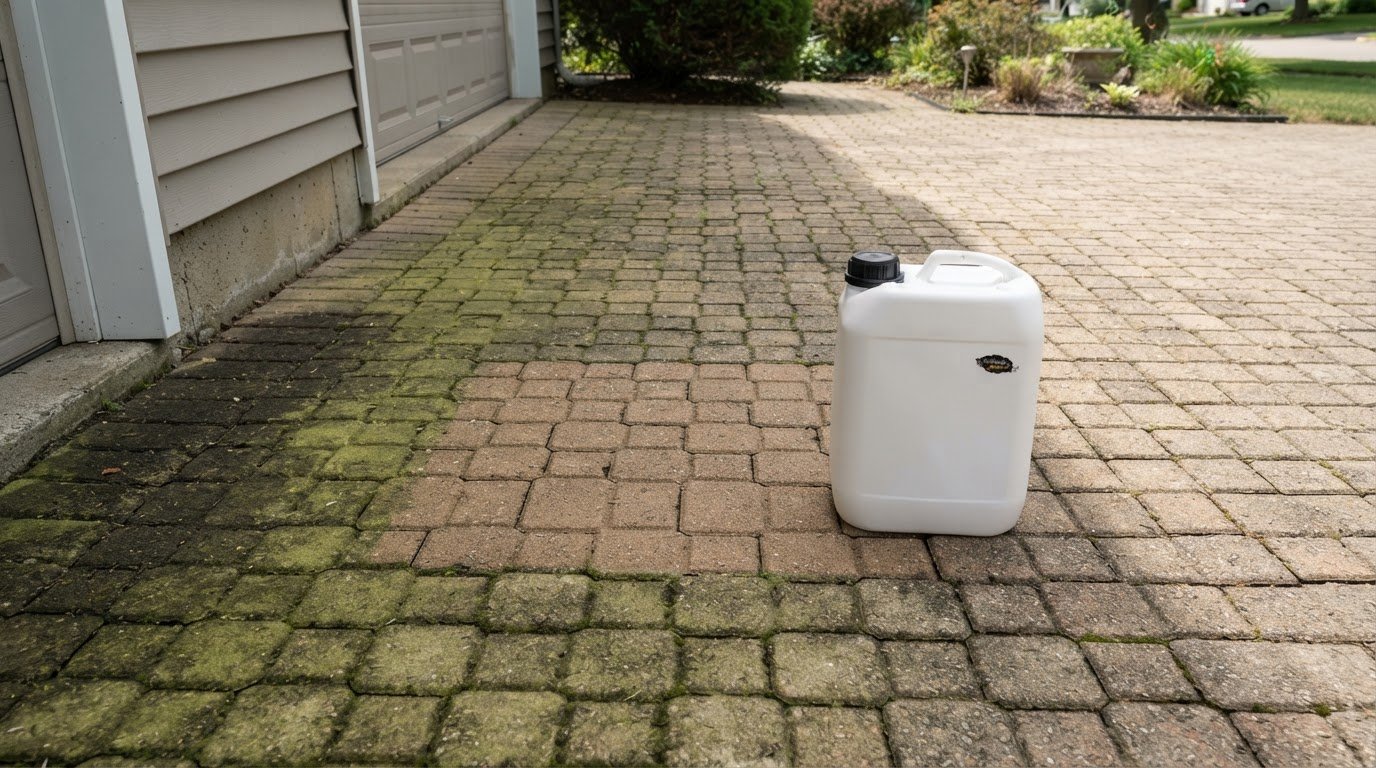
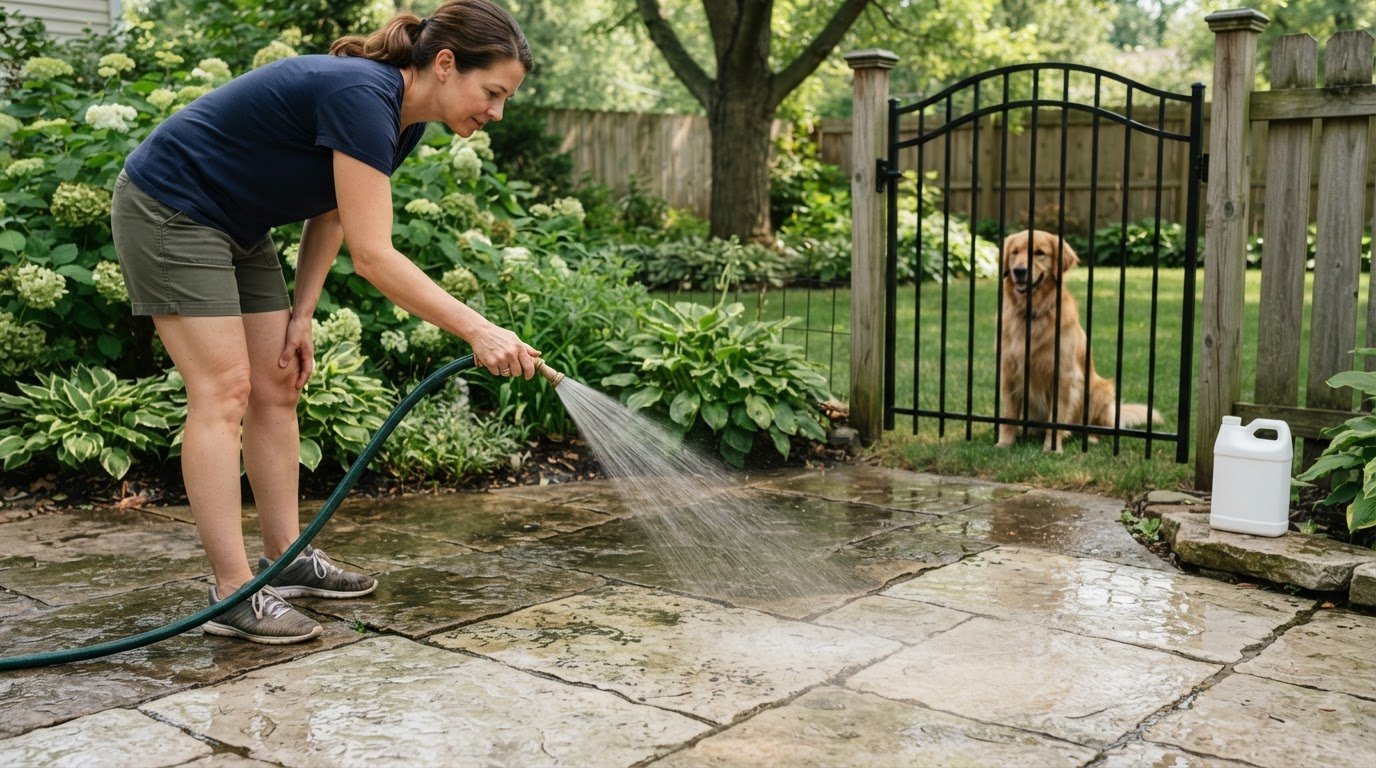
A cleaner that suits one patio can be the wrong choice for another. Pet-safe patio cleaning starts with a product labeled non-toxic and biodegradable, but the surface matters too: a cleaner suitable for paving may not be right for natural stone. Plant-based or enzyme cleaners can help lift everyday grime and stains, while the product label guides safe use around pets and nearby plants.
It’s understandable to want a clean patio without worrying about what your pet might touch or sniff. Regularly removing leaves, twigs, and pet hair also helps keep outdoor mess under control. This guide explains how to choose a suitable cleaner, limit your pet’s exposure, protect nearby plants, and plan routine maintenance. It also compares approaches for different patio materials, so you can match the product to your surface and the marks you need to remove.
Key Takeaways
- Choose a patio cleaner labeled non-toxic and biodegradable, and match its intended use to your surface.
- Reduce pets’ contact with cleaning chemicals by keeping them away during application and storing products out of reach.
- Clear loose debris before cleaning, and protect nearby plants from cleaner and rinse water.
- Build a simple sweeping routine to keep leaves, twigs, and pet hair from accumulating between deeper cleans.
- Use the patio material and type of staining to guide your choice of cleaner, especially on natural stone.
1. Choosing non-toxic and biodegradable cleaners
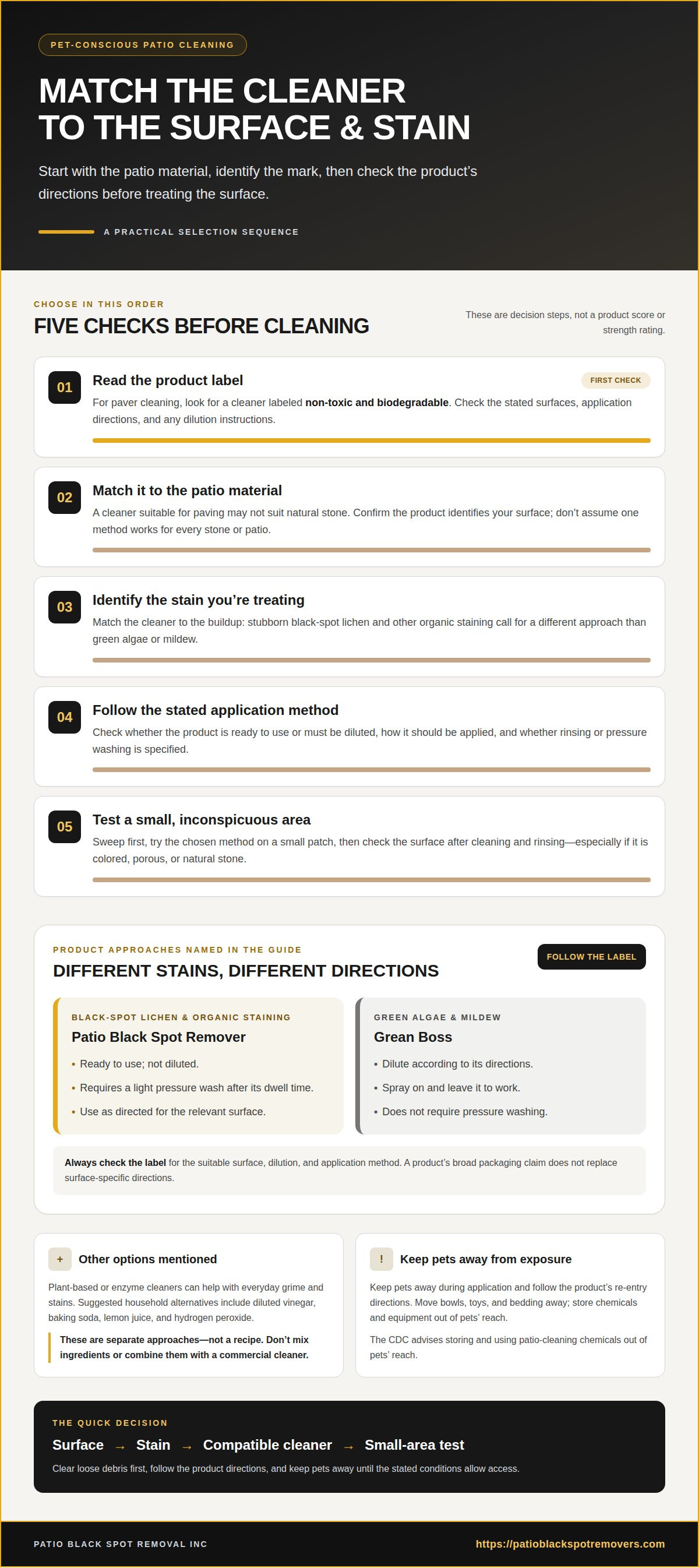
Start with the product label, not the word “natural” on the front. For paver patios, choose a cleaner labeled non-toxic and biodegradable. Then read its directions to see which surfaces it’s intended for and how it should be applied. A broad claim on the packaging doesn’t replace surface-specific instructions. Match the cleaner to both the patio material and the stain you’re treating.
For stubborn black-spot lichen and other organic staining on natural stone or paving, use Patio Black Spot Remover as directed. It is ready to use, not diluted, and requires a light pressure wash after its dwell time. For green algae and mildew, Grean Boss is diluted according to its directions, then sprayed on and left to work without pressure washing. Check the label for the surface, dilution, and application method.
Household ingredients are not automatically suitable for every patio or pet. Diluted vinegar is sometimes used on patio surfaces, and baking soda is another suggested option for odors and stubborn dirt. Lemon juice and hydrogen peroxide are also suggested for tough stains. These are separate approaches, not a recipe. Don’t mix ingredients or combine them with a commercial cleaner.
Before treating the full patio, sweep away loose debris and test the chosen method on a small, inconspicuous area. Check the surface after cleaning and rinsing, especially if it’s colored, porous, or natural stone. Don’t assume a method suitable for paving will suit every stone. For a concentrated stain or an unfamiliar surface, choose a product whose directions identify that material and type of buildup.
Pet-conscious use depends on handling and storage, not just the product description. The Centers for Disease Control and Prevention (CDC) advises storing and using patio-cleaning chemicals out of pets’ reach. Keep animals away during application and follow the product’s instructions for access to the treated area. Don’t leave a bucket, sprayer, or open container where a curious pet can reach it.
Use this quick selection check before cleaning:
- Match the cleaner’s stated surface to your pavers, stone, or other patio material.
- Choose a non-toxic and biodegradable label for paver cleaning.
- Consider plant-based or enzyme products for grime and everyday marks.
- Use household alternatives as separate methods, not mixtures.
- Follow label directions, test a small area, and store products away from pets.
Make product choice practical: identify the surface, identify the stain, then choose a compatible cleaner. A small-area test and application according to the product directions can help prevent a quick cleanup from becoming a surface-care problem.
2. Pet health risks from patio-cleaning chemicals
Patio-cleaning chemicals can irritate pets’ skin, eyes, or breathing. Repeated contact, such as walking across a treated area, can increase exposure. A dog might sniff a wet patch, while a cat may step through cleaner and groom afterward. For Pet Safe Patio Cleaning, keep pets away during application and until the product’s stated re-entry conditions are met.
Different products require different precautions. A spray can drift beyond the patio, while liquid cleaner can collect in joints between paving slabs. Read the label before opening the container. Note the application directions, protective measures, and instructions for keeping people and animals away. Use only the stated amount and method. Never assume a diluted product is harmless simply because it looks or smells mild.
How long should pets stay off a patio after cleaning? Follow the product’s re-entry instructions. Keep pets away from Patio Black Spot Remover and Stone King Bluestone Cleaner until the treated area has been thoroughly rinsed. Keep them away from Patio Black Spot Preventer and Grean Boss until the surface has dried. Don’t replace these product-specific instructions with a fixed waiting period.
Plan the application so pets cannot wander onto the patio. Close doors leading outside, use a gate, or keep animals in another area while applying cleaner. Move water bowls, food dishes, toys, and bedding away from the work area first. These steps reduce the chance of contact with wet surfaces or residue. Keep pets away until the product’s re-entry conditions are met.
After cleaning, check for liquid in paving joints, low spots, and along the patio edge. Follow the product’s rinsing directions rather than judging by appearance alone. Don’t let a pet investigate while you’re rinsing or putting away equipment. Return bowls and toys only after application and any required rinse are complete.
- Read the label before choosing or applying a cleaner.
- Keep pets away during application and until label directions allow access.
- Move bowls, toys, and bedding away from the treatment area.
- Follow the product’s specific rinsing and re-entry directions.
Store containers securely after use. The Centers for Disease Control and Prevention (CDC) advises storing and using patio-cleaning chemicals out of pets’ reach. Close the cap, put the product away, and clear cloths or tools from the patio. For Pet Safe Patio Cleaning, careful handling continues after the surface is clean.
For outdoor stone affected by organic staining, choose a cleaner made for the surface and follow its directions. Explore patio cleaning options for stone and paving as one next step in planning a careful cleanup.
3. Preparing the patio and protecting nearby plants
Start with a clear work area. Sweep leaves, twigs, and pet hair from the paving before applying cleaner. Left in place, this debris can become a breeding ground for bacteria and attract pests such as ants. Remove bowls, toys, cushions, and planters from the treatment area. Clearing them first also prevents cleaner or rinse water from collecting underneath.
How should you clean a patio safely around pets? Keep pets indoors or behind a closed barrier, clear the surface, protect nearby plants, then apply cleaner according to its label. Rinse or collect runoff as directed, and keep animals away until the product’s re-entry instructions allow access.
Use a physical boundary to separate pets from the work zone. A closed gate or temporary fence can block access while you clean; a planted border may also help define the patio’s edge. Don’t rely on calling a pet away once the work starts. Curious animals may approach wet paving, tools, or a container left within reach.
Protect nearby plants before cleaner or rinse water reaches them. Move potted herbs and flowers beyond the splash area, and shield delicate foliage from direct spray. If a plant bed borders the patio, apply cleaner carefully and avoid letting liquid run across the soil. Follow the product directions and treat only the area that needs cleaning. Never spray undiluted product directly onto plants or grass.
What about local rules for runoff? Guidance can differ, so don’t direct cleaner or rinse water into a storm drain or natural waterway unless local instructions allow it. Control the flow at the patio edge and follow the product’s disposal directions. Avoid letting runoff cross a planted bed, where it could contact roots or leaves.
Prevent pets from licking cleaner or runoff by keeping them away from the patio and nearby puddles. Close doors, secure the gate, and move water bowls before opening the product. During rinsing, watch for liquid collecting in paving joints or low spots. Keep pets separated until the surface has been rinsed as directed and the product’s re-entry conditions are met.
- Clear leaves, twigs, and pet hair before cleaning.
- Move bowls, toys, and portable planters out of the work area.
- Use a closed gate or barrier to keep pets away.
- Shield nearby plants and control runoff at the patio edge.
- Follow label instructions for rinsing, disposal, and pet re-entry.
Before starting, check the patio’s slope and drainage path. A surface that tilts toward a garden bed needs careful application to avoid runoff reaching plants. Keep tools and open containers inside the work area, too. Once cleaning is complete, put away the equipment, inspect the edges for pooled water, and keep the barrier in place until the product’s re-entry conditions are met.
4. Regular maintenance and deep-cleaning schedules
A weekly sweep is a practical way to keep a pet-friendly patio clear of loose debris. Use a broom or leaf blower to remove leaves, twigs, and pet hair before they collect in corners or paving joints. This routine also makes it easier to spot new stains while they’re localized. Choose a regular day so patio care doesn’t depend on noticing a buildup first.
Doormats at entrances can limit debris tracked onto the patio. Place one where people and pets step outside, then shake or clean it during your regular sweep. If leaves gather quickly beneath a tree, include that area rather than waiting for the whole surface to look dirty. Build your routine around where debris actually lands, not just the most visible paving.
Deep cleaning doesn’t need an arbitrary calendar date. Let visible buildup guide the decision: recurring organic staining, algae, mildew, or persistent dirt may call for a focused clean. Distinguish these from loose debris, which a broom or leaf blower can remove. A stain that returns in the same spot needs attention there, while a generally tidy patio may only need a regular sweep.
Use a simple three-part check during maintenance:
- Clear: Sweep the full patio, including edges and spaces between slabs.
- Inspect: Look for organic growth, dirt marks, and spots that return after sweeping.
- Decide: Keep to routine debris removal or plan a targeted clean for visible staining.
After sweeping, note where the buildup comes from. A doormat may reduce tracked-in grit near a doorway, while a leaf blower can clear dry leaves from open paving. If pet hair repeatedly gathers beside outdoor furniture, include that area in your next sweep—and keeping up with routine coat maintenance using organic grooming essentials from Essencera can help minimize loose fur before it reaches the patio. These observations help you adjust your routine without adding unnecessary cleaning steps.
Choose a suitable weather window for deeper cleaning by following the chosen product’s label. Avoid improvising a schedule based on a fixed number of deep cleans each year; the amount of foot traffic, surrounding trees, and visible organic growth all affect how soon a patio needs attention. A shaded corner with recurring algae may need a targeted approach sooner than an exposed section that stays clear.
Keep the routine manageable. A weekly sweep removes loose material, while an inspection shows where more work is needed. This prevents ordinary leaves and pet hair from being treated as though they require chemical cleaning. It also helps you focus product use on actual staining and keep the patio presentable between deeper cleans.
5. Cleaning products for different patio materials
Choose a cleaner by matching its directions to the patio surface, not just the visible stain. Concrete pavers, natural stone, and wood decking can respond differently to cleaning products and methods. If the product directions don’t identify your material, don’t assume it’s suitable. Test the chosen method on a discreet area first, then inspect the surface before treating the rest.
For paving, choose a product intended for the material and type of buildup. Natural stone needs particular care because a general-purpose product may not suit every stone. For bluestone, Stone King Bluestone Cleaner is formulated for both natural cleft and smooth finishes. For stubborn black-spot lichen on natural stone or paving, use Patio Black Spot Remover as directed. Don’t substitute a household mixture by default.
Are pressure washing and steam cleaning safe alternatives for pet owners? Neither method is automatically suitable for every patio. Pressure washing can damage a surface, while steam should only be used when the equipment directions allow it for that material. Water-only pressure washing avoids adding liquid cleaner, but it doesn’t remove the risk of surface damage.
For pet urine, stains, and odors, first remove residue and rinse the affected spot with water. Baking soda is one household option for odors and stubborn dirt; diluted vinegar is another suggested patio-cleaning method. Use them separately, test a small area, and don’t mix either with a commercial cleaner. For a persistent mark, choose a product whose directions match both the surface and stain.
How much do pet-conscious patio products and professional cleaning services cost? Product and service costs depend on factors such as the patio’s material, the amount of staining, and the work required. Compare the product’s intended coverage and directions with the area and cleaning task, rather than choosing solely by container size.
Liquid laundry detergent is sometimes suggested for patio stone, with a forum contributor recommending about 15 minutes before scrubbing and rinsing. That timing isn’t a universal instruction for every stone or detergent. Check that the product is suitable for the surface, test an inconspicuous spot, and rinse as directed. Avoid leaving detergent residue where pets could walk or lick the paving.
- Pavers: Match the cleaner label to paving and the stain.
- Natural stone: Choose a product intended for that stone, such as bluestone.
- Wood decking: Use only a method identified as suitable for the deck material.
- Pet stains: Treat the affected area, test first, and rinse as directed.
For a surface-specific option, explore patio cleaners for stone and paving and match the product to your material and cleaning need.
Patio Black Spot Removal
Patio Black Spot Removal INC sells patio-cleaning products for natural stone and paving, including treatments for black-spot lichen, algae, bluestone care, and ongoing maintenance. Choose Patio Black Spot Remover for black-spot lichen and organic staining, Grean Boss for green algae and mildew, Stone King Bluestone Cleaner for bluestone, or Patio Black Spot Preventer for preventive maintenance. Follow the product directions, including the instructions for application and keeping pets away from treated surfaces. Browse the range and choose the product that matches your patio and the buildup you need to treat.
Make your next patio clean a considered one
Set up a cleaning routine that fits how your household uses the outdoor space. Choose a calm period when pets can stay elsewhere, and keep the product directions available throughout the task. A little planning helps protect the patio, surrounding plants, and your pet’s access to the yard.
Pet-safe patio cleaning isn’t about choosing one method for every surface. Make each decision with the material, visible stain, and your pet’s habits in mind. As your patio changes through the seasons, adjust your approach to the buildup you actually see rather than automatically reaching for a stronger treatment.
For a product suited to your stone or paving, explore the options available from Patio Black Spot Removal INC. If you’d like help with your patio-cleaning question, contact Patio Black Spot Removal INC. A thoughtful plan can help keep your outdoor space ready for you and your pets.
Frequently Asked Questions
Why Clean Your Patio?
Cleaning your patio removes accumulated dirt and organic growth that can obscure its surface. Leaves, pet hair, algae, and mildew can build up in joints and shaded corners, making the space look neglected and harder to maintain. Regular cleaning also helps you notice new stains early, so you can choose a targeted method instead of treating the entire patio. Keep the approach suited to the surface and the type of buildup.
What patio cleaners are safe for pets?
Choose a cleaner whose label explains its intended surface and pet-use precautions. Non-toxic and biodegradable labels can help guide choices for pavers, but follow the product’s directions rather than relying on a broad “natural” claim. Product-specific conditions matter: Patio Black Spot Remover is safe for pets once the treated area has been thoroughly rinsed, while Patio Black Spot Preventer and Grean Boss are safe after the treated surface has dried.
Which ingredients in patio cleaners are toxic to dogs and cats?
No single ingredient list identifies every patio cleaner as harmful to every pet. Risk can depend on the product, concentration, and type of contact. Some patio-cleaning chemicals can irritate skin, eyes, or breathing, particularly with repeated exposure. Read the product directions for handling precautions, and prevent pets from licking wet cleaner or runoff. Store containers securely out of their reach after use.
How can I clean a patio with pet-safe household ingredients?
Use household ingredients separately, and test each method on a discreet patch first. Diluted vinegar is one option for patio stains; baking soda can help with odors and stubborn dirt. Lemon juice and hydrogen peroxide are also suggested for tough stains, but don’t combine ingredients or mix them with commercial cleaners. Use only what the surface tolerates, rinse as appropriate, and keep pets away until the area is clean and dry.
How do pet-safe patio cleaners compare by surface, such as concrete, pavers, wood, and stone?
Compare the product’s stated surface uses before applying it. For concrete and paving, choose a cleaner whose directions name those materials. Wood decking needs a cleaner specifically intended for wood, not a stone treatment. Natural stone also calls for a suitable product: Stone King Bluestone Cleaner is formulated for bluestone, while Patio Black Spot Remover is designed for natural stone and paving. A discreet test can show whether a method changes the surface before you treat a larger area.
How much do pet-safe patio cleaning products and professional services cost?
No professional-service cost is available.