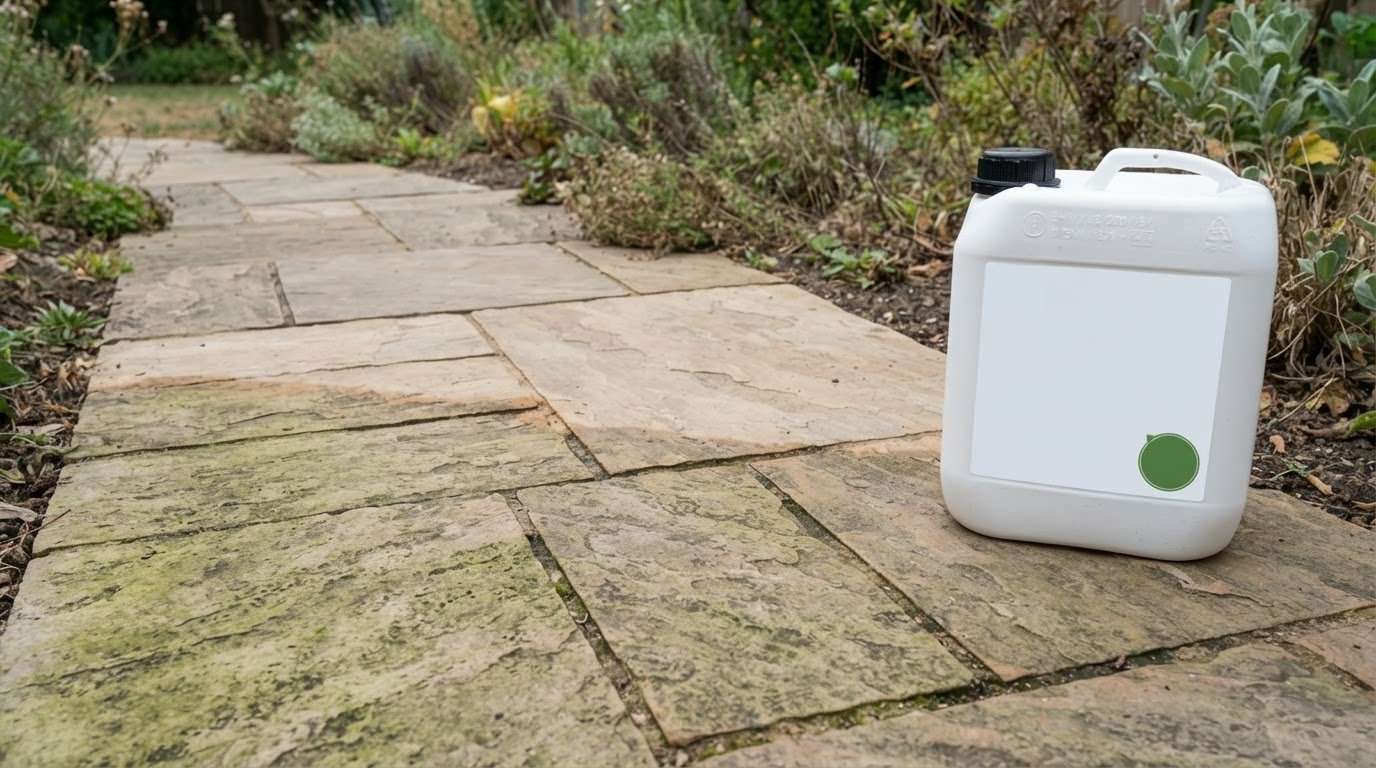
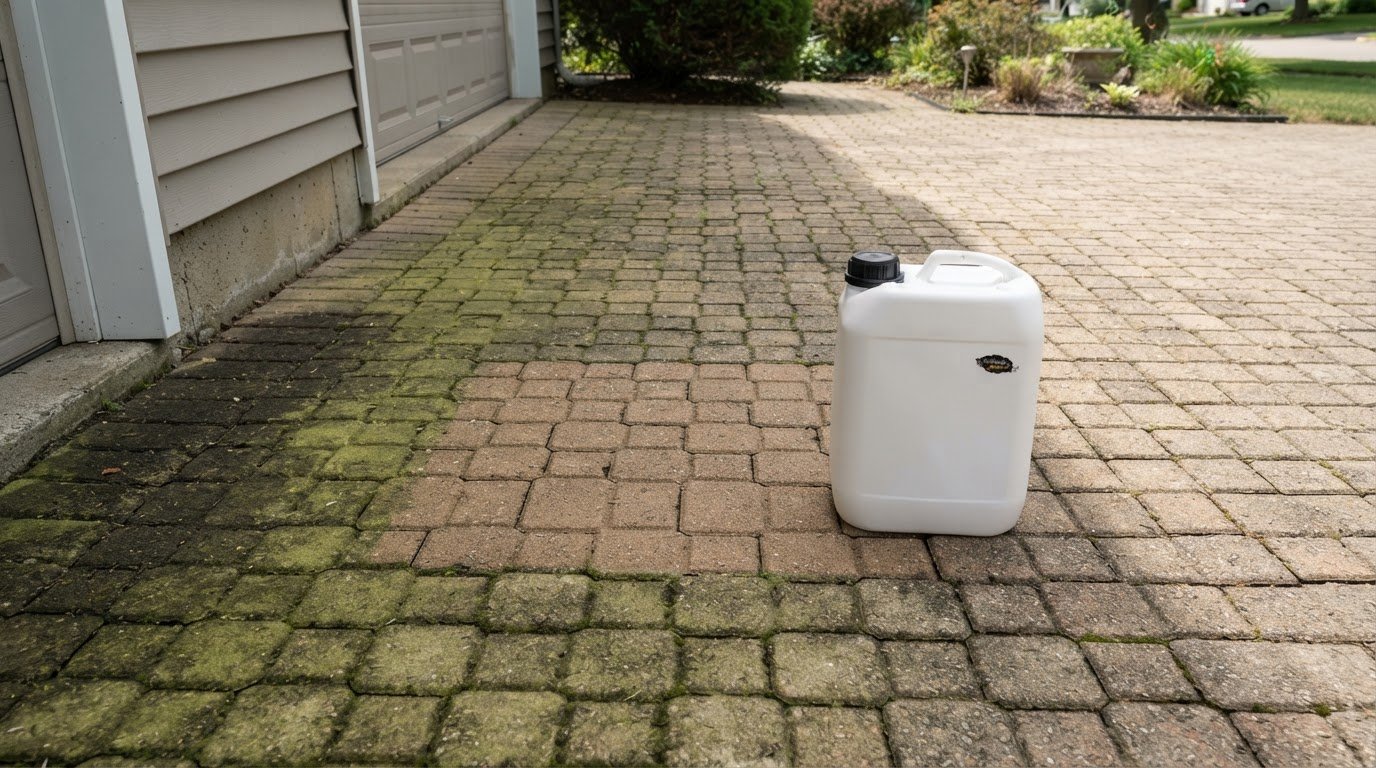
The best algae remover for outdoor stone is one suited to both the growth and the surface, not simply the strongest cleaner available. Grean Boss is formulated for green algae and mildew on outdoor hardscapes, including patios, walkways, driveways, pavers, and concrete. Follow its directions and test a small, inconspicuous area before treating the full surface.
Algae often returns where stone stays damp or shaded, so removal is only part of the job. This guide explains how to match a cleaner to outdoor stone, prepare and treat the surface, and use preventive sealing to help reduce regrowth. You’ll also learn why the source of the dampness and the stone’s porosity matter when choosing a practical approach. With the right cleaner and careful application, you can tackle green growth while protecting the look of your patio, path, or driveway.
Key Takeaways
- Match the cleaner to your stone and the type of growth, rather than choosing the strongest product by default.
- Prepare the surface and apply the treatment according to its directions to help clean effectively without unnecessary abrasion.
- Test a small, inconspicuous area first to spot possible discoloration or other surface reactions.
- Reduce conditions that keep stone damp or shaded, and consider preventive sealing as part of ongoing care.
- Choose a targeted algae remover for green growth, and use a separate solution when the problem is black spotting.
Algae growth on concrete, patio, and porcelain tiles
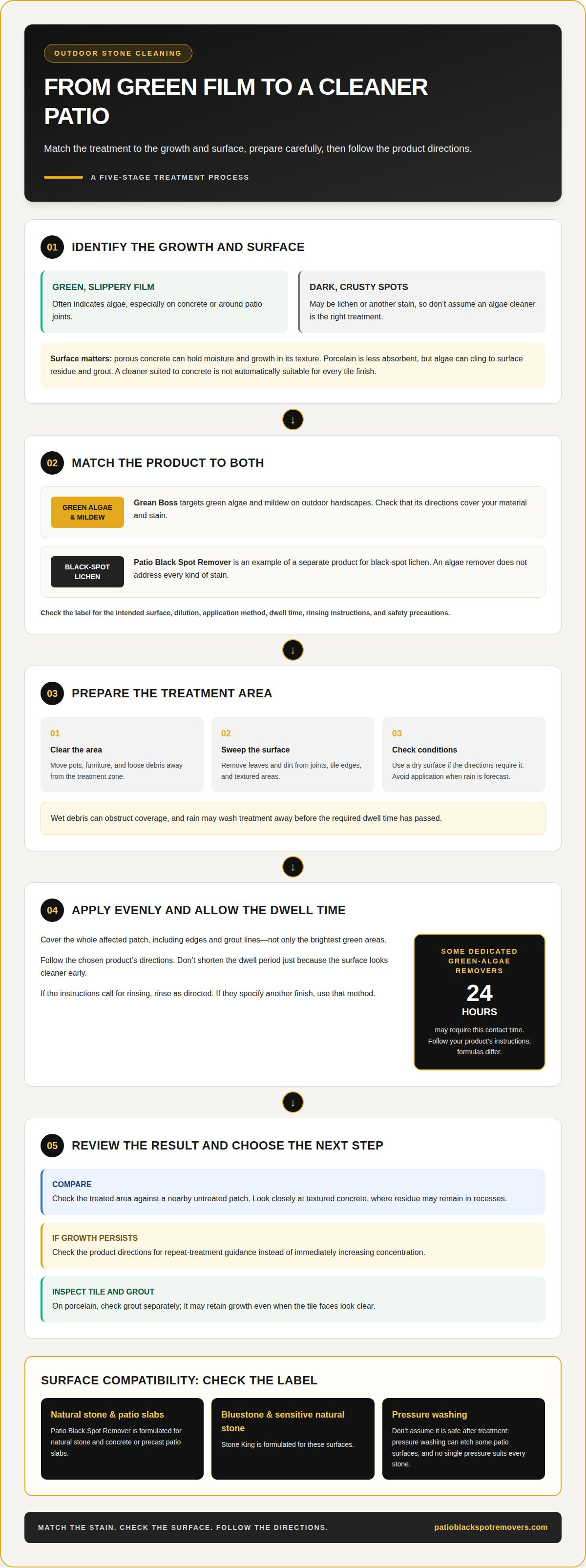
- Identify the growth and surface before choosing a cleaner. Green, slippery film on concrete or around patio joints often indicates algae, while dark, crusty spots may be lichen or another stain. Porous concrete can retain moisture and growth in its texture; porcelain is less absorbent, but algae can still cling to surface residue and grout. Follow the product directions for the specific material, since a cleaner suited to concrete is not automatically right for every tile finish.
- Match the cleaner to both the surface and the growth. Check that the product directions cover your material and the type of stain. Grean Boss targets green algae and mildew; black-spot lichen requires a different product, such as Patio Black Spot Remover. Check dilution and application directions before starting. These details help ensure the product is used as intended.
- Prepare the patio so the cleaner reaches the affected area. Move pots, furniture, and loose debris away from the treatment zone. Sweep leaves and dirt from concrete joints, tile edges, and textured areas where green film collects. Apply the remover to a dry surface when its directions call for dry conditions, and avoid application when rain is forecast. Wet debris can obstruct coverage, while rain may wash treatment away before the required dwell time has passed.
- Apply evenly, then allow the stated dwell time. For green algae, dedicated removers may require 24 hours of contact, but follow the chosen product’s instructions rather than assuming every formula works alike. Cover the whole affected patch, including edges and grout lines, instead of treating only the brightest green areas. Don’t shorten the dwell period because the surface looks cleaner early. If instructions call for rinsing, follow them; if they specify another finish, use that method.
- Review the result after treatment and use the right next step. Compare the cleaned area with a nearby untreated patch, especially on textured concrete where residue can remain in recesses. If growth persists, check the directions for repeat-treatment guidance instead of immediately increasing concentration. For porcelain, inspect grout separately because it may retain growth even when tile faces look clear. Keep the surface maintained after cleaning; persistent dampness can encourage algae to return.
Algae regrowth and preventive sealing
- After cleaning, identify why the same patch becomes green again. Check shaded corners, areas beneath planters, and joints that stay damp after rain. Algae removers clear existing growth, but they do not permanently prevent regrowth, especially in damp or shaded locations. Treat cleaning and prevention as separate jobs. If moisture continues to collect beside a wall or beneath furniture, address that condition alongside cleaning.
- Let the stone dry fully before considering a sealer. Trapped moisture can interfere with sealing and may leave the surface unevenly protected. Follow the sealer’s label for suitable materials, preparation, application, and drying conditions. Natural stone, concrete pavers, and porcelain don’t necessarily accept the same treatment; for sensitive surfaces such as travertine, resources such as sealwerx.com.au outline practical methods for reviving and protecting natural stone. Choose a product intended for the particular surface, and test an inconspicuous area first to check for changes in color or appearance.
- Apply preventive sealer as directed, not as a substitute for cleaning. A compatible sealer can help limit water absorption in porous stone, making the surface less hospitable to persistent dampness. It won’t remove algae already present, and it shouldn’t be treated as a permanent barrier against growth. Keep the application even, and pay attention to joints and edges where water may linger. Use the manufacturer’s guidance for coats and drying.
- Keep the patio clear after sealing. Move planters occasionally so their bases don’t hold moisture against the stone, and sweep leaves from joints before they break down into damp debris. Check areas beside downpipes, steps, and shaded walls after wet weather. If water repeatedly pools in one spot, improve its path away from the surface where practical. These small maintenance steps tackle the conditions that encourage algae between cleans.
- Inspect the stone before treating new marks. Green film suggests algae, while black spots may need a different approach. An algae remover doesn’t prevent black spots from growing, so don’t rely on sealing or algae treatment to address both problems. Choose treatment for the visible stain, then maintain the surface and review the sealer according to its own instructions. This keeps prevention focused on moisture and avoids treating every mark alike.
Product safety and surface compatibility
- For products sold at major U.S. retailers, choose a dedicated algae remover whose label names your surface. Follow its directions for dilution, application, dwell time, rinsing, and safety precautions. Don’t pressure-wash automatically after treatment. Stoneworld warns that pressure washing can etch some patio surfaces, and there’s no single safe pressure for every type of stone.
- Read the surface directions before buying or applying a cleaner. Concrete and natural stone have different textures and absorption levels, so a formula intended for one material may not suit another. Patio Black Spot Remover is formulated for natural stone and concrete or precast patio slabs. Stone King is formulated for bluestone and sensitive natural stone. Do not assume a product is suitable for a surface the directions do not identify.
- Test the product on a small, inconspicuous area first. Choose a spot behind a planter or near an outer edge, then apply the cleaner exactly as directed. Allow the treatment to work and check the result after the surface dries. Look for fading, color change, residue, or an altered finish. A small test can reveal a reaction before you treat a visible section or the whole patio.
- Keep the label available while preparing and applying the solution. Measure any dilution precisely, and use only the application method specified. Don’t combine algae remover with another cleaner, because mixing products can create unwanted reactions or affect the stone. Protect nearby plants and objects from overspray where the instructions advise it. Keep people and pets away according to the label, especially while the treated area remains wet.
- Let the product complete its stated dwell time before judging the finish. Some dedicated removers work gradually, so an immediate rinse or scrub may interrupt the intended treatment. If the label calls for rinsing, use its stated method rather than adding high pressure. If it calls for leaving the treatment in place, don’t pressure-wash it off. Reapply only as directed, not by increasing concentration or shortening the treatment interval.
- Match your cleaning method to the stone’s condition after treatment. Textured concrete can retain residue in its pores, while smooth porcelain may show streaks from uneven application. Follow the product’s cleanup directions and inspect both the tile faces and grout. Avoid aggressive scrubbing or forceful water on delicate stone. If the surface changes during the test, stop using that cleaner on the remaining patio.
Look for a dedicated algae remover labeled for your specific stone or paving, including any sealed or polished finish. Its label should specify dilution, application method, dwell time, rinsing, and safety precautions. When caring for or selecting architectural stone slabs, guidance from a specialized distributor like Infinity Stone Inc. can also help you understand how different densities and finishes respond to moisture and surface treatments.
Where algae grows outdoors
Cost per gallon or treatment depends on dilution, surface porosity, and application rate, so compare the label’s coverage with the area you’ll treat. For application, follow the product label: one part remover to three parts clean water is a specified dilution for some treatments, and dedicated algae remover directions recommend allowing 24 hours’ dwell time.
- Inspect shaded patio edges first. Areas beside fences, walls, and hedges receive less direct sun and can stay damp longer after rain. Look for green film where paving meets a shaded border, then trace the patch toward nearby drainage. This helps distinguish a localized damp area from growth spread across the whole patio. Treat the affected surface according to the cleaner’s material directions, not just the most visible spot.
- Check beneath outdoor furniture and planters. A pot base or chair foot can trap moisture and block airflow, creating a green mark that follows its outline. Move the item, inspect the stone beneath it, and treat the affected area. Afterward, reposition planters periodically so the same area can dry. On porous stone, growth may cling within the texture; smooth paving may show a surface film instead.
- Inspect joints, steps, and the edges of paving slabs. These recessed areas collect leaves, soil, and water, giving algae a sheltered place to establish. Sweep loose debris from joints before treatment, and note whether growth follows a step edge or spreads across each slab. Apply the cleaner evenly across affected joints and stone, following its label for dilution and dwell time.
- Look near downpipes, drains, and low points in the patio. A recurring green patch below a downpipe may indicate repeated wetting, while water gathered in a depression can keep paving damp. Check these locations after rain and compare them with nearby, drier stone. If the stain returns in the same place, reducing repeated wetting is part of managing regrowth, not simply applying more cleaner.
- Check paths, driveways, and north-facing outdoor walls as well as the main patio. Narrow paths bordered by planting can stay shaded, and paving beside a wall may dry slowly. Concrete, natural stone, and tile can all develop growth, but their textures and product compatibility differ. Identify the exact surface before choosing treatment, then follow the label rather than assuming one cleaner suits every outdoor material.
- Measure the area before mixing a treatment. A 4-litre quantity of Stone King Algae Remover makes 16 litres of ready-to-use solution and covers approximately 100 m², depending on surface porosity and application rate. Use that coverage information to estimate treatment needs, then follow the product’s own instructions. Applying more solution than the surface requires won’t solve persistent dampness beneath a planter or beside a drain.
Cost per gallon or treatment varies with the product’s dilution, surface porosity, and application rate. Compare the label’s coverage with the area you plan to treat to estimate what you’ll need.
Causes of algae on outdoor surfaces
- Track how long each area stays wet after rain. Algae needs moisture to establish, so a shaded patch beside a wall often behaves differently from a sunny slab. Compare damp corners with exposed paving after the same shower. If one section remains wet longer, investigate nearby shade, drainage, or water flow before treating the whole surface. Lingering moisture can point to the source of recurring growth.
- Check where sunlight is blocked. A fence, hedge, porch roof, or outdoor storage unit can shade stone and slow drying. Look for growth following the shadow line, especially beneath a bench or along the north-facing side of a structure. Trim or reposition items where practical to improve light and airflow. Avoid assuming shade alone explains every patch; a nearby downpipe or low spot may also keep that section damp.
- Inspect the stone’s texture and joints. Porous concrete and rough natural stone can retain water in surface pits, while recessed joints collect moisture and debris. Compare a textured slab with a smoother neighboring surface. Growth concentrated in grooves may indicate trapped dampness and dirt. Sweep loose leaves and soil from those areas, then check whether water drains freely.
- Follow the water. Examine the patio below downpipes, outdoor taps, air-conditioning drainage, and planters after use or rainfall. A narrow green trail below a leaking fitting points to repeated wetting, while a shallow depression can hold a puddle. Correct the source where practical, and clear debris that blocks drainage. Cleaning without addressing repeated water exposure leaves the same conditions in place for new growth.
- Look for organic debris that stays against the stone. Fallen leaves beneath a hedge, soil spilled from a pot, and clippings caught between slabs can keep a small area damp. Remove debris with a broom and move containers so their bases can dry. Check these spots again after rain. If growth repeatedly follows one planter or leaf pile, adjust that maintenance habit alongside cleaning.
- Separate the cause from the visible stain before choosing a remedy. Green growth across a damp, shaded area calls for an algae treatment, while black spotting may need a different product. Grean Boss treats green algae and mildew, but does not prevent regrowth in damp or shaded locations. Treat the surface as directed, then reduce moisture sources and maintain airflow. This addresses both the stain and the conditions behind it.
Patio Black Spot Removal: Bluestone Cleaner Stone King
Patio Black Spot Removal INC offers Bluestone Cleaner Stone King and Grean Boss Algae Remover for outdoor stone and paving. Choose an algae-focused cleaner for green growth, and use a product intended for the surface you’re treating. For black spotting, Patio Black Spot Remover addresses a different cleaning need; Patio Black Spot Preventer is for ongoing prevention, not algae removal.
Follow the product directions, including the surface guidance, dilution, and application method. If your patio has both green algae and black spots, identify each problem before choosing a treatment. Grean Boss targets green algae and mildew; Patio Black Spot Remover addresses black-spot lichen.
For help choosing among these patio cleaning products, contact Patio Black Spot Removal INC.
Make outdoor stone care part of your routine
Let the next cleaning begin with observation, not guesswork. Notice where dampness lingers, whether growth appears in a new place, and how the stone responds to treatment. Those patterns can help you choose more carefully when algae returns. Keep the surface material in mind, too: a cleaner suited to one patio may not suit another. The best algae remover for outdoor stone matches the growth and surface, with directions you can follow confidently. Treat maintenance as ongoing care, and your next decision becomes clearer.
If you’re ready to choose a suitable patio treatment, contact Patio Black Spot Removal INC. Take the next step with a clear plan for your stone, and give your outdoor space attentive care.
Frequently Asked Questions
What is the best algae remover for outdoor stone patios and walkways?
For green algae and mildew on outdoor hardscapes, Grean Boss is made for patios, walkways, driveways, pavers, and concrete. The best algae remover for outdoor stone is one whose directions cover your surface and stain. Match the treatment to the problem: black-spot lichen needs a different product, such as Patio Black Spot Remover. Follow the product’s application and safety instructions.
Which algae removers are safe for natural stone, including limestone, marble, sandstone, and granite?
Choose a cleaner whose label names the specific stone, then test a small, discreet area before treating the full patio. Patio Black Spot Remover is formulated for natural stone including sandstone, bluestone, York stone, limestone, travertine, and quartzite. Stone King is formulated for bluestone and sensitive natural stone. For marble or granite, use only a product whose directions identify that material as suitable.
How do oxygen bleach, sodium hypochlorite, and quaternary ammonium algae removers compare for stone?
Don’t choose by ingredient name alone. The formulation, concentration, surface directions, and application instructions all matter for stone compatibility. Oxygen bleach, sodium hypochlorite, and quaternary ammonium products aren’t interchangeable, and an ingredient label alone doesn’t establish suitability for limestone, marble, sandstone, or granite. Check the product directions for your exact stone, avoid mixing cleaners, and test an inconspicuous spot before broader application.
What algae removers are safe for plants, pets, and nearby lawns?
Follow the product’s precautions around pets and vegetation. Grean Boss and Patio Black Spot Preventer are safe for pets after the treated area has dried; Patio Black Spot Remover and Stone King require thorough rinsing first. Avoid spraying undiluted product directly onto plants or grass, and keep spray away from water bodies. Protect nearby planting from overspray, and keep pets off the area until the stated condition is met.
Can vinegar or household bleach damage outdoor stone or mortar?
Household cleaners can harm or discolor some stone, so do not assume they are suitable for a patio. Vinegar and bleach may also affect mortar and surrounding materials. Use a product whose directions cover your surface and algae problem, and test a small, hidden area before wider treatment. Never mix vinegar, bleach, or another cleaner. If the test changes the stone’s color or finish, stop and do not treat the rest.
How can you prevent algae from returning on outdoor stone?
Reduce persistent dampness by clearing leaves, improving airflow around planters, and addressing spots where water repeatedly collects. Don’t use a sealer as an algae-prevention step: sealers don’t stop organic growth and may alter the stone’s appearance. Patio Black Spot Preventer is a maintenance treatment for black-spot lichen prevention and green algae stains. Grean Boss targets green algae and mildew, not black-spot lichen.
What precautions and disposal rules apply when using algae remover outdoors?
Read the label before mixing or applying treatment, and use its dilution, surface, and safety directions. Work on a dry surface, wear suitable protective clothing, and keep spray away from plants, grass, and water bodies. For Grean Boss and Patio Black Spot Preventer, don’t apply if rain is forecast within 48 hours. Follow the product label and local waste instructions for leftover solution and its container.
Which algae removers are available at major U.S. retailers and what do product labels recommend?
Choose a dedicated algae remover whose label names your stone or paving and gives directions for dilution, application, dwell time, rinsing, and safety. Some treatments recommend 24 hours of dwell time; follow the specific product’s instructions.