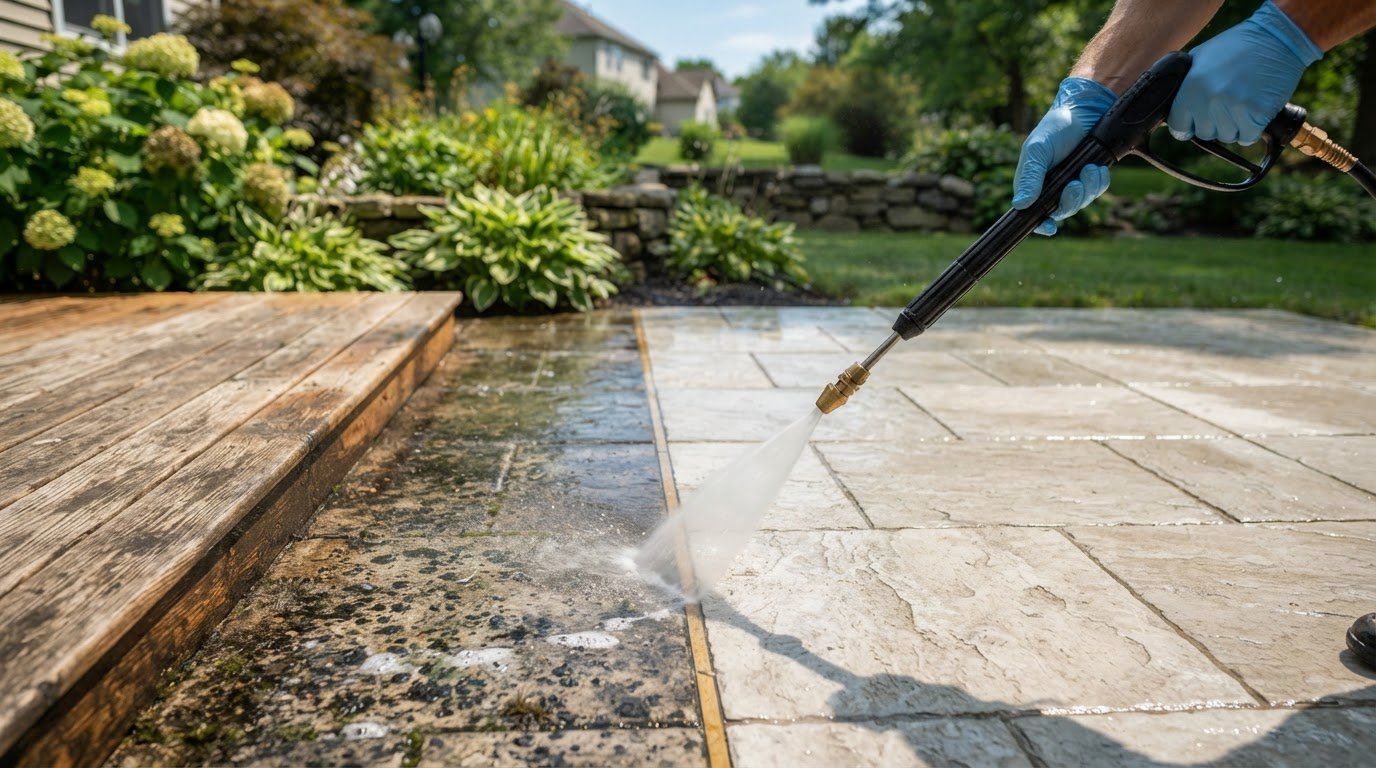
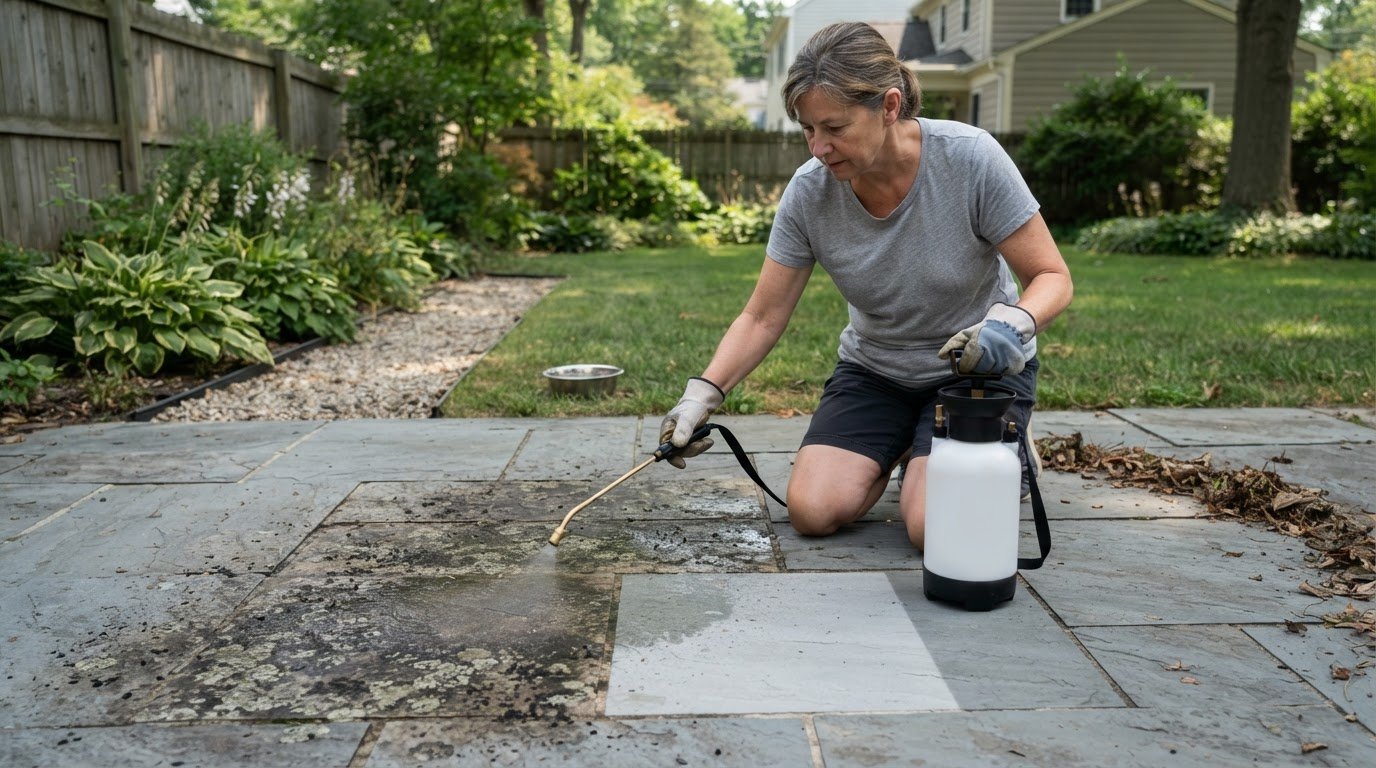
A cleaner patio doesn’t have to start with harsh chemicals. Sweep away loose debris, try water and a brush first, then use a 1:1 mix of white vinegar and water for mildew, dirt, or algae on suitable hard surfaces. An eco-friendly patio cleaner should match the paving, and vinegar can erode limestone or marble if overused.
It’s frustrating when green growth and grime dull a patio, but using more cleaner isn’t always the answer. Start with the gentlest method suited to the surface, and manage runoff to protect nearby plants and pets.
This guide explains how to clear debris, choose an eco friendly patio cleaner, and protect nearby plants and pets. You’ll also learn when a DIY clean may be enough and when persistent organic stains call for a purpose-made product.
Key Takeaways
- Start with sweeping and brushing so you can lift loose debris before reaching for a cleaner.
- Choose a low-chemical method that suits your paving, and take care with acidic solutions on sensitive stone.
- Keep pets, bowls, and loose items away while cleaning, and let the patio dry before pets return.
- Protect nearby plants by controlling overspray and runoff, and guide water away from flowerbeds.
- For persistent organic staining, consider whether a purpose-made patio cleaner is a better fit than another DIY treatment.
1. Why Choose Eco-Friendly Patio Cleaning?
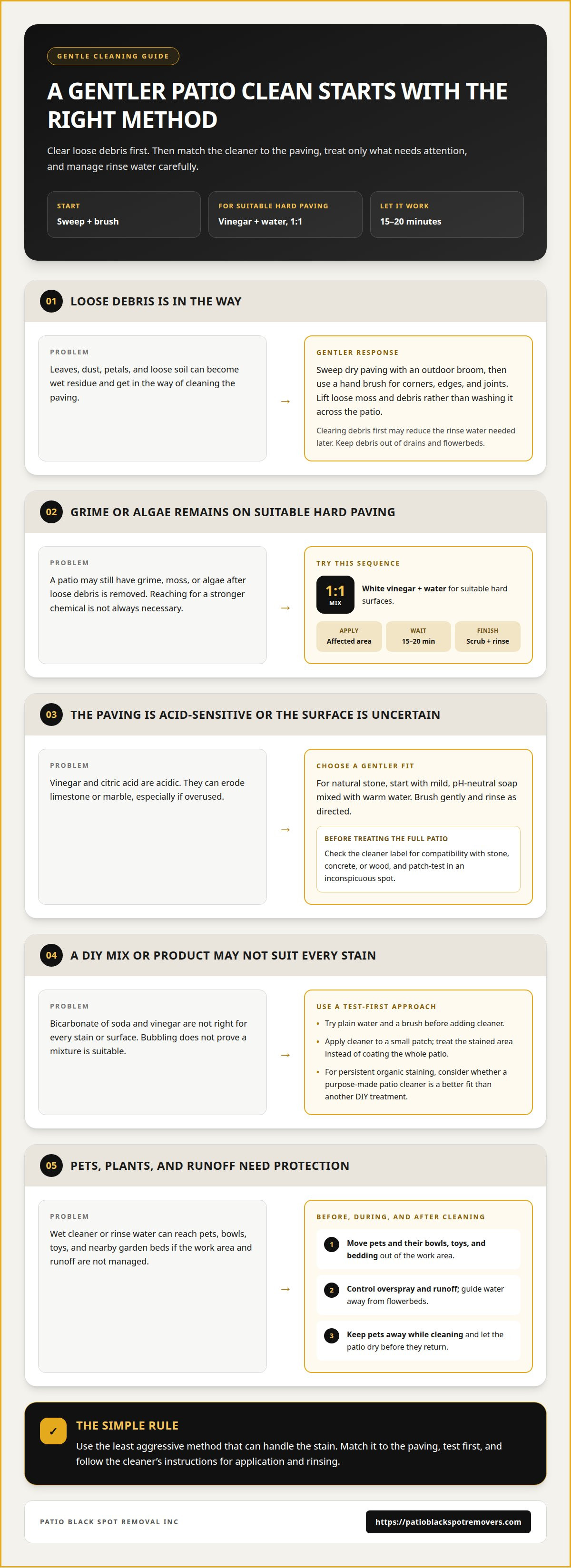
Eco-friendly patio cleaning starts with using the least aggressive method that can handle the stain. Sweep first, then try water and a stiff brush on outdoor surfaces before choosing a cleaner. For grime, moss, or algae on suitable hard paving, mix white vinegar and water in a 1:1 ratio. Apply it to the affected area, leave it for 15-20 minutes, scrub, then rinse. This gives the solution time to work without immediately reaching for a stronger chemical.
Match the cleaning method to the patio material. Vinegar and citric acid are acidic, so use caution on limestone and other acid-sensitive stone. For natural stone, a mild, pH-neutral soap mixed with warm water is a gentler starting point. Patch-test any cleaner in an inconspicuous spot and follow its label for application and rinsing.
Bicarbonate of soda, also called baking soda, can help loosen dirt during a targeted clean. Some DIY advice suggests combining it with vinegar, letting the mixture sit briefly, then scrubbing and rinsing. However, the mixture is not suited to every stain or surface, and its bubbling reaction does not prove otherwise. Test a small, inconspicuous area first, especially on polished or sealed paving.
Biodegradable patio cleaners aren’t automatically suitable for every material. Check the label for compatibility with stone, concrete, or wood, then patch-test before treating the full patio. Concrete and some pavers can tolerate different cleaners than limestone, while wood may need a gentler approach. With an eco friendly patio cleaner, surface directions matter as much as ingredient claims.
There’s no single average price for eco-friendly patio cleaners in the US; costs vary by product size and formulation. Pressure washing can lift grime using water and mechanical force, but water use depends on the washer, pressure setting, cleaning time, and patio area. Use the lowest effective pressure, and try brushing first when it can remove the dirt.
A simple DIY patio-cleaning solution can be made with lemon juice and water. Like other acidic ingredients, it needs caution on sensitive stone. Test it on an inconspicuous patch before applying it more broadly.
2. Clearing debris before cleaning
Dry debris is easier to remove before it becomes wet residue. Sweep leaves, dust, flower petals, and loose soil off the paving first. This clears the surface so water and cleaner can reach grime beneath, rather than soaking into garden waste, and may reduce the rinse water needed later.
Use a stiff outdoor broom across the slabs, then sweep the edges where windblown leaves collect. Lift compacted debris from corners and around drain covers with a hand brush. Check under chairs and planters too, since trapped leaves can hold moisture against paving and leave marks. Set aside clean organic material for composting.
Before sweeping near a garden bed, look for wildlife sheltering among leaves or moss. Move debris gently to avoid disturbing hidden animals or nests. Remove pets, food bowls, toys, and movable furniture from the patio before cleaning. This clears the work area and helps prevent dirty splashback from reaching bowls, toys, or outdoor furniture from Tropicraft Patio.
- Gather loose items: Move chairs, plant pots, mats, and pet bowls away from the cleaning area.
- Sweep the open paving: Brush leaves and loose dirt into a pile before applying water.
- Clear joints and edges: Lift packed weeds, moss, and soil carefully with a hand tool.
- Sort the debris: Compost swept leaves, moss, and other suitable organic material.
Give patio joints a careful pass. Use a narrow brush to loosen soil and plant fragments between slabs, then sweep the debris away. Clear buildup at edges, such as the base of a wall or beside a step, before rinsing. Avoid forceful scraping that could chip a slab or dislodge jointing material.
Look for dry stains that brushing can remove without washing. For example, brush dried soil around a planter before wetting the surrounding paving. If moss is loose, lift and collect it rather than washing it across the patio. Keep debris out of drains and flowerbeds to avoid extra cleanup and blocked runoff.
Once the surface is clear, you can judge what still needs treatment. If bluestone remains stained after loose debris is removed, using an eco friendly patio cleaner is a great way to safely prepare your stone for the next steps.
3. Low-chemical and pet-safe patio cleaning
Start with plain water and a brush, then use a mild cleaner only if residue remains. Castile soap mixed with warm water is one low-chemical option for routine washing. Apply it to a small patch, scrub gently, and rinse as directed. This limits unnecessary cleaner and shows how the patio material responds.
A low-chemical product still needs to suit the paving and the job. Read the label for surface compatibility, application, and rinsing instructions, then test an inconspicuous area before treating the full patio. For natural stone, mild, pH-neutral soap and water offer a gentle cleaning option. Avoid vinegar on limestone or marble, because its acidity can erode those surfaces.
What should you avoid in an environmentally friendly patio cleaner? Avoid harsh products and cleaners not labeled for your patio surface. Don’t use vinegar on limestone or marble. If pressure washing with detergent, choose a biodegradable option and follow its directions.
Keep pets away during cleaning, even when using a homemade solution. Move bowls, toys, and bedding out of the work area before washing. Don’t let pets walk through wet cleaner or rinse water. Once cleaning and rinsing are complete, let the patio dry before pets return. This reduces contact with damp residue on paving and in joints.
- Use the gentlest method first: Brush with water before adding soap or another cleaner.
- Apply selectively: Treat the stained patch instead of coating the entire patio.
- Rinse as directed: Follow the product label rather than leaving cleaner behind.
- Keep pets out: Reopen the area after the patio has dried.
For a small oil or grease mark, cornstarch can absorb some of the stain. Leave it on the spot for around 30 minutes, then sweep it away. This dry method avoids washing a larger area just to treat one mark. If residue remains, use a suitable cleaner on the affected paving and rinse according to its label.
Pressure washing can clean with water alone, but strong pressure may be unnecessary for ordinary dirt. If detergent is needed, choose a biodegradable option. Steam cleaning is another method that uses water without detergent. Keep pets away while the surface is wet, then let it dry fully before returning bowls or toys.
Low-chemical cleaning works best as a sequence: remove loose grime, choose a method suited to the surface, and focus treatment on the stain. This keeps cleaning targeted and helps avoid leaving excess product or residue across the patio.
4. Protecting nearby plants from runoff
Before applying cleaner, trace where water will flow across the patio. A slight slope can carry diluted product toward flowerbeds, lawn edges, or a storm drain. Cover nearby plants to limit overspray, then remove the cover after cleaning and rinsing. Keep it clear of delicate stems to avoid crushing them.
For patio cleaning in the US, follow the product label and keep cleaner-laden runoff out of storm drains. Direct rinse water toward permeable ground where it can soak in, rather than letting it flow into a drain. Use only the amount directed, and avoid cleaning in rain, which can spread residue beyond the patio.
A pressure washer can send water farther than a garden hose, so check the spray direction before starting. Aim toward permeable ground and use the lowest effective pressure. Keep the nozzle angled away from plants, doors, and drainage grates. If the patio slopes toward a drain, use a broom or squeegee to guide water toward soil instead.
Gravel or mulch can help redirect water away from flowerbeds. Place a low barrier along the patio edge where runoff usually escapes, leaving a route toward permeable ground. Don’t block a drain with loose material. After rinsing, check the barrier and nearby soil for suds, cleaner residue, or dislodged organic debris.
- Cover plants: Use a tarp to shield foliage from cleaner spray and rinse water.
- Control the flow: Direct runoff toward soil where it can soak in.
- Protect drains: Keep cleaner and patio debris from entering storm drains.
- Inspect the edge: Look for pooled water or residue near flowerbeds after rinsing.
Keep rinsing controlled. Use a hose with a steady, gentle flow instead of flooding the patio. If cleaner remains, rinse according to the label rather than extending the wash across the garden. Collect loose moss and leaves separately so organic debris doesn’t wash into planting beds or block drainage.
Once the surface dries, remove the plant cover and inspect leaves and soil along the patio border. If you spot suds or residue, rinse the affected area with clean water toward permeable ground. This final check can catch overspray and runoff that passed beneath the barrier during cleaning.
5. Eco-friendly professional cleaning
Professional patio cleaning can still use a low-chemical approach. Much like how professional services such as Valley Clean tailor residential and commercial cleaning to protect specific materials, exterior upkeep relies on matching the method to the stain and surface rather than defaulting to stronger chemicals. For loose dirt on concrete, water and brushing may be enough. For persistent organic growth, a suitable patio cleaner or controlled pressure washing may be more appropriate.
Ask what the cleaning process involves, not just whether it is called green. A practical approach starts by identifying the paving, checking the stain, and testing a small area. Use the cleaner according to its label. For natural stone, mild, pH-neutral soap and water offer a gentle option.
Equipment matters too. Pressure washing can clean with water alone, but excess pressure can damage paving or push runoff toward plants and drains. Use the lowest effective pressure and direct the spray toward permeable ground. Steam cleaning is another detergent-free option. Choose a method suited to the surface, rather than relying on the most powerful equipment.
Before cleaning, clear leaves and move furniture away from the area. This gives the cleaner better access to paving and keeps dirt from being blasted beneath chairs or planters. Cover nearby plants and guide runoff toward ground where it can soak in. These steps matter whether you’re cleaning concrete, stone, or pavers.
Regular maintenance doesn’t always require machinery. A brush, water, and a surface-compatible cleaner can address a small stained area with less overspray. Reserve pressure washing for grime that brushing cannot shift. If you use detergent with a pressure washer, choose a biodegradable option and follow its label for use and rinsing.
Consider a more intensive method when staining covers a broad area, remains after careful brushing, or returns quickly. The material, type of growth, and location of drains all affect the cleaning plan. Deeply marked bluestone, for example, calls for a cleaner suited to that stone rather than a general-purpose chemical.
Keep the goal simple: remove the stain while limiting chemical use, water waste, and runoff. If bluestone is the surface that needs attention, explore patio-cleaning products suited to outdoor stone care.
Patio Black Spot Removal: Patio Black Spot Remover
Patio Black Spot Removal INC offers Patio Black Spot Remover for persistent organic staining on outdoor paving. Choose it when sweeping, brushing, and a suitable low-chemical method haven’t shifted stubborn black spots or lichen. Match the product to your patio surface, patch-test first, and follow its directions for application and rinsing.
For other cleaning needs, Stone King Bluestone Cleaner is designed for bluestone, Grean Boss targets algae, and Patio Black Spot Preventer helps prevent new staining. Choose according to the stain and material rather than using one product on every surface. Read the label and manage runoff carefully to protect nearby plants.
For product details, visit Patio Black Spot Removal INC.
Make your next patio clean more deliberate
Let the surface guide your next step. A shaded stone corner with recurring growth needs a different approach from a concrete path marked by loose soil. Identify the material and stain before choosing an eco friendly patio cleaner suited to both. This keeps maintenance focused instead of treating every slab with the same product.
Make a habit of checking the patio when putting furniture away or sweeping leaves. Spotting fresh buildup early gives you a chance to remove it before it becomes a larger task. Keep the product label handy and follow its directions each time you clean. Consistent, careful upkeep helps protect paving, nearby planting, and the outdoor space you enjoy.
If persistent patio staining needs a purpose-made product, contact Patio Black Spot Removal INC to explore the available options. Take the next step with care, and keep your patio ready to enjoy.
Frequently Asked Questions
Decision Framework: What Should You Use?
Choose by surface first, then by stain. For routine dust on concrete, a brush and water may be enough; for biological growth on bluestone, use a cleaner intended for that stone. Treat grease separately from algae or lichen, since one method may not address both. Consider nearby plants and drainage before choosing a wet method, then follow the product label for application and rinsing.
Why Choose Eco-Friendly Patio Cleaning?
This approach reduces reliance on strong detergents. Brushing loose dirt away before applying a product, for example, can reduce the amount of cleaner needed. A suitable low-chemical method also lets you focus on the stained section instead of washing the whole patio. Check that the method suits the paving, addresses the stain, and allows you to manage rinse water responsibly.
Why Go Eco-Friendly?
Choose an eco-conscious approach to keep cleaning controlled around your outdoor space. A patio beside a vegetable bed, lawn, or fish pond needs careful runoff management, even with a mild solution. Use a cleaner suited to the surface, apply it only where needed, and keep excess water away from sensitive areas. Aim for effective maintenance without unnecessary product use or careless runoff.
What Are the Best Eco-Friendly Patio Cleaners?
The best choice depends on the stain and paving. Patio Black Spot Remover targets black spot lichen and other organic staining; Stone King Bluestone Cleaner is intended for bluestone. Grean Boss targets green algae, mildew, and moss, while Patio Black Spot Preventer helps prevent new staining rather than removing existing black spots. These products are biodegradable and acid-free. Read each label to match its use to your patio.
Which Patio Cleaners Are Safe for Pets, Children, and Plants?
Follow the product directions and keep people and animals away during application. Rinse Patio Black Spot Remover and Stone King Bluestone Cleaner thoroughly before pets return; let Patio Black Spot Preventer and Grean Boss dry before pets return. Products are safe for plants when applied correctly, but don’t spray undiluted product directly onto plants or grass. Keep children off the area until cleaning is complete and the surface is dry.
How Do Homemade Vinegar and Baking Soda Patio Cleaners Compare With Commercial Products?
Homemade mixtures can suit small, light cleaning tasks, but acidic vinegar can harm limestone or marble. Baking soda and vinegar may help with surface grime, though the mixture isn’t tailored to every paving material or stain. Purpose-made cleaners give directions for particular surfaces or types of organic growth. Compare the label with your patio material, then patch-test before treating a larger area.
How Effective Are Eco-Friendly Patio Cleaners at Removing Algae, Moss, Grease, and Stains?
Results depend on matching the cleaner to the stain. Grean Boss targets algae, mildew, and moss; Patio Black Spot Remover addresses black spot lichen and other organic staining. Grease is different: start by absorbing a small oil mark with cornstarch, then sweep it away. For older or heavy biological staining, follow the product directions and assess the surface after treatment rather than assuming one application will suit every patio.