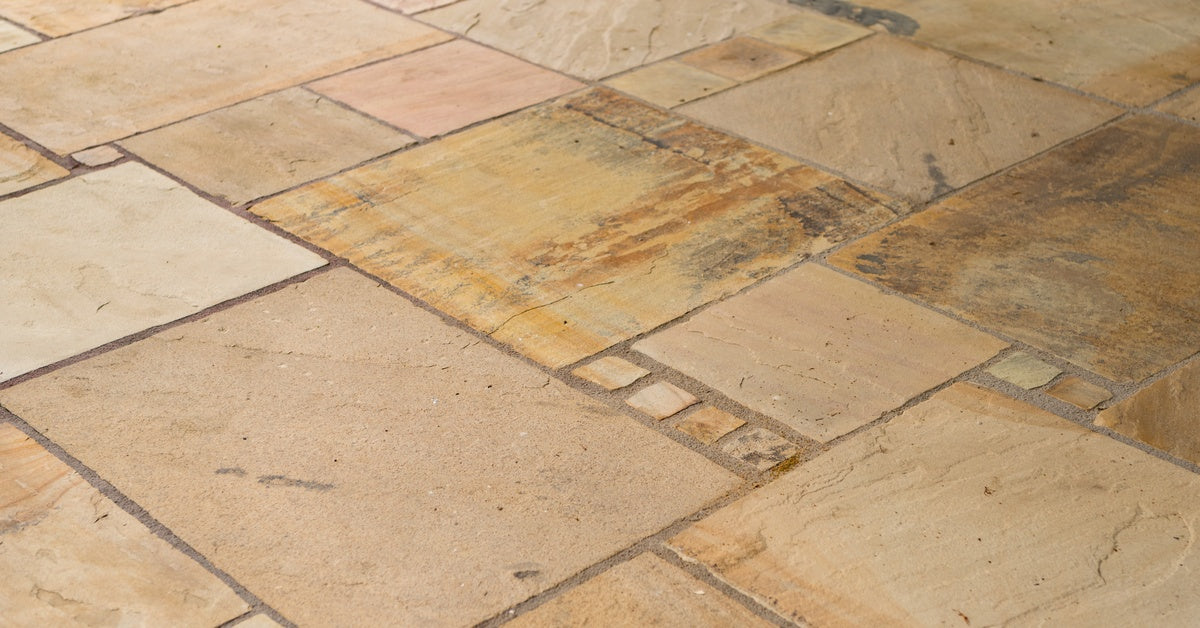
Indian sandstone provides varied tones that make outdoor patio spaces feel warm and established. However, this stone requires consistent care. Black stains can develop when organic growth settles into the surface. If you’re interested in the unique look of Indian sandstone for your patio, here are the tips you need to know to prevent black spots and stains.
How Does Indian Sandstone Develop Black Stains
Indian sandstone has a porous surface. Tiny openings in the stone can hold moisture and organic matter after rain or regular outdoor use.
Black spots come from black lichen spores that land from the trees. They feed off the mineral within the stone. The longer they are left, the harder it is to remove them.
Moisture creates the right conditions for growth. Shaded areas and damp corners often show stains first. Black stains rarely stay on the surface alone. They can root into the stone and become harder to remove with basic washing.
Routine prevention helps protect the patio before stains spread. A homeowner can reduce the risk with correct cleaning habits and targeted patio care products.
Keep Organic Debris Off the Patio
Leaves, soil, pollen, and garden waste can feed mold and algae growth. Indian sandstone patios often collect this debris after storms or seasonal changes. Debris can gather around planters and furniture legs. It can also collect along walls and between slabs.
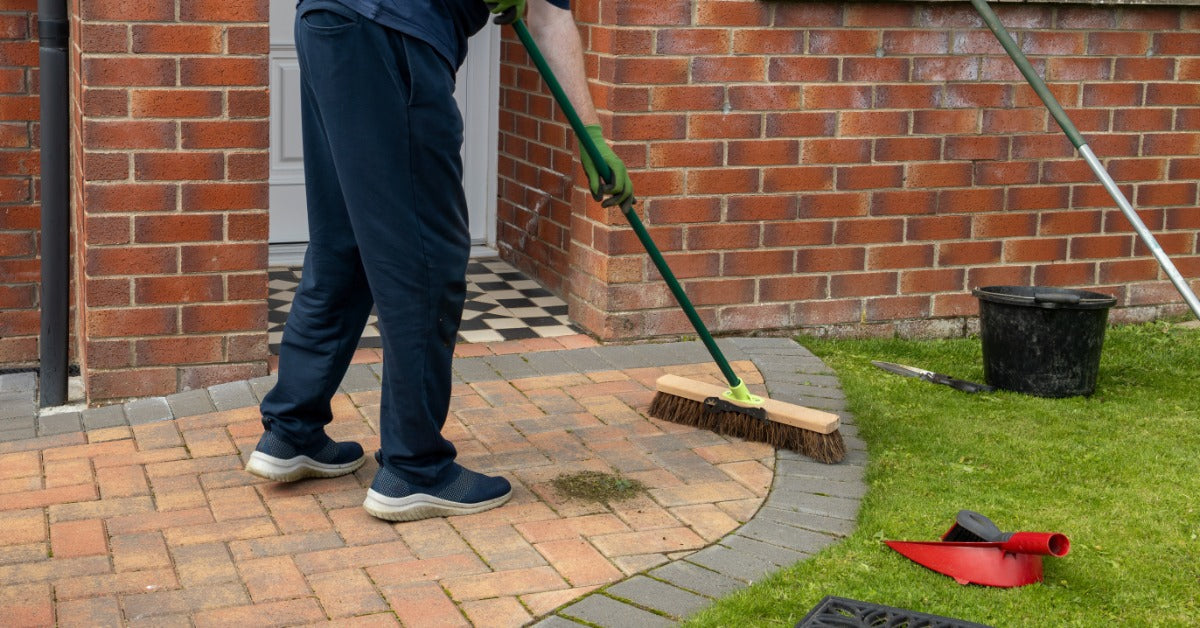
A quick sweep helps stop organic matter from sitting on the stone. This simple habit also improves the overall look of the patio.
Regular clearing matters most during fall and spring. These seasons bring heavier plant waste and more moisture.
Homeowners should also check corners after heavy rain. Water can push leaves and soil into low areas where staining may begin. Additionally, damp debris can encourage black staining when left in place.

Improve Drainage Around the Patio
Standing water increases the chance of black stains. Indian sandstone performs better when rainwater drains away from the surface. Poor drainage can leave damp patches for long periods. These damp patches give algae and lichen more time to establish.
Blocked drains can cause staining around the edges. Soil or garden waste can also prevent water from leaving the patio. Homeowners should keep drainage channels clear. Regular checks help reduce moisture before it becomes a recurring problem.
Uneven slabs can also hold water. A professional patio contractor can review dips or problem spots when drainage remains poor.
Reduce Shade Where Practical
Shade slows evaporation after rain. It also makes mold and algae worse on stone surfaces. Indian sandstone patios near trees or fences often stay damp. These areas need more frequent attention than open, sunny spaces.
Trimming back overhanging branches can help. This technique allows more light and air to reach the patio. Dense shrubs near the patio can also trap moisture. A small gap between plants and paving improves airflow.
Garden furniture can create shaded patches too. Moving furniture during routine cleaning helps the surface dry more evenly. Additionally, planters should not sit in one place for long periods. Moisture can collect underneath and leave dark marks on the stone.
Use the Right Cleaning Routine
Aggressive pressure washing on Indian sandstone can disturb joints or roughen the stone surface. Avoid pressure washing and instead opt for a controlled, product-based routine that gives homeowners better long-term results.
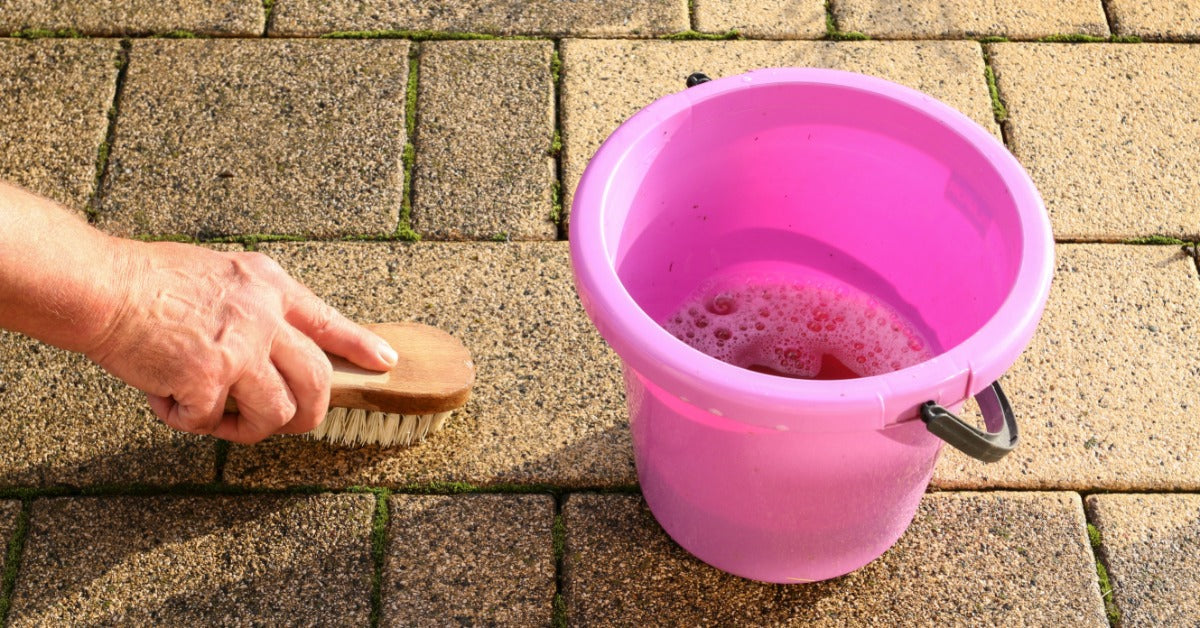
A proper cleaning routine should match the type of staining. General grime needs a different approach than black lichen spots. Black spots need targeted treatment because this lichen is within the stone, not just the surface. Surface washing alone will not solve the problem.
Homeowners should follow product instructions closely. Correct dwell time and application method can affect the final result. Re-treating can often be required on surfaces older than five years.
A simple routine can include:
- Sweeping loose debris
- Treating visible stains
- Rinsing as directed
- Using preventative products
This approach keeps patio care manageable. It also helps prevent stains from reaching a more difficult stage.
Avoid Common Patio Care Mistakes
Many homeowners wait until black stains become widespread. Early action usually makes patio cleaning easier.
Another common mistake involves using a general outdoor cleaner for every stain. Black spot growth often needs a more specialized formula. Homeowners should also avoid mixing different cleaning products. Product combinations can create safety risks and poor results.
Heavy pressure washing may create a clean look at first but speeds up some types of organic staining on patios.
Ignoring edges and joints can also lead to repeat staining. These areas often hold damp debris and need regular attention.
Treat Black Spots Before They Spread
Small black spots can become larger patches. Early treatment helps limit the amount of growth across the patio. Indian sandstone can show staining more clearly on lighter slabs. That contrast makes early marks easy to notice.
A patio black spot preventer can help support a maintenance routine after cleaning and gives homeowners a targeted option for ongoing patio care. Prevention works best on a clean surface. Removing existing black spots first helps the patio stay in better condition.
Maintain Joints and Edges
Joints and edges often collect moss, soil, and plant debris. These areas can hold moisture long after the main patio surface dries. Borders near lawns often need extra care. Grass clippings and soil can wash onto the sandstone after rain.
A complete patio care routine should include these overlooked spaces. Staining often starts where routine cleaning stops.

Choose Products Made for Restoring Patios
Indian sandstone needs products that address organic staining without unnecessary harshness. Patio Black Spot Removal Inc. formulates products for patio cleaning and stain prevention.
Our company focuses on black lichen stains that many standard patio cleaners fail to tackle. Our formulas also target stains caused by mold, algae, mildew, and related outdoor growth.
A homeowner can use Patio Black Spot Remover to treat established staining and our preventer for routine care after the patio looks clean. This two-step approach helps homeowners manage both cleaning and annual maintenance. It also supports better long-term results than surface washing alone.
Keep the Patio Looking Its Best
Black stains on Indian sandstone need practical prevention. Moisture control, debris removal, and targeted products all play an important role. A clean patio also supports safer outdoor use. Less algae and grime can help reduce slippery areas during wet weather.
Homeowners should not wait for stains to cover the surface. Early treatment protects the look of the stone and reduces future work.
Patio Black Spot Removal Inc. offers patio cleaning products designed to restore the natural colors to stonework and help homeowners maintain their outdoor spaces. Choose Patio Black Spot Remover and Patio Black Spot Preventer to restore the patio surface and support lasting results.