Lichen growth can make a clean patio look worn and neglected. These dark marks often form across natural stone, concrete, brick, and patio tile. Many property owners first try pressure washing or standard outdoor cleaners, which often removes surface grime, but rarely removes the lichen that grows within the stone.
Professional-grade patio cleaners work differently. They target the lichen spots and remove it from the stone. Find out how these professional-grade cleaners are able to break through black lichen spots better than other methods.
Why Lichen Becomes So Difficult to Remove
Lichen starts as microscopic spores from the trees that land on outdoor surfaces. Wind often carries these spores and when it rains, they get nestled into the pores of the stone. Lichen lays dormant for the first 12 months. After this 12-month period, they start to feed from the minerals in the surface.
If not removed, a two-year germination period starts. Signs of black lichen spots start to show after this three-year growing process.
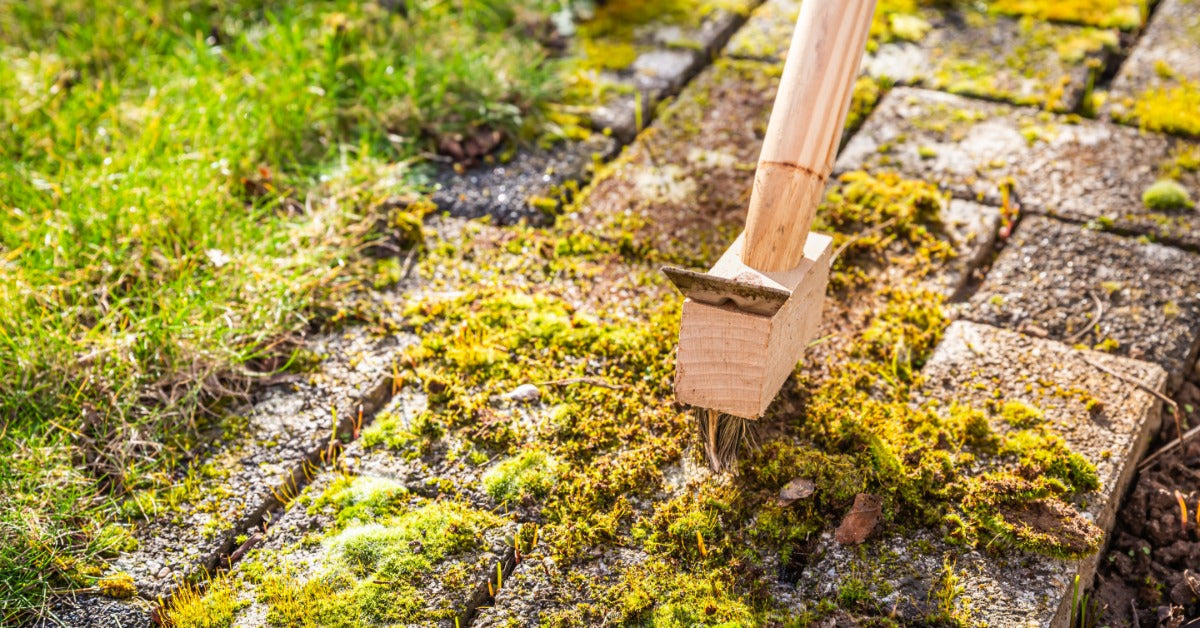
Black lichen spots can look like ink dots at first. As they grow, the spots become darker and harder to remove. Lichen also develops a root-like structure that grips into tiny pores and surface texture. This structure creates the main challenge for homeowners. Surface scrubbing & brushing on concrete slabs may remove the head of the lichen, but it will return within months.
How Lichen Forms on Patio Surfaces
Some patios are more porous than others. The more porous, the quicker black lichen spots will grow. Natural stone such as limestone and sandstone are very porous. These surfaces can be harder to maintain for this reason. Moisture helps those areas support growth. Shaded patios and areas near planting beds often stay damp for longer periods.
The first layer of lichen growth spreads across the surface. If left untreated, it continues to grow and eventually discolors the entire patio.
Standard cleaning products often struggle because they only work as a surface cleaner.

Why Household Cleaners Often Fall Short
Many household cleaners focus on general dirt. Patio lichen needs a more targeted cleaning approach. Soap and water can loosen soil from the surface, but they cannot always disrupt biological growth behind black spots.
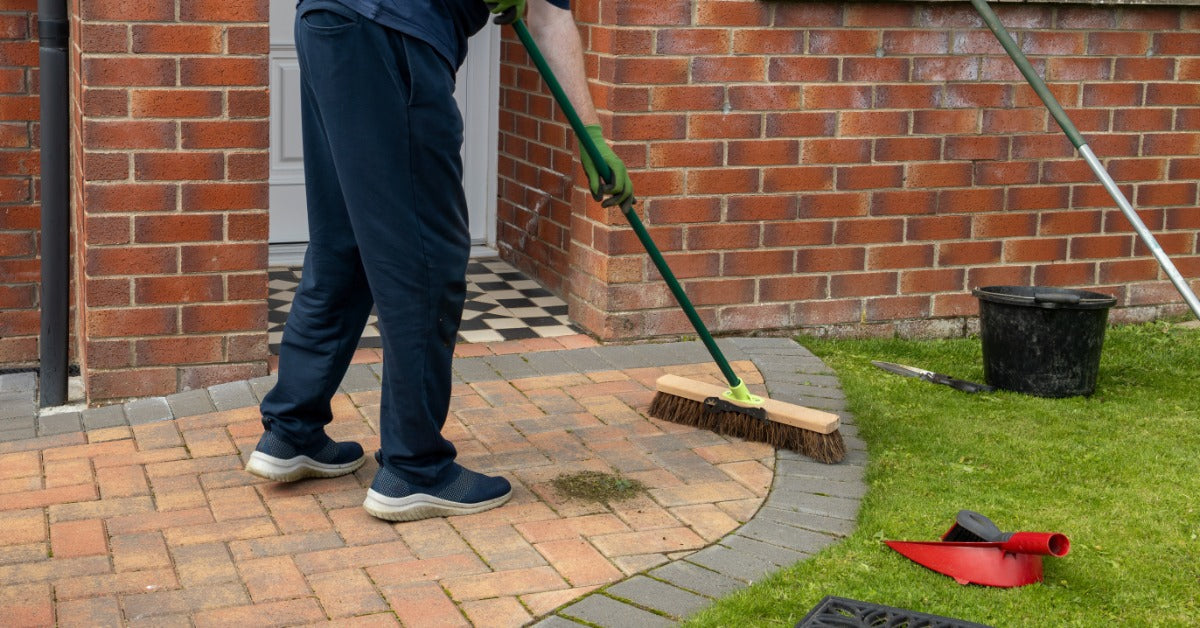
A general patio cleaner and a stiff brush may improve remove surface dirt, but won’t touch stubborn staining or lichen.
Some homeowners increase pressure to compensate. Heavy pressure can harm stone surfaces and accelerate lichen growth. Acidic cleaners can create another problem. Harsh acids may damage natural stone and surrounding garden areas.
How Professional-Grade Cleaners Reach Deeper Growth
Professional-grade patio cleaners use stronger stain-targeting action than basic cleaners. Rather than focusing on the surface of the stone. They aim to sink into the stone and remove the lichen.
A quality cleaner should be applied with a pump-up garden sprayer. Sprayed onto the surface and left work for the stated dwell time. The cleaner sinks into the stone and begins to disrupt the lichen structure.
Lichen growth that has only been visible for a couple of years can be removed in as little as 30 minutes. The patio surface can show a cleaner and brighter finish within just 10 minutes of application. When ready to rinse off, lightly pressure wash the area to remove any growth on the surface of the stone.
The Role of Contact Time
Contact time plays a major role in patio cleaning. Professional-grade cleaners need time to work through the stone. Fast scrubbing can limit the cleaner’s effect. The formula needs direct contact with the stain before removal begins.
These cleaners work whilst the surface is wet and saturated with the cleaning product. Avoid applying these cleaners when the stone is in direct sunlight as it will dry too quickly. Homeowners should follow product instructions closely. Correct dwell time helps the cleaner perform as designed.
Why Pressure Washing Alone Can Miss Black Spots
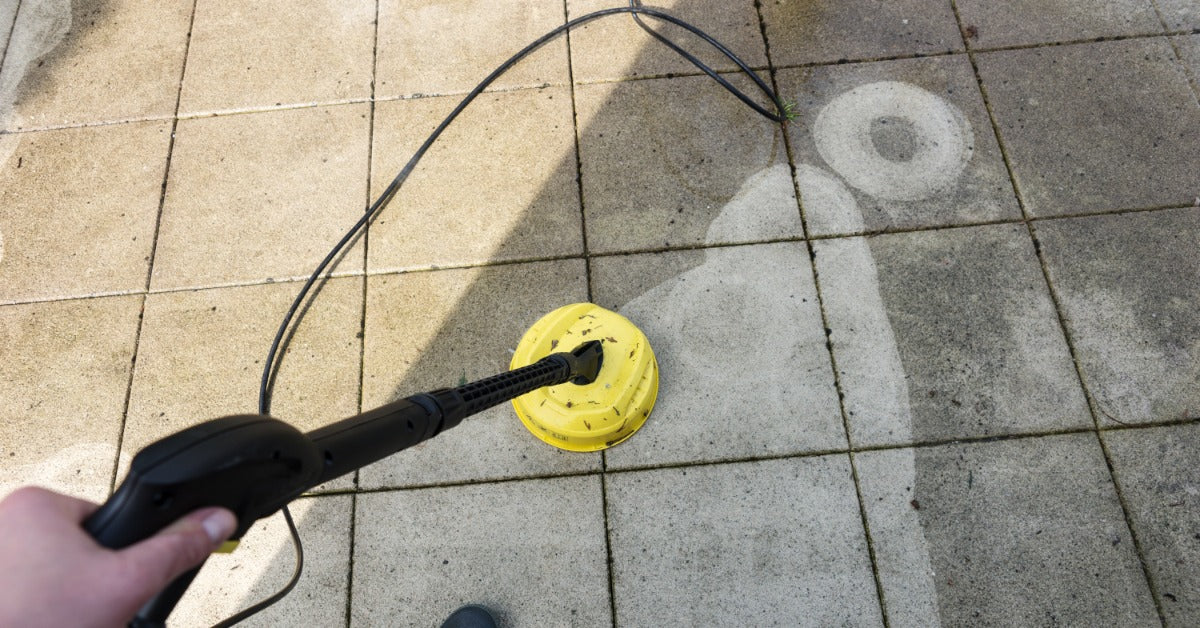
Pressure washing can remove loose dirt from patio surfaces. It can also clear moss and some algae from the top layer. Black lichen often stays in place after pressure washing.
High pressure can also remove part of the stone face. This can create rough areas that attract more organic growth later. Natural stone needs careful treatment. Sandstone and similar materials can suffer surface damage from aggressive cleaning methods.
Professional-grade cleaners reduce the need for extreme pressure. The formula does more of the work before rinsing starts.
What To Expect During the Cleaning Process
A patio with black lichen may not change evenly at first. Heavier spots can need more applications than other areas that get more sunlight. Always use the cleaner on the whole area, even if there are no spots. Missed patches can leave uneven results and make preventative maintenance harder in the future.
Surface condition also affects the outcome. Older stone and heavily stained areas may need extra attention. Always test a small area first to confirm surface compatibility before full application.
Key steps often include:
- Clear loose debris before treatment
- Apply the cleaner to all areas
- Allow proper contact time
- Brush only when instructions recommend it
- Rinse according to product directions
- Repeat treatment only when needed
Choosing The Right Cleaner for Natural Stone
Natural stone needs a patio cleaner that can target lichen without harsh acid damage. A natural stone black spot remover should focus on stain removal and surface care.
The product should suit the material. Bluestone, sandstone, limestone, concrete, and brick can each respond differently.
A professional-grade cleaner should also match the type of staining. Black lichen needs a different approach than light dirt or pollen residue.
Patio Black Spot Removal Inc. formulates products for this specific problem. The remover targets black lichen, mold, algae, and mildew on outdoor stonework. Our company also offers a preventer product for ongoing patio care. This two-part approach helps address current staining and future growth.

Why Prevention Matters After Black Lichen Removal
Lichen spores can return after cleaning. Outdoor patios face constant exposure to moisture, shade, and organic debris.
A clean surface still needs maintenance. Regular care helps reduce the conditions that allow black spots to develop again. Remove leaves, manage standing water, and trim nearby plants where practical.
Patio Black Spot Preventer supports this maintenance stage. It helps control future growth after the remover restores the surface. Annual treatment can help maintain a cleaner finish. It can also reduce the need for heavy cleaning later.
Professional Results Start with the Right System
Black lichen will resist standard patio cleaners because it grows within the stone. The surface stain only tells part of the story. Professional-grade cleaners break down Lichen. This approach gently removes the black spots on stone and concrete.
Patio Black Spot Removal Inc. supplies products designed for stubborn patio black spots. Our remover and preventer can work together as a practical cleaning and maintenance system.
For patios affected by black lichen, mold, algae, or mildew, choose Patio Black Spot Removal Inc. products. Restore the surface with the remover, then help protect the finish with the preventer.